
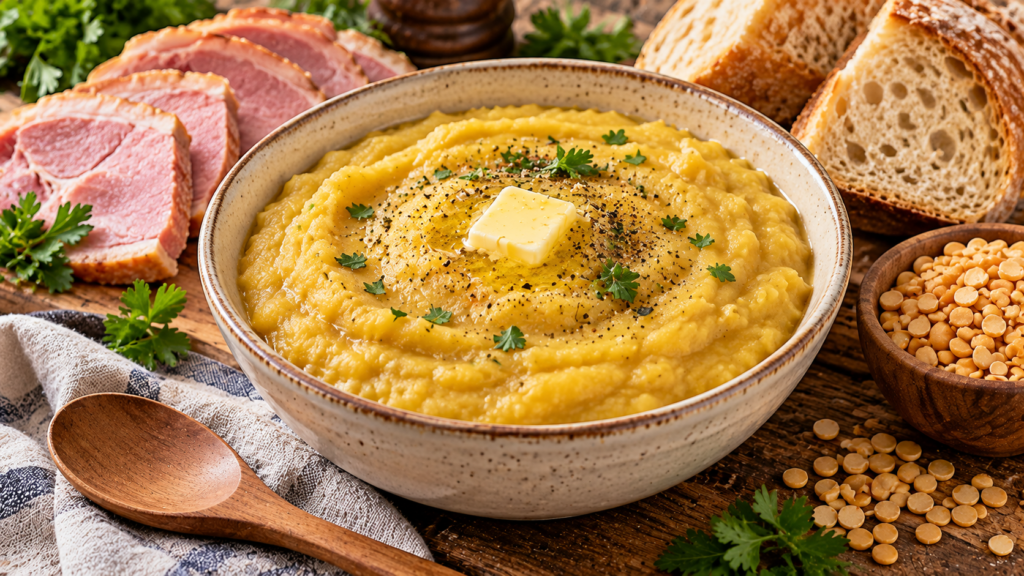
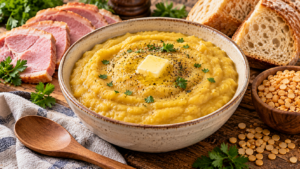
Have you ever tried a traditional British dish that’s simple, comforting, budget-friendly, and packed with old-fashioned flavor? This Pease Pudding Recipe is a classic North East English favorite made with yellow split peas, onion, and gentle seasoning. The result is a thick, creamy pudding with a mild, savory flavor that pairs beautifully with ham, bacon, sausages, or freshly baked bread.
Popular in Northumberland and the wider North East of England, pease pudding has been enjoyed for generations. Traditionally, the split peas were cooked slowly in a pudding bag alongside ham or a joint of meat, allowing them to become tender and absorb extra flavor. Today, you can prepare an easy homemade version in a saucepan without needing special equipment.
The beauty of this Pease Pudding Recipe lies in its simplicity. Affordable pantry ingredients transform into a satisfying side dish that can be served warm, chilled, or spread onto sandwiches. Whether you’re exploring British heritage cooking or recreating a dish you remember from childhood, this traditional recipe is well worth making.
Recipe Overview
- Recipe Name: Pease Pudding
- Category: Side Dish
- Cuisine: British, especially North East English
- Servings: 6 people
- Prep Time: 10 minutes, plus soaking time
- Cook Time: 1 hour 30 minutes to 2 hours
- Total Time: Approximately 2 hours, plus soaking
- Calories: Approximately 180 kcal per serving
What Is Pease Pudding?
Pease pudding is a traditional British dish made primarily from yellow split peas cooked until soft and mashed into a thick, smooth, or slightly textured pudding. It is particularly associated with Northumberland and Newcastle, where it is often served alongside boiled ham or other meats.
Despite its name, pease pudding is savory rather than sweet. Its flavor is mild and earthy, making it an excellent accompaniment to salty meats, vegetables, and crusty bread. Some traditional versions use meat cooking liquid for extra richness, while this homemade version uses water or vegetable stock for flexibility.
Why You’ll Love This Recipe
This Pease Pudding Recipe turns inexpensive yellow split peas into a hearty, satisfying dish with very little hands-on work. It uses simple ingredients and develops a creamy texture as the peas cook slowly. You can serve it warm with a traditional roast or chill it for sandwiches and easy lunches. It’s also naturally vegetarian when prepared with water or vegetable stock, making it suitable for a variety of meals.
Ingredients
Gather these simple ingredients to prepare a traditional, creamy pease pudding with a deliciously savory flavor.
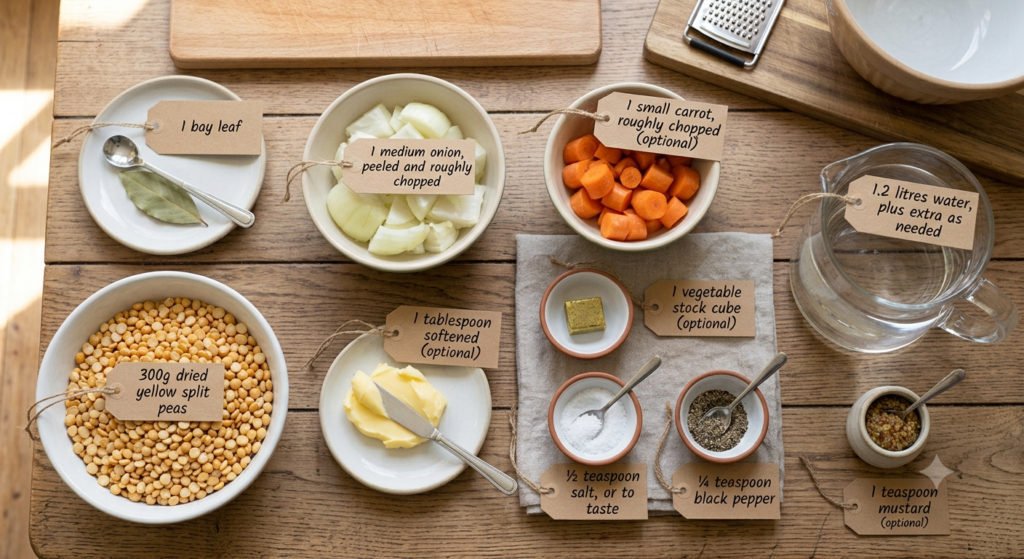
For the Pease Pudding
- 300 g dried yellow split peas
- 1 medium onion, peeled and roughly chopped
- 1 small carrot, roughly chopped (optional)
- 1 bay leaf
- 1.2 litres water, plus extra as needed
- 1 vegetable stock cube, optional
- ½ teaspoon salt, or to taste
- ¼ teaspoon black pepper
- 1 tablespoon butter (optional)
- 1 teaspoon mustard (optional)
Ingredient tip: Yellow split peas are the essential ingredient. Check the packet instructions because some varieties benefit from soaking before cooking.
Equipment Needed
You’ll only need a few basic kitchen tools to make this traditional British side dish at home.
- Large saucepan with a lid
- Colander
- Wooden spoon
- Measuring jug
- Potato masher or immersion blender
- Serving bowl
Recipe Video Guide
How to Make Pease Pudding
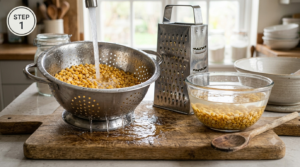
Step 1: Rinse and Soak the Split Peas
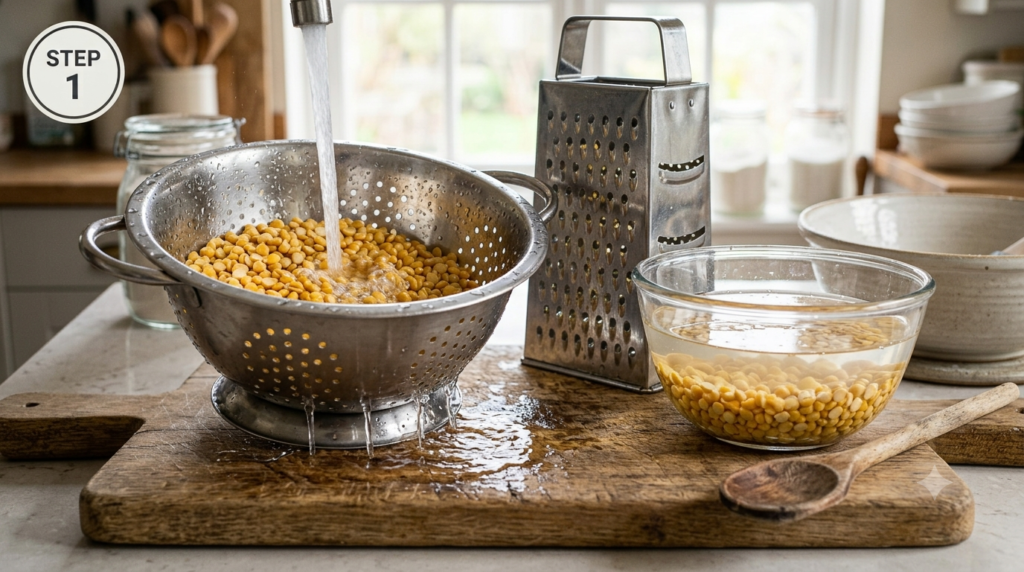
Place the yellow split peas in a colander and rinse them thoroughly under cold running water. Check for any unwanted debris, then transfer the peas to a large bowl and cover them with plenty of water. Soak overnight if recommended on the packet, allowing room for the peas to expand. Drain and rinse before cooking.
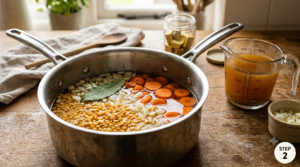
Step 2: Prepare the Cooking Ingredients
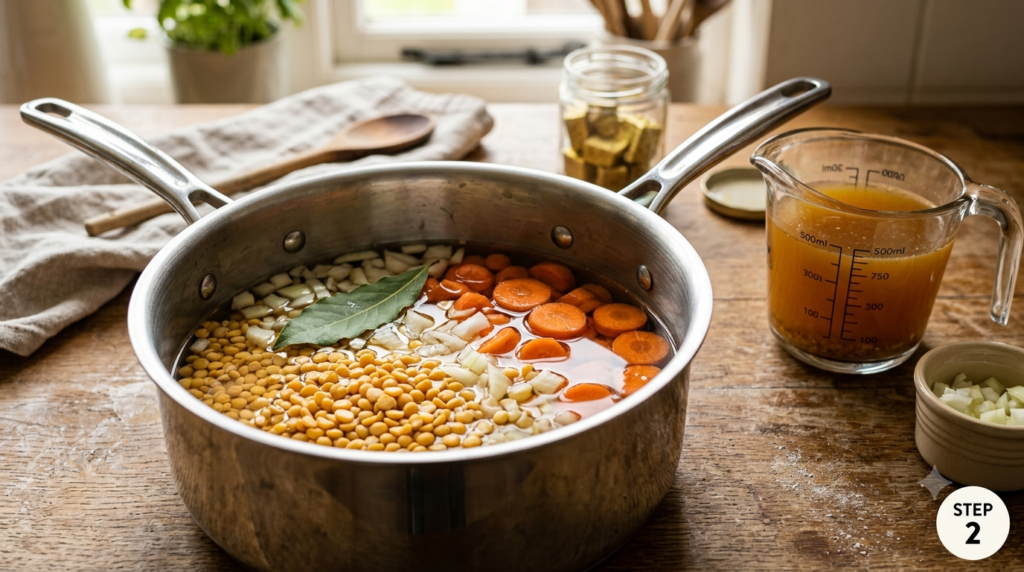
Transfer the drained peas to a large saucepan and add the chopped onion, optional carrot, bay leaf, and approximately 1.2 litres of fresh water. If you want a more savory flavor, crumble in a vegetable stock cube. Stir gently, then place the pan over medium-high heat and bring the liquid to a boil.
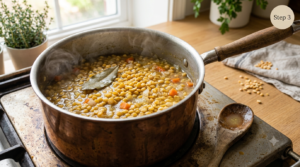
Step 3: Simmer Until the Peas Are Tender
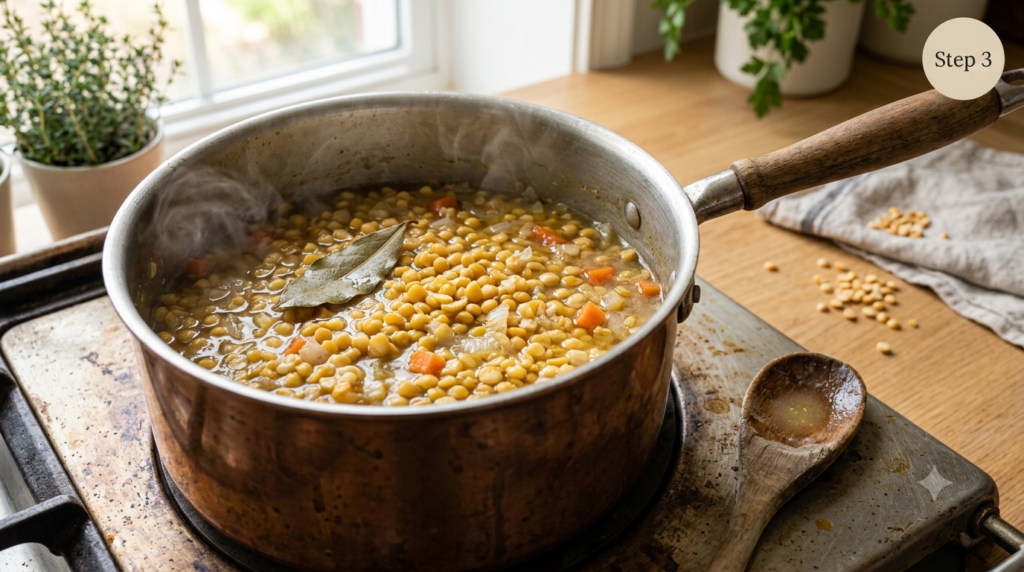
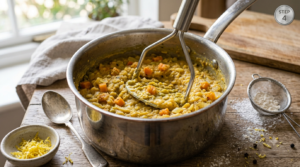
Reduce the heat to low and simmer gently for approximately 1½–2 hours, stirring occasionally. Keep the lid slightly ajar and check the water level regularly, adding more hot water if the peas begin to dry out before becoming tender. The peas are ready when they break apart easily and can be mashed without resistance.
Step 4: Remove the Bay Leaf and Mash
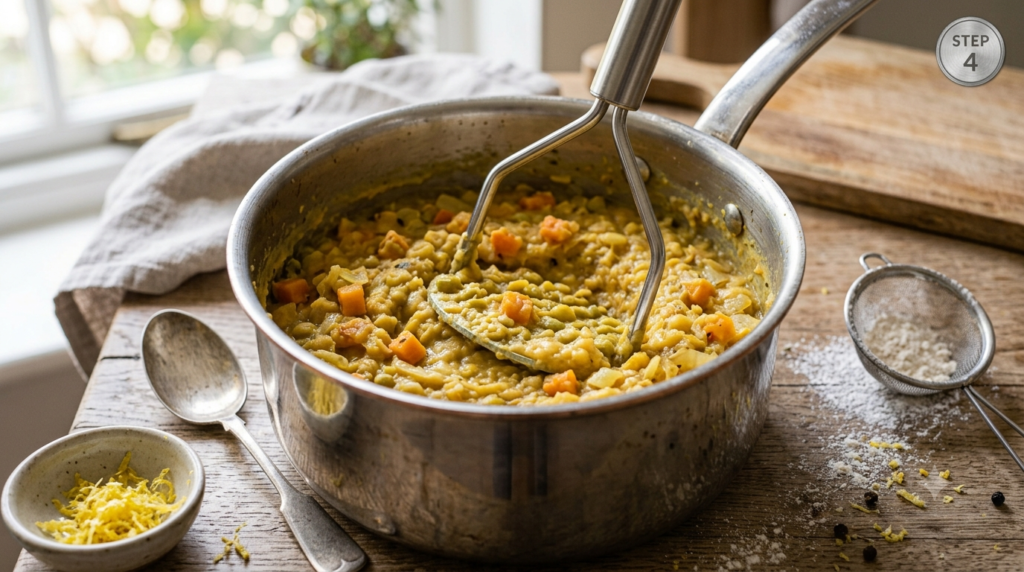
Remove the bay leaf from the saucepan. Use a potato masher to crush the cooked peas and softened vegetables until the mixture becomes thick and creamy. For a smoother texture, use an immersion blender briefly, taking care not to overprocess the pudding into a completely liquid consistency.
Step 5: Season and Adjust the Texture
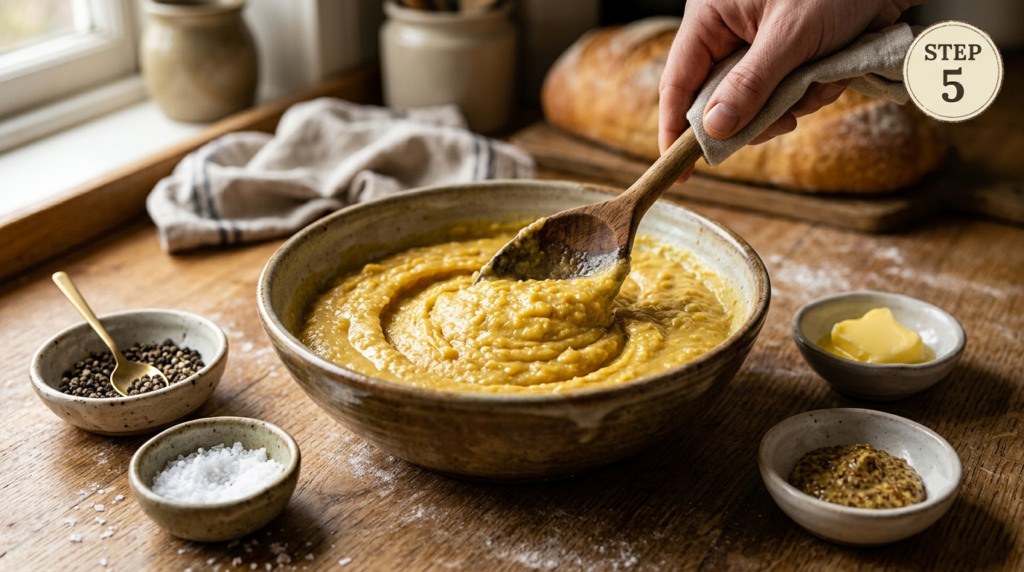
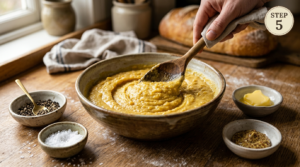
Add the salt, black pepper, and optional butter or mustard. Stir well and taste before adding extra seasoning, especially if you used stock. If the mixture is too thick, stir in a little hot water; if it seems watery, simmer uncovered for several minutes until the excess liquid evaporates.
Step 6: Rest and Serve
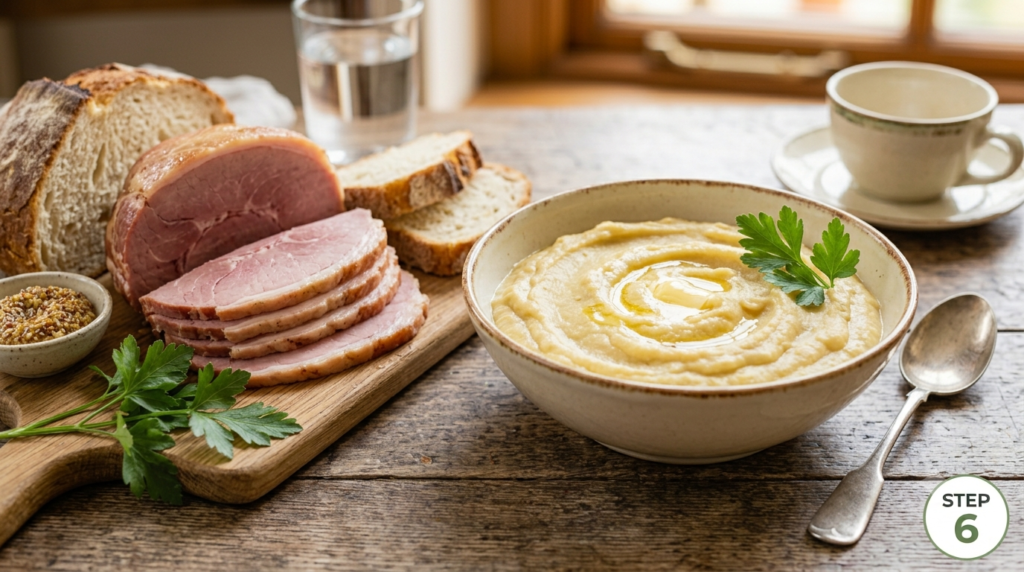
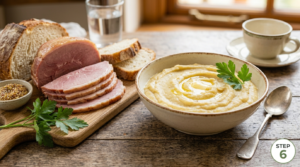
Remove the pan from the heat and let the pudding rest for about five minutes to thicken slightly. Spoon it into a serving bowl and enjoy it warm with boiled ham, sausages, bacon, or crusty bread. Alternatively, allow it to cool before refrigerating if you prefer a firmer texture for sandwiches.
Expert Tips for the Best Pease Pudding Recipe
- Check your peas: Follow the packet instructions for soaking and cooking because different products can vary.
- Cook slowly: A gentle simmer helps the peas soften evenly without sticking to the pan.
- Stir regularly: Pay particular attention to the bottom of the saucepan as the mixture thickens.
- Control the liquid: Add water gradually rather than pouring in too much at once.
- Season at the end: Taste after the peas soften so you can balance the salt and pepper properly.
- Choose your texture: Mash by hand for a rustic pudding or blend briefly for a smoother finish.
Delicious Variations
Traditional Ham-Flavored Pudding
For a more traditional meat-based flavor, replace some of the water with unsalted ham cooking liquid. Check the salt level carefully because the liquid may already be salty.
Vegetarian Pease Pudding
Use water or vegetable stock and omit the butter if you prefer a dairy-free version. The split peas provide a naturally hearty base.
Creamy Butter Pease Pudding
Stir in a small knob of butter after mashing. This adds richness and gives the pudding a smoother mouthfeel.
Mustard Pease Pudding
Add a teaspoon of English mustard for a sharper, more robust flavor that complements ham and sausages.
Herby Pease Pudding
Stir in a little chopped parsley or thyme just before serving for a fresh herbal note.
What to Serve with Pease Pudding
This Pease Pudding Recipe is traditionally served with savory foods that complement its mild, earthy flavor.
- Boiled ham: A classic North East English pairing.
- Sausages: Serve alongside browned sausages and onion gravy.
- Bacon: The salty, smoky flavor works beautifully with the creamy peas.
- Crusty bread: Spread chilled pudding onto slices for a simple snack.
- Roasted vegetables: Pair with carrots, parsnips, and potatoes.
- Pickled beetroot: Its tangy flavor balances the richness of the dish.
For a traditional meal, serve warm pease pudding with slices of ham, boiled potatoes, and vegetables.
Storage Instructions
Refrigerator
Allow the pudding to cool, then transfer it to a clean, airtight container. Refrigerate promptly and use within 3–4 days.
Freezer
Divide the cooled pudding into individual portions and freeze in airtight containers for up to 3 months for the best quality.
Reheating
Reheat in a saucepan over low heat, stirring regularly and adding a splash of water if necessary. Heat until steaming hot throughout. You can also microwave individual portions, stirring halfway through.
Make-Ahead Tip
Prepare the pudding a day in advance and refrigerate it. The texture will become firmer as it cools, making it easy to slice or spread. Reheat with a little water if you want to serve it warm and creamy.
Common Mistakes to Avoid
Not Cooking the Peas Long Enough
Undercooked split peas remain firm and grainy. Continue simmering until they soften completely before mashing.
Letting the Pan Dry Out
The peas need enough liquid to cook properly. Check the saucepan regularly and add hot water as necessary.
Adding Too Much Salt Early
Stock cubes and ham cooking liquid can contain considerable salt. Season gradually and taste at the end.
Forgetting to Stir
As the mixture thickens, it can stick to the bottom of the pan. Stir occasionally and lower the heat if necessary.
Making the Pudding Too Watery
Excess liquid can prevent the pudding from setting into its characteristic thick texture. Simmer uncovered until it reaches your preferred consistency.
Nutrition Information
| Nutrient | Approximate Amount per Serving |
|---|---|
| Calories | 180 kcal |
| Carbohydrates | 32 g |
| Protein | 12 g |
| Fat | 2 g |
| Saturated Fat | 1 g |
| Cholesterol | 5 mg |
| Fiber | 12 g |
| Sugar | 4 g |
| Sodium | 250 mg |
Nutrition values are estimates for one of six servings and will vary depending on the stock, butter, and seasoning used.
Final Thoughts
This Pease Pudding Recipe brings a traditional British favorite to your kitchen with affordable ingredients and straightforward preparation. Yellow split peas cook into a thick, comforting pudding that pairs wonderfully with ham, sausages, vegetables, and bread.
Whether you’re exploring North East English cooking or looking for a filling side dish to prepare ahead, this recipe is easy to adapt to your preferred texture and flavor. Make it traditionally with ham cooking liquid or keep it vegetarian with vegetable stock. Either way, it’s a practical, satisfying dish that deserves a place in your recipe collection.
Frequently Asked Questions
What is pease pudding made from?
Pease pudding is primarily made from yellow split peas cooked with water, onion, and seasoning until soft and thick.
Is pease pudding the same as mushy peas?
No. Both use peas, but pease pudding is generally thicker and traditionally made with yellow split peas, while mushy peas are usually made with marrowfat peas.
Do I need to soak yellow split peas?
Not every variety requires soaking, but soaking can reduce cooking time. Follow the instructions on your packet.
Can I make pease pudding without a blender?
Yes. A potato masher or even a sturdy wooden spoon can break down the cooked peas.
Is pease pudding vegetarian?
Yes, when prepared with water or vegetable stock and without meat cooking liquid. Check the stock ingredients if cooking for a vegetarian.
How do I make pease pudding thicker?
Simmer it uncovered for a few minutes, stirring frequently, until excess moisture evaporates. It will also thicken as it cools.
Recipe Card
Pease Pudding Recipe
Ingredients
Equipment
Method
- Place the yellow split peas in a colander and rinse them thoroughly under cold running water. Check for any unwanted debris, then transfer the peas to a large bowl and cover them with plenty of water. Soak overnight if recommended on the packet, allowing room for the peas to expand. Drain and rinse before cooking.
- Transfer the drained peas to a large saucepan and add the chopped onion, optional carrot, bay leaf, and approximately 1.2 litres of fresh water. If you want a more savory flavor, crumble in a vegetable stock cube. Stir gently, then place the pan over medium-high heat and bring the liquid to a boil.
- Reduce the heat to low and simmer gently for approximately 1½–2 hours, stirring occasionally. Keep the lid slightly ajar and check the water level regularly, adding more hot water if the peas begin to dry out before becoming tender. The peas are ready when they break apart easily and can be mashed without resistance.
- Remove the bay leaf from the saucepan. Use a potato masher to crush the cooked peas and softened vegetables until the mixture becomes thick and creamy. For a smoother texture, use an immersion blender briefly, taking care not to overprocess the pudding into a completely liquid consistency.
- Add the salt, black pepper, and optional butter or mustard. Stir well and taste before adding extra seasoning, especially if you used stock. If the mixture is too thick, stir in a little hot water; if it seems watery, simmer uncovered for several minutes until the excess liquid evaporates.
- Remove the pan from the heat and let the pudding rest for about five minutes to thicken slightly. Spoon it into a serving bowl and enjoy it warm with boiled ham, sausages, bacon, or crusty bread. Alternatively, allow it to cool before refrigerating if you prefer a firmer texture for sandwiches.
Video
Notes
- Check your peas: Follow the packet instructions for soaking and cooking because different products can vary.
- Cook slowly: A gentle simmer helps the peas soften evenly without sticking to the pan.
- Stir regularly: Pay particular attention to the bottom of the saucepan as the mixture thickens.
- Control the liquid: Add water gradually rather than pouring in too much at once.
- Season at the end: Taste after the peas soften so you can balance the salt and pepper properly.
- Choose your texture: Mash by hand for a rustic pudding or blend briefly for a smoother finish.
