Ingredients
Equipment
Method
Step 1: Rinse and Soak the Split Peas
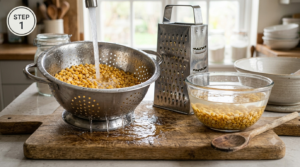
- Place the yellow split peas in a colander and rinse them thoroughly under cold running water. Check for any unwanted debris, then transfer the peas to a large bowl and cover them with plenty of water. Soak overnight if recommended on the packet, allowing room for the peas to expand. Drain and rinse before cooking.
Step 2: Prepare the Cooking Ingredients
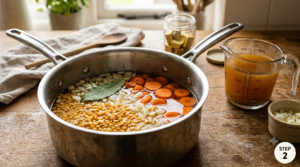
- Transfer the drained peas to a large saucepan and add the chopped onion, optional carrot, bay leaf, and approximately 1.2 litres of fresh water. If you want a more savory flavor, crumble in a vegetable stock cube. Stir gently, then place the pan over medium-high heat and bring the liquid to a boil.
Step 3: Simmer Until the Peas Are Tender
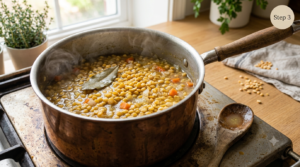
- Reduce the heat to low and simmer gently for approximately 1½–2 hours, stirring occasionally. Keep the lid slightly ajar and check the water level regularly, adding more hot water if the peas begin to dry out before becoming tender. The peas are ready when they break apart easily and can be mashed without resistance.
Step 4: Remove the Bay Leaf and Mash
- Remove the bay leaf from the saucepan. Use a potato masher to crush the cooked peas and softened vegetables until the mixture becomes thick and creamy. For a smoother texture, use an immersion blender briefly, taking care not to overprocess the pudding into a completely liquid consistency.
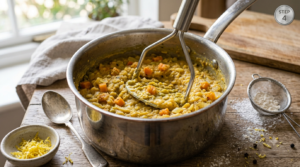
Step 5: Season and Adjust the Texture
- Add the salt, black pepper, and optional butter or mustard. Stir well and taste before adding extra seasoning, especially if you used stock. If the mixture is too thick, stir in a little hot water; if it seems watery, simmer uncovered for several minutes until the excess liquid evaporates.
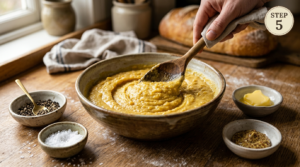
Step 6: Rest and Serve
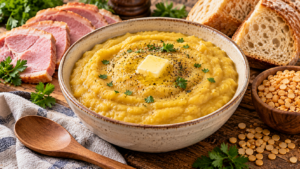
- Remove the pan from the heat and let the pudding rest for about five minutes to thicken slightly. Spoon it into a serving bowl and enjoy it warm with boiled ham, sausages, bacon, or crusty bread. Alternatively, allow it to cool before refrigerating if you prefer a firmer texture for sandwiches.
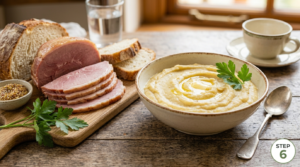
Video
Notes
- Check your peas: Follow the packet instructions for soaking and cooking because different products can vary.
- Cook slowly: A gentle simmer helps the peas soften evenly without sticking to the pan.
- Stir regularly: Pay particular attention to the bottom of the saucepan as the mixture thickens.
- Control the liquid: Add water gradually rather than pouring in too much at once.
- Season at the end: Taste after the peas soften so you can balance the salt and pepper properly.
- Choose your texture: Mash by hand for a rustic pudding or blend briefly for a smoother finish.