
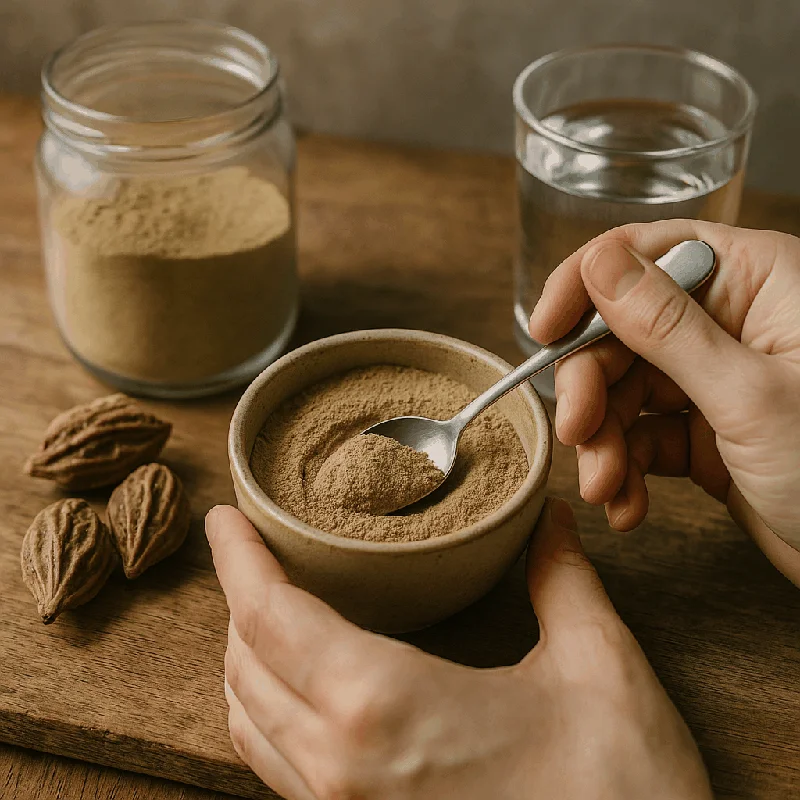
An ingredient that fights back
Most powders in a cook’s pantry are there because they taste good. Haritaki is the exception. The ground, dried fruit of the Terminalia chebula tree is bitter, earthy, and strongly astringent. It dries out your mouth the way an over-steeped cup of black tea or an unripe persimmon does. The fruit is rich in tannins, which accounts for that puckering feel.
People take it anyway, because in Ayurveda it has been used for digestion for a very long time. So the cooking problem is a narrow one: a small measured amount of something unpleasant, taken once a day, that needs to go down without a fight. That is a problem a kitchen can solve.
Ground rules before you measure anything
The amounts below come from the Ask Ayurveda article on how to take haritaki powder, which is written and reviewed by Ayurvedic doctors. The key numbers are short enough to remember:
- Beginners start with about a quarter teaspoon once a day.
- The usual serving after that is half a teaspoon.
- One serving a day. These are four ways to prepare that serving, not four drinks to have on the same day.
Use a proper measuring spoon and level it off. This is not an ingredient for eyeballing, because too much can cause loose stools and stomach cramps.
A safety note that matters more than any technique: if you have kidney disease, are pregnant or breastfeeding, or take regular medication, do not use haritaki without your doctor’s approval.
Method 1: plain warm water
This is the baseline, and the version to try first so you know what you are working with.
- 1/4 teaspoon haritaki powder for beginners, 1/2 teaspoon once you are used to it
- 1 cup warm water
Warm the water until it is comfortable to drink, not boiling. Add the powder and stir well. It does not fully dissolve, so stir again just before drinking and finish the cup before the sediment settles. In the evening, traditional sources suggest adding a pinch of dry ginger or a drop of lemon juice, both of which give the cup some brightness.
Flavor: honest. Earthy, bitter, drying. Follow it with a glass of plain water.
Method 2: warm water with honey
Honey is the classic softener, and it works on two levels. Sweetness balances the bitterness, and the thicker texture rounds off the astringent edge.
- 1/2 teaspoon haritaki powder
- 1 cup warm water
- Honey, to taste
Stir the powder into the warm water first, then add the honey and stir until it disappears. The source article gives no fixed amount for honey, so start with a little and adjust. Let the water cool slightly before the honey goes in so the flavor stays fresh.
Flavor: closer to a strong herbal tea. A squeeze of lemon makes it better still.
One caution for family kitchens: the CDC advises that honey should not be given to children under 12 months. This drink is for adults in any case.
Method 3: stirred into ghee
Ghee, or clarified butter, is one of the traditional carriers for haritaki. Fat coats the tongue, and that mutes the dry, puckering quality more effectively than water can.
- 1/4 to 1/2 teaspoon haritaki powder
- A small spoonful of soft or gently melted ghee, just enough to bind the powder
- Warm water to drink afterward
Work the powder into the ghee with the back of a spoon until you have a smooth paste. Eat it from the spoon and follow with a few sips of warm water. The article lists ghee as a carrier without giving a ratio, so the aim is simply enough ghee to hold the powder together.
Flavor: nutty and mellow at first, with the bitterness arriving late and leaving quickly. Many people find this the gentlest version.
Method 4: simmered as a tea
Boiling changes the character of the powder a little, producing something that drinks like a rustic herbal infusion.
- 1/2 teaspoon haritaki powder
- 1 cup water
- A squeeze of lemon, optional
Bring the water and powder to a boil together in a small saucepan. Take it off the heat, let it cool slightly, and pour it into a mug. Sip it slowly. Add lemon at the end if you like.
This is the preparation suggested for the early morning on an empty stomach. Plan around it: some people need the bathroom soon afterward, so it is not a good choice five minutes before leaving the house.
Flavor: the most tea-like of the four, with a deeper, woody note.
Other traditional pairings
The same source mentions that some people take haritaki with warm milk or with jaggery, the unrefined cane sugar common in Indian cooking, particularly in the evening. No proportions are given for these, so treat them as variations on the half-teaspoon serving and sweeten to your own taste.
Small tricks that help
- Temperature: warm is easier than cold. Cold water makes the powder clump and sharpens the bitterness.
- Speed: a few steady sips beat a long, reluctant half hour with a cooling cup.
- Chaser: plain water afterward clears the dry feeling.
- Extra water through the day: haritaki has a mild laxative effect, so staying hydrated matters.
- Do not hide it in food. Stirring it into a smoothie or soup makes it hard to know how much you actually took.
Storing the powder
Treat it like a ground spice. Keep it in an airtight jar in a cool, dry cupboard, away from sunlight and the steam of the stove. Use a dry spoon every time. It generally keeps for one to two years; if it smells off or has clumped from moisture, throw it out.
A few honest caveats
Haritaki is a traditional herb, and research on it so far is mostly laboratory and animal work with few human trials. It is not a treatment for any disease. Possible side effects include loose stools, cramping, dehydration, and nausea from the taste; reduce the amount or stop if they appear. It is also meant for use in cycles of a few weeks with breaks, not as a permanent daily habit in large amounts.
In the United States, supplements are not approved by the FDA for safety or effectiveness before sale, so choose a powder that has been independently tested for heavy metals.
Note: this article is for information only and does not replace advice from your doctor.
