
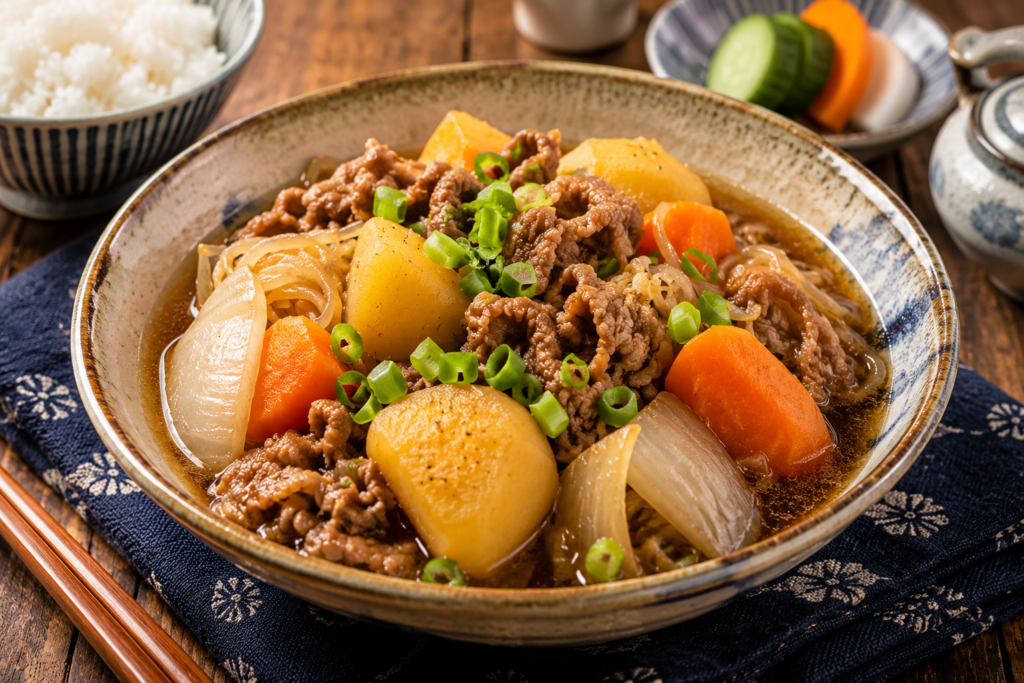
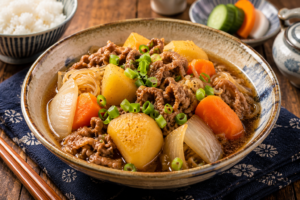
Welcome! If you’ve ever wanted to bring the comforting flavors of a traditional Japanese home-cooked meal into your own kitchen, this Nikujaga Recipe is the perfect place to start. Often described as Japan’s ultimate comfort food, nikujaga combines tender slices of beef, soft potatoes, sweet onions, and carrots in a delicate soy-based broth that’s both savory and slightly sweet. Every spoonful is warm, satisfying, and filled with rich homemade flavor that has been cherished by Japanese families for generations.
The beauty of nikujaga lies in its simplicity. It doesn’t rely on complicated techniques or hard-to-find ingredients. Instead, a handful of everyday staples slowly simmer together, allowing the vegetables to absorb the delicious broth while the beef becomes wonderfully tender. Whether you’re new to Japanese cooking or looking for an authentic family-style dish, this recipe is sure to become a regular favorite.
Recipe Overview
- Category: Main Course
- Cuisine: Japanese
- Servings: 4 people
- Prep Time: 15 minutes
- Cook Time: 35 minutes
- Total Time: 50 minutes
- Calories: Approximately 410 per serving
Why You’ll Love This Nikujaga Recipe
Nikujaga is one of those meals that tastes even better than it looks. Its comforting flavors and hearty ingredients make it perfect for family dinners any time of the year.
- Authentic Japanese home-style comfort food
- Tender beef and perfectly cooked vegetables
- Rich, savory, and slightly sweet broth
- Simple ingredients that are easy to find
- Great for meal prep and leftovers
- One-pot recipe with minimal cleanup
- Beginner-friendly cooking method
- Delicious and satisfying for the whole family
What Is Nikujaga?
Nikujaga is a classic Japanese stew made by simmering thinly sliced beef with potatoes, onions, carrots, and sometimes shirataki noodles in a flavorful broth of soy sauce, mirin, sake, sugar, and dashi. The name itself comes from the Japanese words “niku,” meaning meat, and “jaga,” short for jagaimo, meaning potato.
Unlike many Western stews that rely on thick gravies, nikujaga has a light yet deeply flavorful broth that gently coats every ingredient. The vegetables soak up the savory broth while maintaining their texture, creating a comforting meal that’s commonly served with steamed rice.
Ingredients
You’ll need the following simple ingredients to make this comforting Nikujaga recipe.
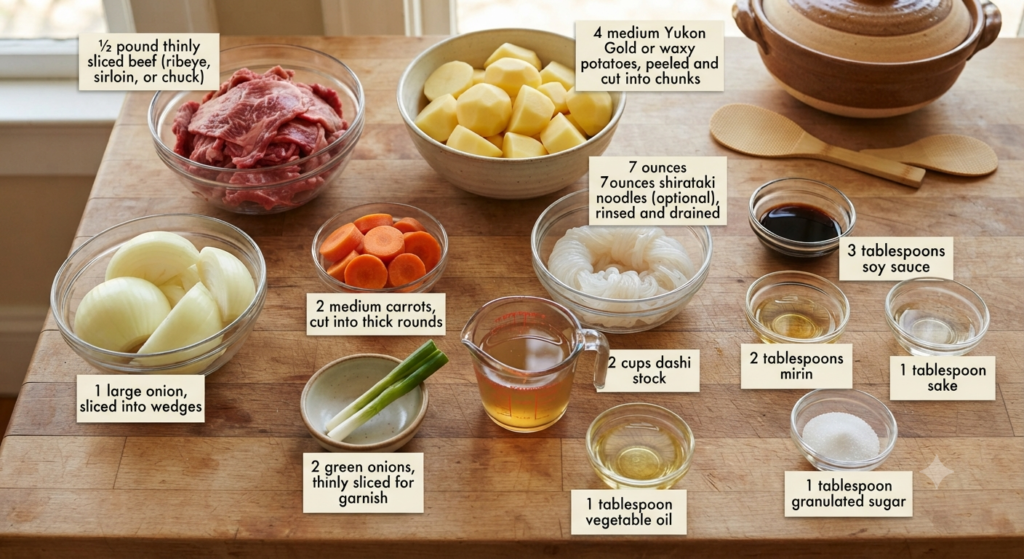
- ½ pound thinly sliced beef (ribeye, sirloin, or chuck)
- 4 medium Yukon Gold or waxy potatoes, peeled and cut into chunks
- 1 large onion, sliced into wedges
- 2 medium carrots, cut into thick rounds
- 7 ounces shirataki noodles (optional), rinsed and drained
- 2 cups dashi stock
- 3 tablespoons soy sauce
- 2 tablespoons mirin
- 1 tablespoon sake
- 1 tablespoon granulated sugar
- 1 tablespoon vegetable oil
- 2 green onions, thinly sliced for garnish
Kitchen Equipment
You’ll need:
- Large Dutch oven or deep saucepan
- Sharp knife
- Cutting board
- Measuring cups and spoons
- Wooden spoon
- Ladle
How to Make Nikujaga Recipe
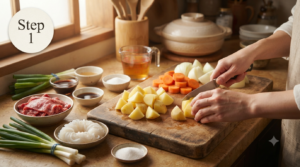
Step 1: Prepare the Ingredients
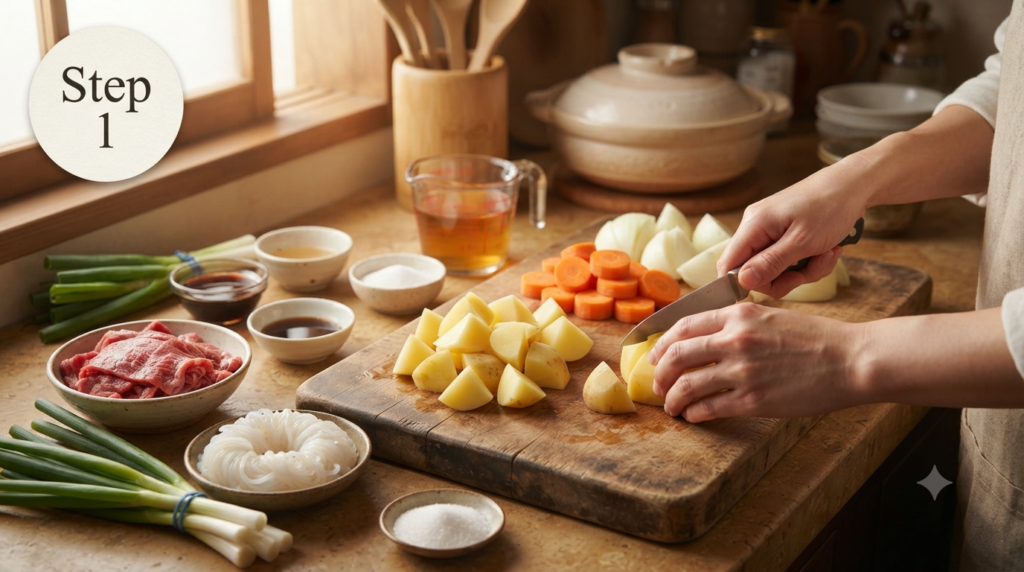
Peel the potatoes and cut them into evenly sized chunks so they cook at the same rate. Slice the onion into wedges and cut the carrots into thick rounds. If you’re using shirataki noodles, rinse them thoroughly under cold water and drain well. Having everything prepared before you begin makes the cooking process smooth and efficient.
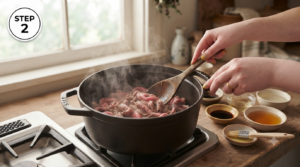
Step 2: Cook the Beef
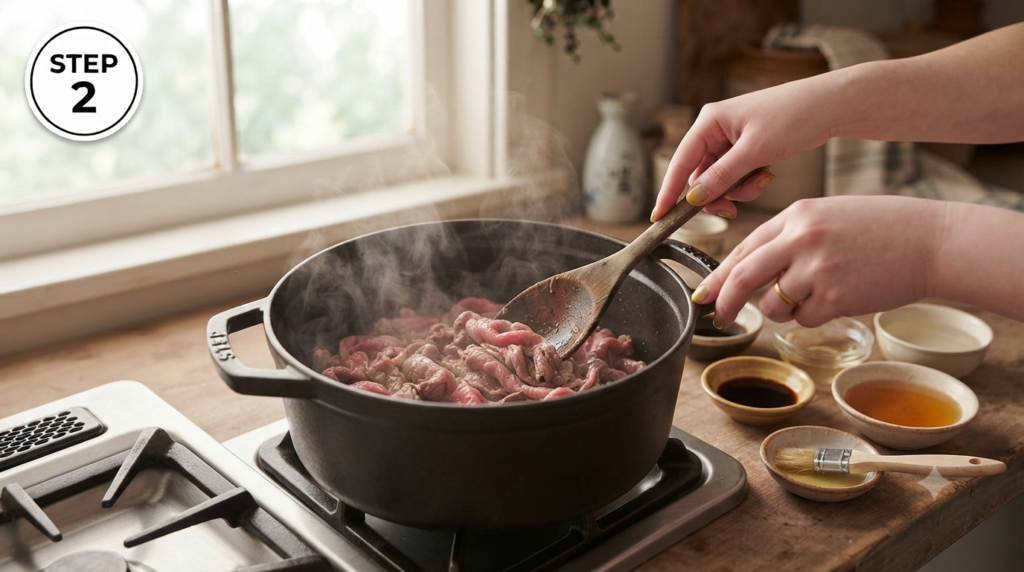
Heat the vegetable oil in a large Dutch oven or deep saucepan over medium heat. Add the thinly sliced beef and cook for 2 to 3 minutes, stirring gently until it loses its pink color. Avoid overcooking the beef at this stage since it will continue cooking while the stew simmers.
Step 3: Add the Vegetables
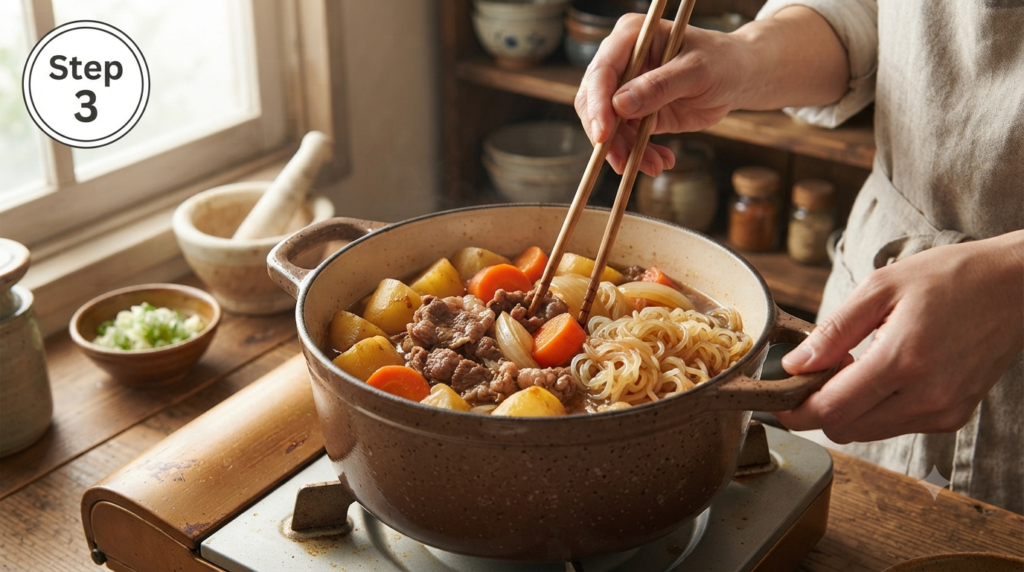
Add the potatoes, onions, carrots, and optional shirataki noodles to the pot. Stir gently for about 2 minutes so the vegetables become lightly coated with the flavorful beef juices before adding the broth.
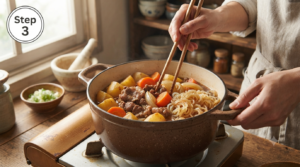
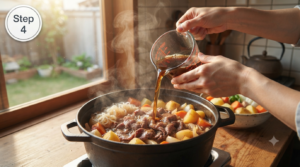
Step 4: Simmer the Stew
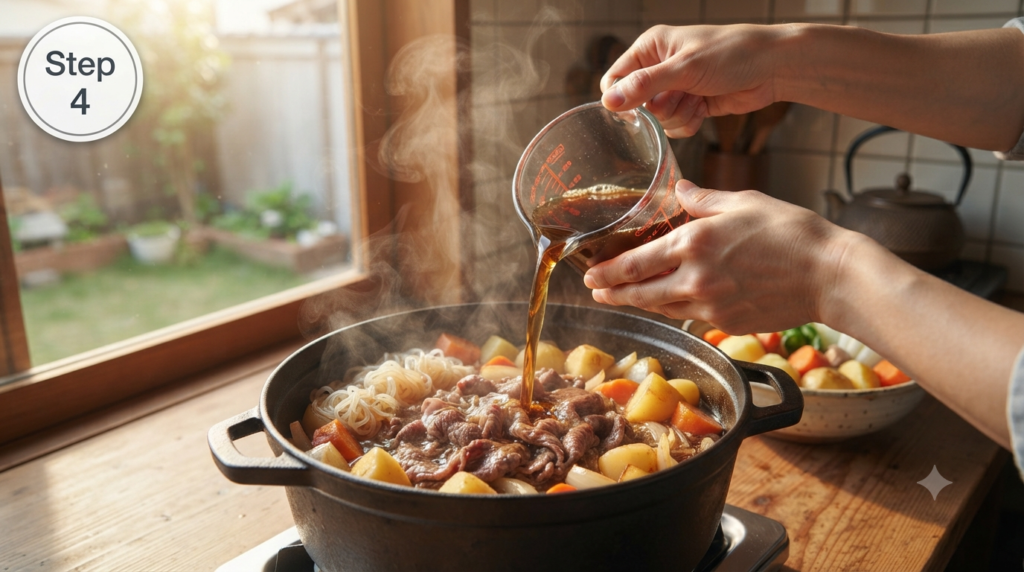
Pour in the dashi stock, soy sauce, mirin, sake, and sugar. Stir gently until the sugar dissolves. Bring the stew to a gentle boil, then reduce the heat to low. Cover the pot partially with a lid and let everything simmer for about 25 to 30 minutes, allowing the vegetables to become tender while absorbing the delicious broth.
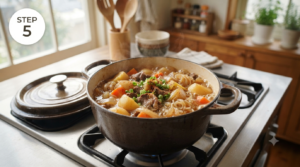
Step 5: Reduce the Broth
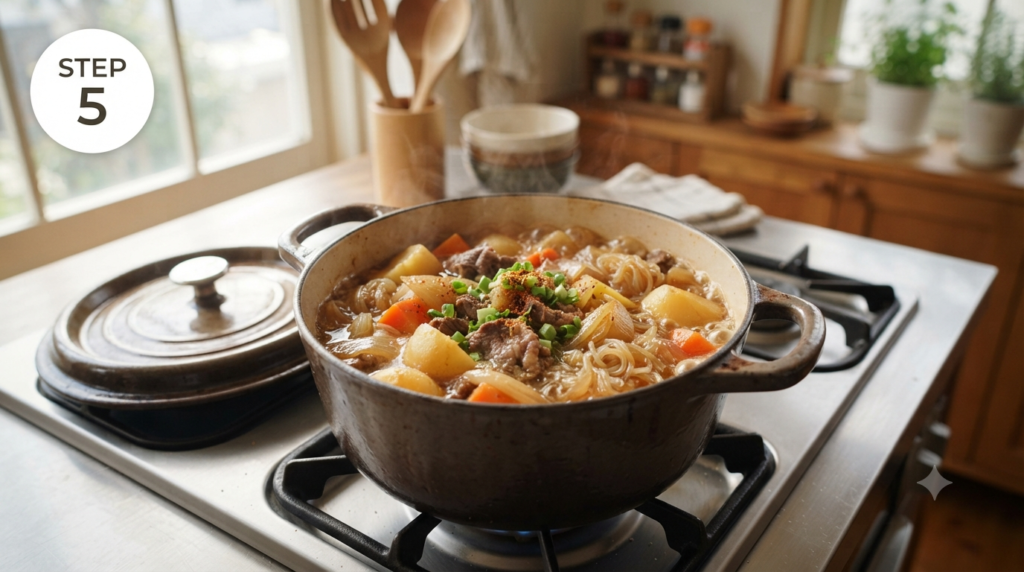
Remove the lid during the final 5 minutes of cooking and allow the broth to reduce slightly. The liquid should become richer and lightly coat the vegetables without becoming thick. Taste the broth and adjust the seasoning with a little more soy sauce if desired.
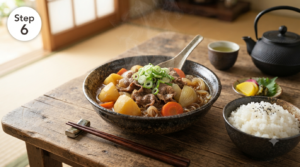
Step 6: Garnish and Serve
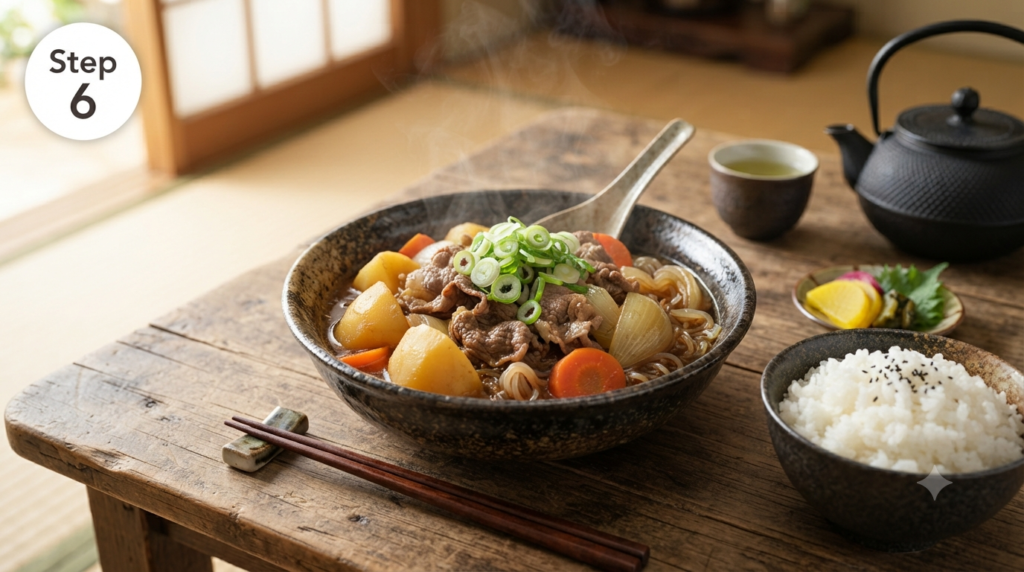
Once the vegetables are tender and the broth has slightly reduced, turn off the heat and let the nikujaga rest for about 5 minutes. This short resting time allows the beef and vegetables to absorb even more of the savory broth, making the flavors richer and more balanced. Ladle the stew into individual serving bowls and garnish with freshly sliced green onions for a pop of color and freshness. Serve hot with steamed Japanese rice for a comforting and authentic meal.
Recipe Video Guide
Expert Tips for the Best Nikujaga Recipe
Even though nikujaga is simple to prepare, a few small techniques can make a noticeable difference in flavor and texture.
- Use thinly sliced beef, so it cooks quickly and stays tender.
- Choose waxy potatoes like Yukon Gold because they hold their shape better while simmering.
- Simmer the stew gently instead of boiling it rapidly to keep the vegetables intact.
- Let the stew rest for a few minutes before serving to deepen the flavors.
- Use homemade dashi if possible for the most authentic taste.
- Stir carefully during cooking to avoid breaking the potatoes.
- Nikujaga often tastes even better the next day as the flavors continue to develop.
Delicious Variations
Pork Nikujaga
Replace the beef with thinly sliced pork for another traditional Japanese variation that’s equally delicious and comforting.
Chicken Nikujaga
Use boneless chicken thighs instead of beef for a lighter yet flavorful version with tender meat.
Seafood Nikujaga
Try shrimp, scallops, or firm white fish to create a unique seafood-inspired twist on this classic dish.
Vegetarian Nikujaga
Skip the meat and use mushrooms, tofu, and extra vegetables while substituting vegetable broth for dashi if desired.
Spicy Nikujaga
Add a small spoonful of Japanese chili paste or a pinch of shichimi togarashi for gentle heat that complements the savory broth.
What to Serve with Nikujaga
Nikujaga is a complete comfort meal on its own, but it pairs wonderfully with traditional Japanese side dishes.
- Steamed Japanese rice
- Miso soup
- Pickled vegetables
- Cucumber salad
- Steamed spinach with sesame dressing
- Edamame
- Tamagoyaki (Japanese rolled omelet)
- Seaweed salad
- Grilled salmon
- Green tea
Storage & Reheating
Nikujaga stores exceptionally well, making it ideal for meal prep.
Refrigerator
Allow the stew to cool completely before storing it in an airtight container. It will stay fresh in the refrigerator for up to 4 days.
Freezer
Freeze cooled portions in freezer-safe containers for up to 2 months. For the best texture, freeze before the potatoes become overly soft.
Reheating
Reheat gently in a saucepan over medium-low heat until warmed through, adding a splash of dashi or water if the broth has reduced too much. It can also be reheated in the microwave in short intervals, stirring occasionally.
Common Mistakes to Avoid
Overcooking the Beef
Thinly sliced beef cooks very quickly. Cooking it too long can make it tough instead of tender.
Using Starchy Potatoes
Highly starchy potatoes tend to fall apart during simmering. Waxy varieties hold their shape much better.
Boiling Too Rapidly
A gentle simmer allows the vegetables to cook evenly while keeping the broth clear and flavorful.
Skipping the Resting Time
Allowing the stew to rest for a few minutes before serving helps the ingredients absorb more of the delicious broth.
Adding Too Much Soy Sauce
Soy sauce provides plenty of flavor, but adding too much can overpower the delicate balance of sweet and savory that’s characteristic of traditional nikujaga.
Nutrition Information
| Nutrient | Amount (Per Serving) |
|---|---|
| Calories | 410 kcal |
| Protein | 23 g |
| Carbohydrates | 30 g |
| Fat | 20 g |
| Saturated Fat | 7 g |
| Cholesterol | 60 mg |
| Sodium | 820 mg |
| Fiber | 4 g |
| Sugar | 8 g |
| Calcium | 55 mg |
| Iron | 3 mg |
Nutrition values are approximate and may vary depending on the ingredients used.
Final Thoughts
This Nikujaga Recipe is a wonderful example of how simple ingredients can create an incredibly comforting and satisfying meal. Tender beef, hearty potatoes, sweet onions, and carrots slowly simmer in a delicate soy-based broth, resulting in a dish that’s both nourishing and deeply flavorful. It’s no surprise that nikujaga has remained one of Japan’s most treasured home-cooked meals for generations.
Whether you’re exploring Japanese cuisine for the first time or looking to recreate a nostalgic family favorite, this recipe is an excellent choice. Serve it with a bowl of steamed rice and your favorite Japanese side dishes, and you’ll have a wholesome meal that’s perfect for cozy weeknight dinners or sharing with loved ones.
You may also like Best Orange Bundt Cake Recipe.
Frequently Asked Questions
What does “Nikujaga” mean?
The name comes from the Japanese words “niku” (meat) and “jagaimo” (potato), highlighting the dish’s two main ingredients.
What type of beef is best for nikujaga?
Thinly sliced ribeye, sirloin, or chuck works best because it cooks quickly and stays tender while simmering.
Can I make nikujaga without dashi?
Yes. Although dashi provides the traditional flavor, you can substitute low-sodium beef broth or vegetable broth if needed.
Is nikujaga spicy?
No. Traditional nikujaga has a mild, savory, and slightly sweet flavor without any heat.
Can I prepare nikujaga ahead of time?
Absolutely. Many people believe nikujaga tastes even better the following day because the vegetables continue absorbing the flavorful broth.
Can I freeze leftovers?
Yes. Nikujaga freezes well for up to 2 months, although the potatoes may become slightly softer after thawing.
Recipe Card
Easy Nikujaga Recipe
Ingredients
Equipment
Method
- Peel the potatoes and cut them into evenly sized chunks so they cook at the same rate. Slice the onion into wedges and cut the carrots into thick rounds. If you’re using shirataki noodles, rinse them thoroughly under cold water and drain well. Having everything prepared before you begin makes the cooking process smooth and efficient.
- Heat the vegetable oil in a large Dutch oven or deep saucepan over medium heat. Add the thinly sliced beef and cook for 2 to 3 minutes, stirring gently until it loses its pink color. Avoid overcooking the beef at this stage since it will continue cooking while the stew simmers.
- Add the potatoes, onions, carrots, and optional shirataki noodles to the pot. Stir gently for about 2 minutes so the vegetables become lightly coated with the flavorful beef juices before adding the broth.
- Pour in the dashi stock, soy sauce, mirin, sake, and sugar. Stir gently until the sugar dissolves. Bring the stew to a gentle boil, then reduce the heat to low. Cover the pot partially with a lid and let everything simmer for about 25 to 30 minutes, allowing the vegetables to become tender while absorbing the delicious broth.
- Remove the lid during the final 5 minutes of cooking and allow the broth to reduce slightly. The liquid should become richer and lightly coat the vegetables without becoming thick. Taste the broth and adjust the seasoning with a little more soy sauce if desired.
- Once the vegetables are tender and the broth has slightly reduced, turn off the heat and let the nikujaga rest for about 5 minutes. This short resting time allows the beef and vegetables to absorb even more of the savory broth, making the flavors richer and more balanced. Ladle the stew into individual serving bowls and garnish with freshly sliced green onions for a pop of color and freshness. Serve hot with steamed Japanese rice for a comforting and authentic meal.
Video
Notes
- Steamed Japanese rice
- Miso soup
- Pickled vegetables
- Cucumber salad
- Steamed spinach with sesame dressing
- Edamame
- Tamagoyaki (Japanese rolled omelet)
- Seaweed salad
- Grilled salmon
- Green tea

1 thought on “Easy Nikujaga Recipe”