
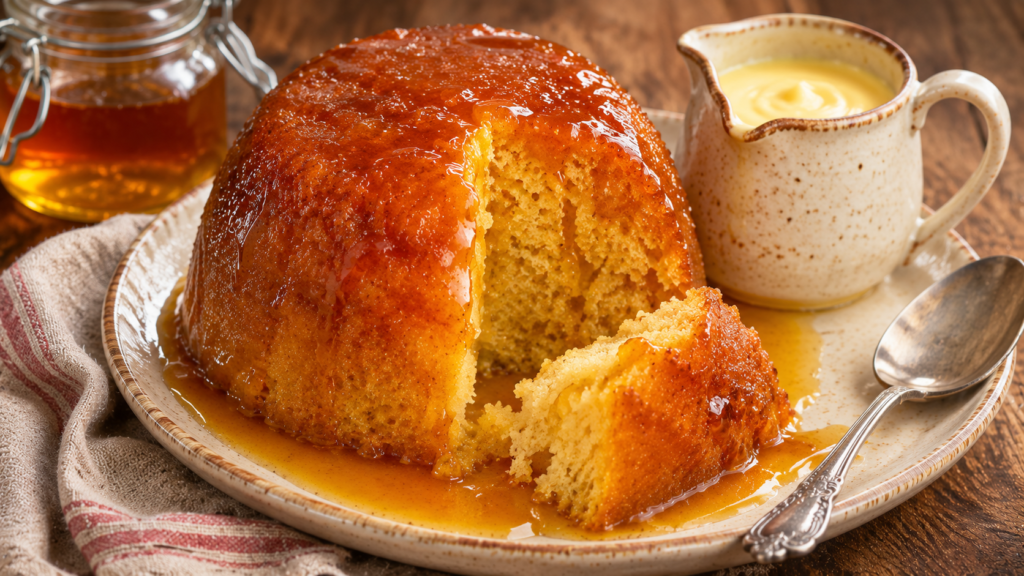
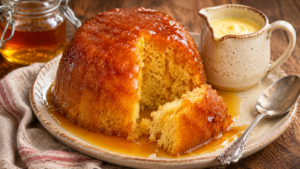
If you love traditional British desserts, this Treacle Sponge Pudding Recipe is a classic treat worth making at home. It features a soft, light sponge cake topped with a generous layer of sweet golden syrup that becomes beautifully sticky when steamed. Every spoonful combines fluffy sponge with rich syrup, creating a comforting dessert that is perfect for chilly evenings and family dinners.
One of the best things about homemade treacle sponge pudding is how simple it is to prepare. You only need a handful of everyday baking ingredients, including butter, sugar, eggs, self-raising flour, and golden syrup. The pudding is gently steamed until risen and tender, allowing the syrup to soak into the sponge.
Whether you’re preparing a traditional Sunday lunch dessert or simply craving something sweet, this treacle sponge pudding recipe is an excellent choice. Serve it warm with creamy custard, pouring cream, or a scoop of vanilla ice cream for a delicious homemade pudding.
Recipe Overview
- Category: Dessert
- Cuisine: British
- Servings: Serves 6 people
- Prep Time: 15 minutes
- Cook Time: 1 hour 30 minutes
- Total Time: 1 hour 45 minutes
- Calories: Approximately 390 kcal per serving
What Is Treacle Sponge Pudding?
Treacle sponge pudding is a traditional British steamed dessert made with a soft sponge mixture and golden syrup. It is usually prepared in a pudding basin, with golden syrup placed at the bottom before the sponge batter is added. Once cooked and turned out, the syrup forms a delicious sticky topping that runs over the fluffy pudding.
Although the name includes the word treacle, most classic recipes use golden syrup rather than black treacle. Golden syrup has a buttery, caramel-like sweetness that gives the pudding its familiar flavour and golden appearance.
This old-fashioned dessert has been enjoyed in British homes for generations. It is particularly popular during colder months and is often served after a traditional Sunday roast. The combination of warm sponge and sweet syrup makes it a comforting dessert that is simple yet incredibly satisfying.
Why You’ll Love This Treacle Sponge Pudding Recipe
- Traditional British dessert: Enjoy a classic homemade pudding with a lovely golden syrup topping.
- Simple ingredients: You probably already have most of the ingredients in your kitchen.
- Soft and fluffy texture: Steaming creates a moist sponge that is wonderfully tender.
- Perfect comfort food: A warm pudding is especially satisfying on cold evenings.
- Great with custard: The sweet syrup and fluffy sponge pair beautifully with creamy custard.
- Family-friendly: Its familiar caramel flavour makes it a lovely dessert for sharing.
Ingredients for Treacle Sponge Pudding
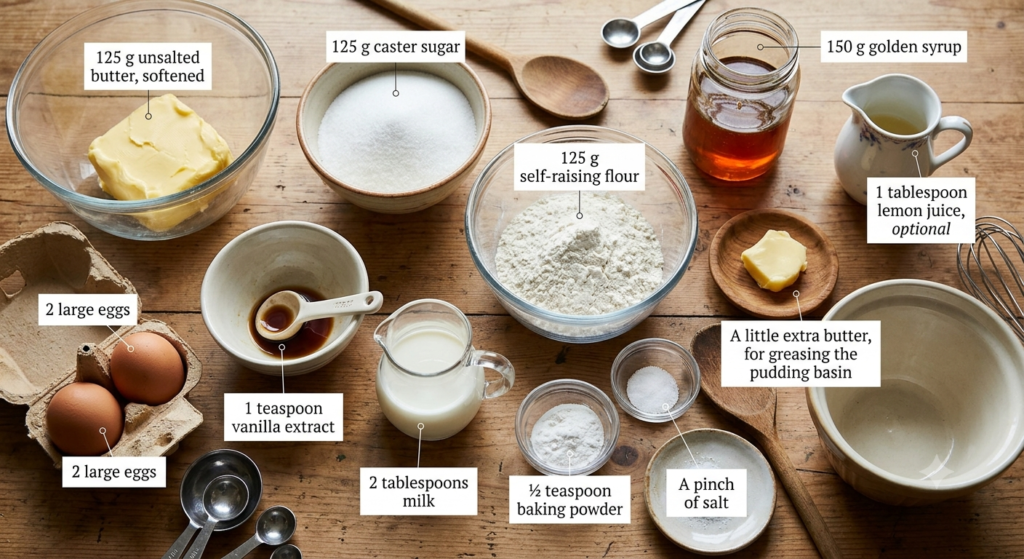
You only need a few basic baking ingredients to prepare this delicious pudding. Use room-temperature butter and eggs for a smooth sponge mixture, and choose good-quality golden syrup for the best flavour.
For the Sponge
- 125 g unsalted butter, softened
- 125 g caster sugar
- 2 large eggs
- 125 g self-raising flour
- 1 teaspoon vanilla extract
- 2 tablespoons milk
- ½ teaspoon baking powder
- A pinch of salt
For the Golden Syrup Topping
- 150 g golden syrup
- 1 tablespoon lemon juice, optional
- A little extra butter, for greasing the pudding basin
Equipment Needed
- 1.2-litre pudding basin
- Large mixing bowl
- Electric hand mixer or wooden spoon
- Measuring scales
- Measuring spoons
- Sieve
- Baking parchment
- Aluminium foil
- Kitchen string
- Large saucepan with a lid
- Small heatproof plate or trivet
- Skewer for checking doneness
Recipe Video Guide
How to Make Treacle Sponge Pudding
Follow these six simple steps to make a soft, fluffy steamed pudding with a delicious golden syrup topping. The most important part is maintaining a gentle simmer throughout steaming so the sponge cooks evenly.
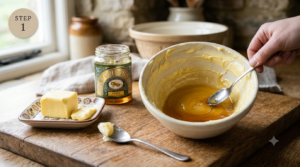
Step 1: Prepare the Pudding Basin
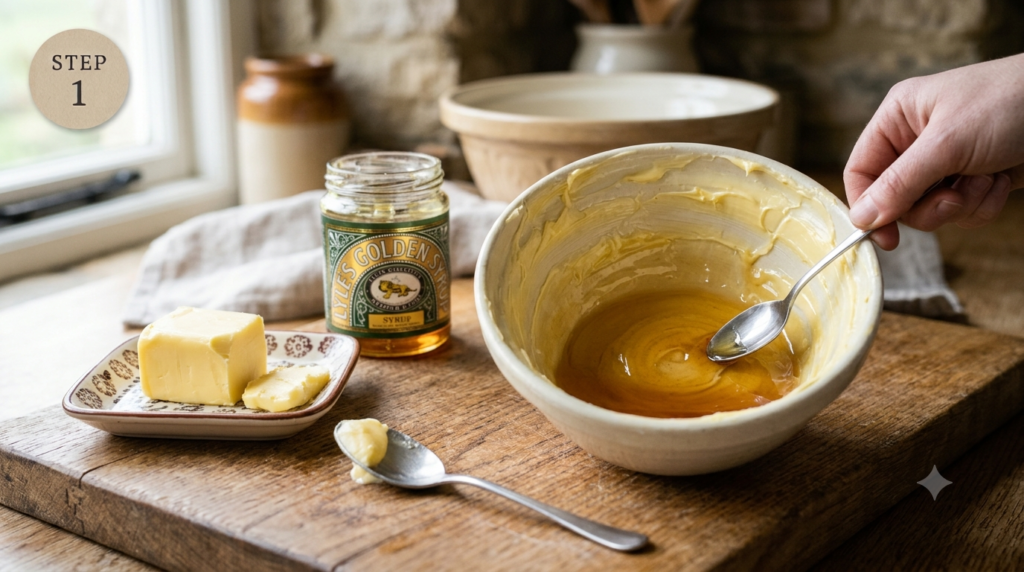
Grease a 1.2-litre pudding basin generously with softened butter, making sure to cover the bottom and sides. Pour the golden syrup into the bottom of the basin and spread it gently so it forms an even layer. If you enjoy a slightly tangy flavour, stir a little lemon juice into the syrup before adding it. Set the prepared basin aside while you make the sponge batter.
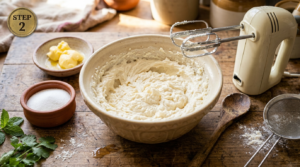
Step 2: Cream the Butter and Sugar
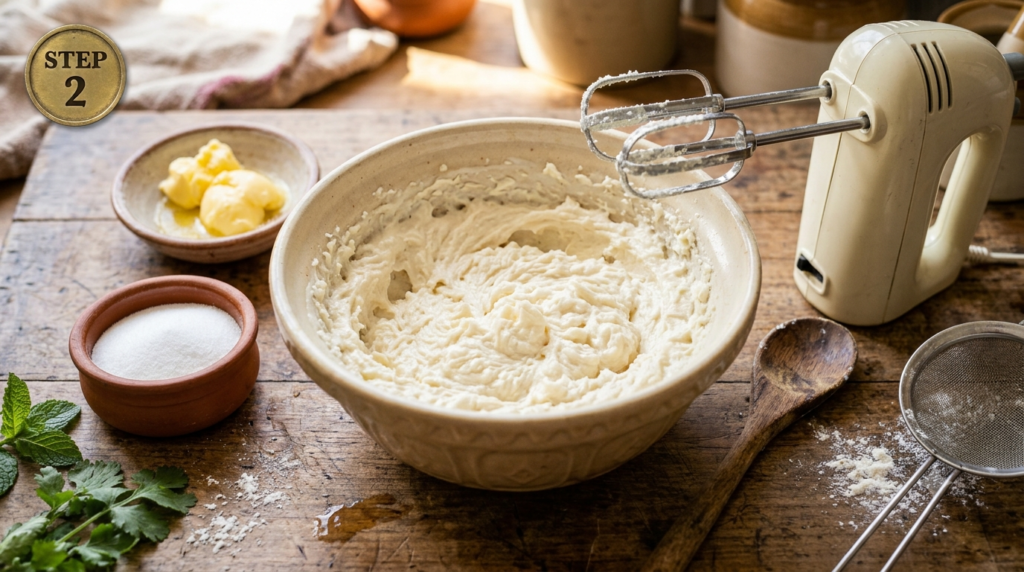
Place the softened butter and caster sugar in a large mixing bowl. Beat them together using an electric hand mixer or wooden spoon until the mixture becomes pale, light, and fluffy. This process incorporates air into the mixture, helping create a soft sponge texture. Scrape down the sides of the bowl occasionally to ensure the butter and sugar are evenly combined.
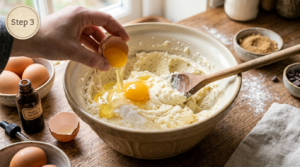
Step 3: Add the Eggs and Vanilla
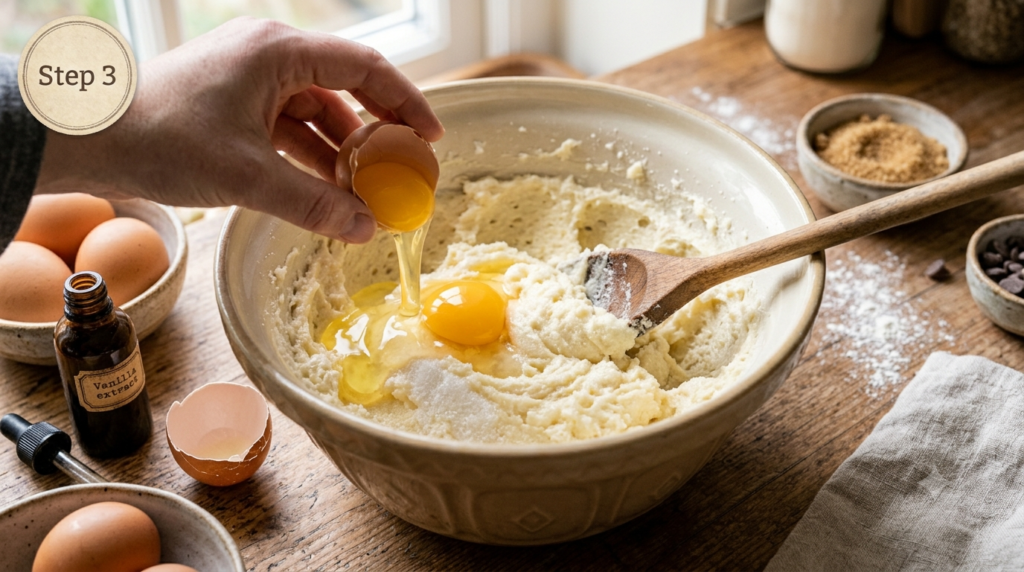
Add the eggs one at a time, beating well after each addition. This helps the mixture remain smooth and prevents it from separating. Stir in the vanilla extract and mix until combined. If the batter looks slightly curdled, don’t worry; adding the flour gradually in the next step will help bring everything together.
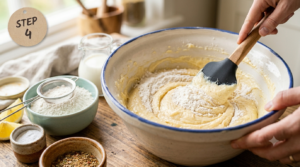
Step 4: Fold in the Dry Ingredients
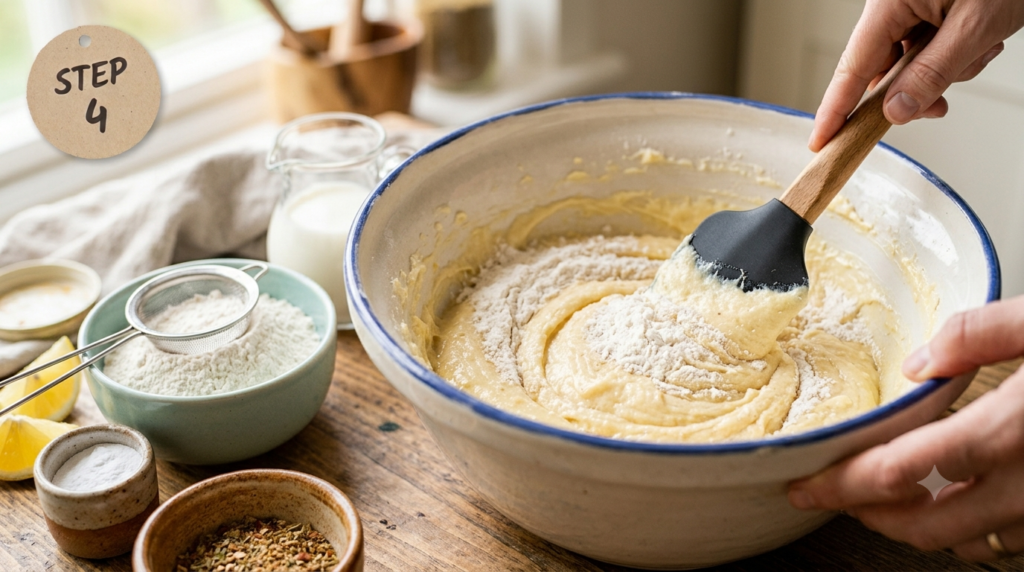
Sift the self-raising flour, baking powder, and salt into the butter mixture. Gently fold everything together using a spatula until no dry flour remains. Add the milk gradually to create a soft, spoonable batter. Avoid overmixing because too much mixing can make the finished sponge dense rather than light and fluffy.
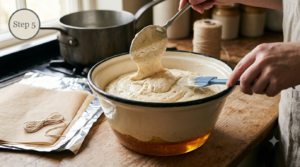
Step 5: Fill the Basin and Prepare for Steaming
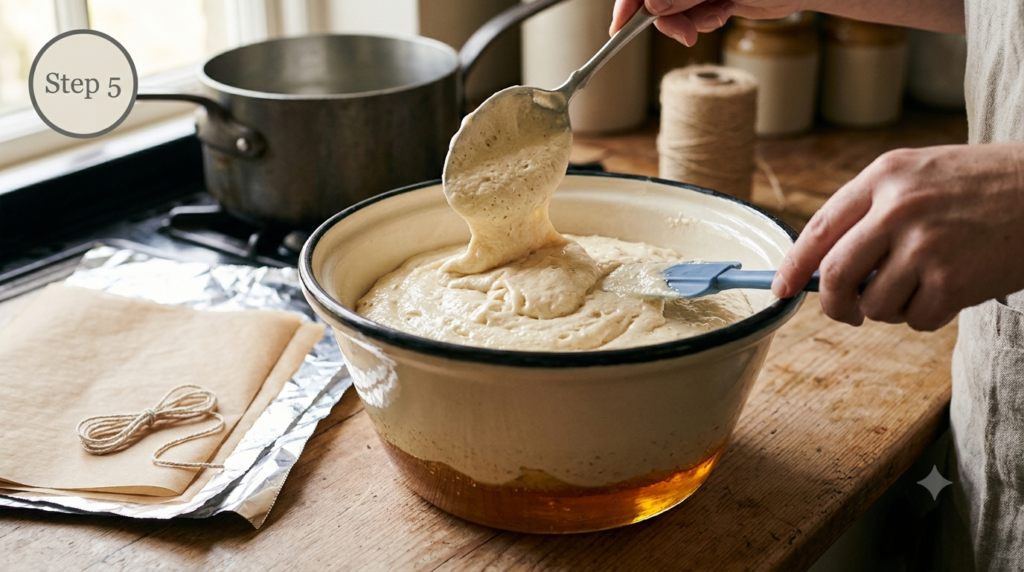
Spoon the sponge mixture carefully over the golden syrup in the prepared pudding basin. Spread the top evenly without pressing the batter down too firmly. Cover the basin with a sheet of baking parchment followed by aluminium foil, making a small pleat in the centre to allow room for the pudding to rise. Secure the covering with kitchen string, then place the basin on a trivet inside a large saucepan containing gently simmering water.
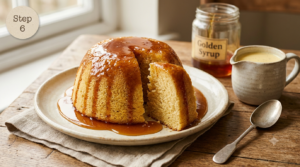
Step 6: Steam, Turn Out, and Serve
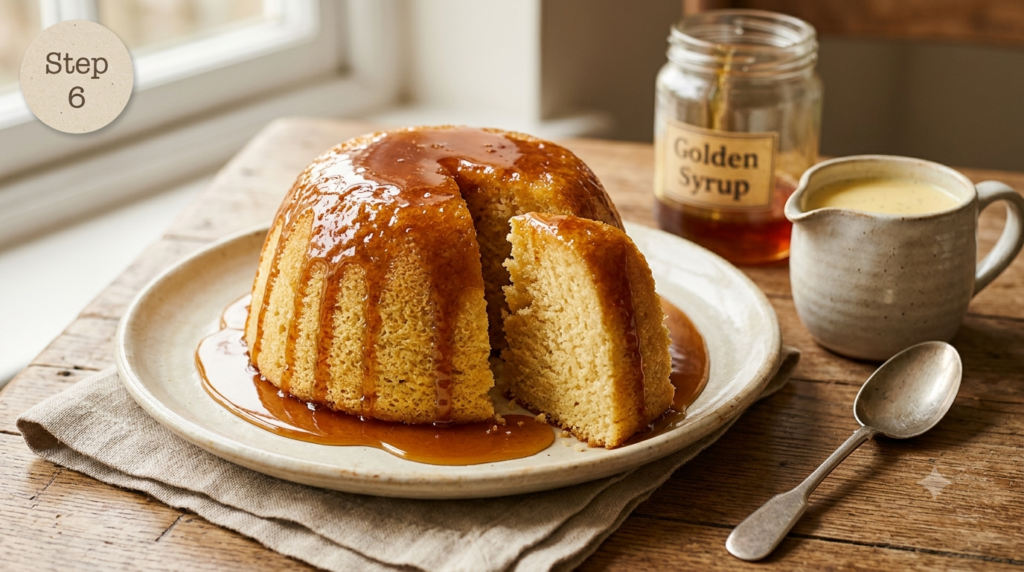
Cover the saucepan with a lid and steam the pudding for approximately 1 hour 30 minutes, checking the water level occasionally and adding boiling water when necessary. The pudding is ready when a skewer inserted into the sponge comes out clean or with a few moist crumbs. Carefully remove the basin and allow it to rest for 5 minutes. Remove the covering, loosen the edges with a knife, and turn the pudding onto a serving plate so the golden syrup flows over the sponge. Serve warm with custard or cream.
Tips for the Best Treacle Sponge Pudding Recipe
A few simple techniques can help you achieve a beautifully risen sponge with a sticky, delicious topping.
- Use room-temperature ingredients: Softened butter and room-temperature eggs combine more easily and create a smoother batter.
- Cream properly: Beat the butter and sugar until pale and fluffy to incorporate enough air into the sponge.
- Avoid overmixing: Fold the flour gently to keep the pudding light and tender.
- Use enough golden syrup: A generous layer at the bottom creates the classic sticky topping.
- Cover the basin properly: Baking parchment and foil prevent water from entering the pudding while allowing it room to rise.
- Maintain a gentle simmer: Boiling water too vigorously can cause uneven cooking.
- Check the water level: Never allow the saucepan to boil dry during steaming.
- Allow a short resting time: Resting for a few minutes makes the pudding easier to turn out.
Variations to Try
Treacle Sponge Pudding with Lemon
Add finely grated lemon zest to the sponge batter and a little lemon juice to the golden syrup. The citrus flavour balances the sweetness and gives the pudding a refreshing twist.
Treacle Sponge Pudding with Ginger
Add ½ teaspoon of ground ginger to the flour mixture for a warm, gently spiced flavour. You can also add a small amount of finely chopped stem ginger for extra texture.
Chocolate Treacle Sponge Pudding
For a chocolate version, replace approximately 20 g of the flour with cocoa powder. Fold it into the dry ingredients and prepare the pudding as usual. The chocolate sponge pairs wonderfully with golden syrup.
Treacle Sponge Pudding with Orange
Add finely grated orange zest to the batter and a small splash of orange juice to the golden syrup. This gives the traditional pudding a lovely citrus aroma.
Treacle Sponge Pudding Without Golden Syrup
If you cannot find golden syrup, you can use light corn syrup or a mild honey as an alternative. The flavour will be slightly different, but the pudding will still be delicious. Golden syrup is recommended for the most traditional taste.
What to Serve with Treacle Sponge Pudding
This warm treacle sponge pudding is delicious on its own, but the right accompaniment makes it even more enjoyable.
- Vanilla custard: The classic British pairing. Warm custard complements the sticky syrup and soft sponge.
- Pouring cream: A little cold cream creates a lovely contrast with the warm pudding.
- Vanilla ice cream: The combination of hot sponge and melting ice cream makes a delicious dessert.
- Whipped cream: Lightly whipped cream adds a soft, creamy texture.
- Fresh berries: Strawberries or raspberries provide a little freshness and balance the sweetness.
- Crème fraîche: Its slightly tangy flavour works beautifully with the rich golden syrup.
How to Store and Reheat Treacle Sponge Pudding
Allow leftover treacle sponge pudding to cool completely before storing it. Transfer the remaining pudding to an airtight container and refrigerate for up to 3 days. Keep any leftover golden syrup topping with the sponge to help maintain its moisture.
To reheat individual portions, place them in a microwave-safe dish and heat for approximately 30–60 seconds, depending on the portion size and microwave power. Check that the centre is hot before serving. You can also reheat the pudding gently in a covered oven-safe dish at 160°C (320°F) until warmed through.
For longer storage, wrap individual portions tightly and freeze in a suitable freezer-safe container for up to 2 months. Defrost overnight in the refrigerator before reheating. The sponge may become slightly softer after freezing, but the golden syrup helps keep it moist.
You may also like Chicken Tikka Marinade Recipe.
Common Mistakes to Avoid
- Using cold butter: Cold butter is difficult to cream with sugar and may produce a denser sponge.
- Overmixing the batter: Excessive mixing can make the pudding heavy instead of light and fluffy.
- Adding too much liquid: Too much milk can make the batter overly loose and affect the final texture.
- Covering the basin incorrectly: Poorly secured foil can allow water to enter and make the sponge soggy.
- Steaming at too high a temperature: Vigorous boiling can cause uneven cooking.
- Allowing the saucepan to run dry: Always check the water level during steaming.
- Turning out immediately: Resting the pudding briefly helps it release from the basin more easily.
- Skipping the doneness test: Check the centre with a skewer before removing the pudding from the heat.
Nutrition Information
The following nutrition values are estimates per serving, assuming the recipe makes six portions. Actual values may vary depending on the brands of butter, sugar, flour, and golden syrup used. These estimates do not include additional custard, cream, or ice cream.
| Nutrient | Approximate Amount per Serving |
|---|---|
| Calories | 390 kcal |
| Protein | 5 g |
| Carbohydrates | 55 g |
| Fat | 17 g |
| Saturated Fat | 10 g |
| Fibre | 1 g |
| Sugar | 36 g |
| Sodium | 180 mg |
Final Thoughts
This Treacle Sponge Pudding Recipe is a wonderful way to enjoy traditional British home baking. With its soft, fluffy sponge and rich golden syrup topping, it delivers all the comfort and sweetness you want from a classic steamed dessert.
It is simple enough to prepare for a family dinner and delicious enough to serve after a special Sunday lunch. Pair it with warm custard, pouring cream, or vanilla ice cream for a comforting homemade dessert that everyone can enjoy.
Once you try this old-fashioned pudding, it may become one of your favourite recipes for cold evenings and cosy family gatherings.
Frequently Asked Questions
Is treacle sponge pudding made with black treacle?
Traditional treacle sponge pudding is usually made with golden syrup rather than black treacle. Golden syrup provides a lighter caramel-like sweetness, while black treacle has a stronger, darker, and slightly bitter flavour.
Can I make treacle sponge pudding without a pudding basin?
Yes. You can use a heatproof bowl or another suitable steaming-safe container. Make sure it is large enough to allow the sponge to rise and can be securely covered with baking parchment and foil.
How do I know when treacle sponge pudding is cooked?
Insert a skewer into the centre of the sponge. If it comes out clean or with a few moist crumbs and no wet batter, the pudding is ready. The cooking time may vary depending on the size and shape of your basin.
Can I make treacle sponge pudding ahead of time?
Yes. You can prepare and steam the pudding in advance, then cool and refrigerate it. Reheat it gently before serving, making sure it is hot throughout.
Why is my treacle sponge pudding dense?
A dense pudding can result from overmixing the batter, using cold ingredients, or not creaming the butter and sugar sufficiently. For a lighter sponge, use softened butter and fold in the flour gently.
Can I bake treacle sponge pudding instead of steaming it?
Yes. You can prepare the same batter in an oven-safe pudding dish and bake it in a water bath. However, the texture will be slightly different from traditionally steamed treacle sponge pudding.
Can I use honey instead of golden syrup?
Honey can be used as an alternative, although it has a different flavour and consistency. Light corn syrup is another option. For the most traditional taste, golden syrup is the best choice.
Recipe Card
Treacle Sponge Pudding Recipe
Ingredients
Equipment
Method
- Grease a 1.2-litre pudding basin generously with softened butter, making sure to cover the bottom and sides. Pour the golden syrup into the bottom of the basin and spread it gently so it forms an even layer. If you enjoy a slightly tangy flavour, stir a little lemon juice into the syrup before adding it. Set the prepared basin aside while you make the sponge batter.
- Place the softened butter and caster sugar in a large mixing bowl. Beat them together using an electric hand mixer or wooden spoon until the mixture becomes pale, light, and fluffy. This process incorporates air into the mixture, helping create a soft sponge texture. Scrape down the sides of the bowl occasionally to ensure the butter and sugar are evenly combined.
- Add the eggs one at a time, beating well after each addition. This helps the mixture remain smooth and prevents it from separating. Stir in the vanilla extract and mix until combined. If the batter looks slightly curdled, don’t worry; adding the flour gradually in the next step will help bring everything together.
- Sift the self-raising flour, baking powder, and salt into the butter mixture. Gently fold everything together using a spatula until no dry flour remains. Add the milk gradually to create a soft, spoonable batter. Avoid overmixing because too much mixing can make the finished sponge dense rather than light and fluffy.
- Spoon the sponge mixture carefully over the golden syrup in the prepared pudding basin. Spread the top evenly without pressing the batter down too firmly. Cover the basin with a sheet of baking parchment followed by aluminium foil, making a small pleat in the centre to allow room for the pudding to rise. Secure the covering with kitchen string, then place the basin on a trivet inside a large saucepan containing gently simmering water.
- Cover the saucepan with a lid and steam the pudding for approximately 1 hour 30 minutes, checking the water level occasionally and adding boiling water when necessary. The pudding is ready when a skewer inserted into the sponge comes out clean or with a few moist crumbs. Carefully remove the basin and allow it to rest for 5 minutes. Remove the covering, loosen the edges with a knife, and turn the pudding onto a serving plate so the golden syrup flows over the sponge. Serve warm with custard or cream.
Video
Notes
- Use room-temperature ingredients: Softened butter and room-temperature eggs combine more easily and create a smoother batter.
- Cream properly: Beat the butter and sugar until pale and fluffy to incorporate enough air into the sponge.
- Avoid overmixing: Fold the flour gently to keep the pudding light and tender.
- Use enough golden syrup: A generous layer at the bottom creates the classic sticky topping.
- Cover the basin properly: Baking parchment and foil prevent water from entering the pudding while allowing it room to rise.
- Maintain a gentle simmer: Boiling water too vigorously can cause uneven cooking.
- Check the water level: Never allow the saucepan to boil dry during steaming.
- Allow a short resting time: Resting for a few minutes makes the pudding easier to turn out.
