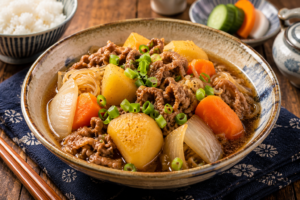
Ingredients
Equipment
Method
Step 1: Prepare the Ingredients
- Peel the potatoes and cut them into evenly sized chunks so they cook at the same rate. Slice the onion into wedges and cut the carrots into thick rounds. If you’re using shirataki noodles, rinse them thoroughly under cold water and drain well. Having everything prepared before you begin makes the cooking process smooth and efficient.
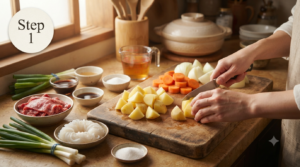
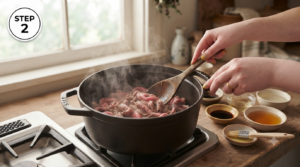
Step 2: Cook the Beef
- Heat the vegetable oil in a large Dutch oven or deep saucepan over medium heat. Add the thinly sliced beef and cook for 2 to 3 minutes, stirring gently until it loses its pink color. Avoid overcooking the beef at this stage since it will continue cooking while the stew simmers.
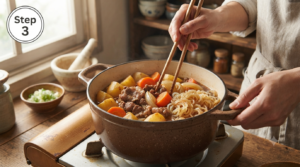
Step 3: Add the Vegetables
- Add the potatoes, onions, carrots, and optional shirataki noodles to the pot. Stir gently for about 2 minutes so the vegetables become lightly coated with the flavorful beef juices before adding the broth.
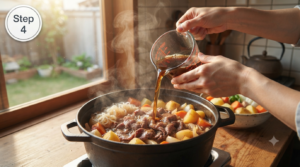
Step 4: Simmer the Stew
- Pour in the dashi stock, soy sauce, mirin, sake, and sugar. Stir gently until the sugar dissolves. Bring the stew to a gentle boil, then reduce the heat to low. Cover the pot partially with a lid and let everything simmer for about 25 to 30 minutes, allowing the vegetables to become tender while absorbing the delicious broth.
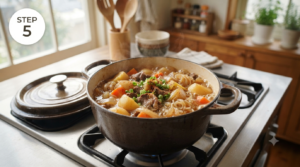
Step 5: Reduce the Broth
- Remove the lid during the final 5 minutes of cooking and allow the broth to reduce slightly. The liquid should become richer and lightly coat the vegetables without becoming thick. Taste the broth and adjust the seasoning with a little more soy sauce if desired.
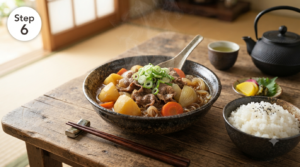
Step 6: Garnish and Serve
- Once the vegetables are tender and the broth has slightly reduced, turn off the heat and let the nikujaga rest for about 5 minutes. This short resting time allows the beef and vegetables to absorb even more of the savory broth, making the flavors richer and more balanced. Ladle the stew into individual serving bowls and garnish with freshly sliced green onions for a pop of color and freshness. Serve hot with steamed Japanese rice for a comforting and authentic meal.
Video
Notes
Nikujaga is a complete comfort meal on its own, but it pairs wonderfully with traditional Japanese side dishes.
- Steamed Japanese rice
- Miso soup
- Pickled vegetables
- Cucumber salad
- Steamed spinach with sesame dressing
- Edamame
- Tamagoyaki (Japanese rolled omelet)
- Seaweed salad
- Grilled salmon
- Green tea