
Some of our most treasured family memories happen around the table. You might remember the smell of a grandmother’s bread baking on a Sunday morning, a holiday dish that only appears once a year, or a soup that always seemed to make everything better. Recipes like these are more than lists of ingredients. They hold a family’s history, traditions and love. Too often, though, they live only in someone’s memory or on a stained index card that could be lost at any moment.
A family recipe book is a beautiful way to preserve those dishes and the stories behind them, so they can be cooked, shared and passed down for generations.
Why a Family Recipe Book Matters
Many cherished recipes are never written down. They’re cooked by feel, with a pinch of this and a handful of that, and passed on by watching rather than reading. When the person who made them is no longer around, those recipes can disappear. A family recipe book keeps them safe before that happens.
Beyond preserving the food itself, a recipe book captures something even more valuable: the people and memories connected to each dish. It can include the name of the person who created a recipe, the occasions it was served and the stories that made it special. Years from now, flipping through those pages will feel like sitting down for a meal with the people you love.
Choosing the Right Book
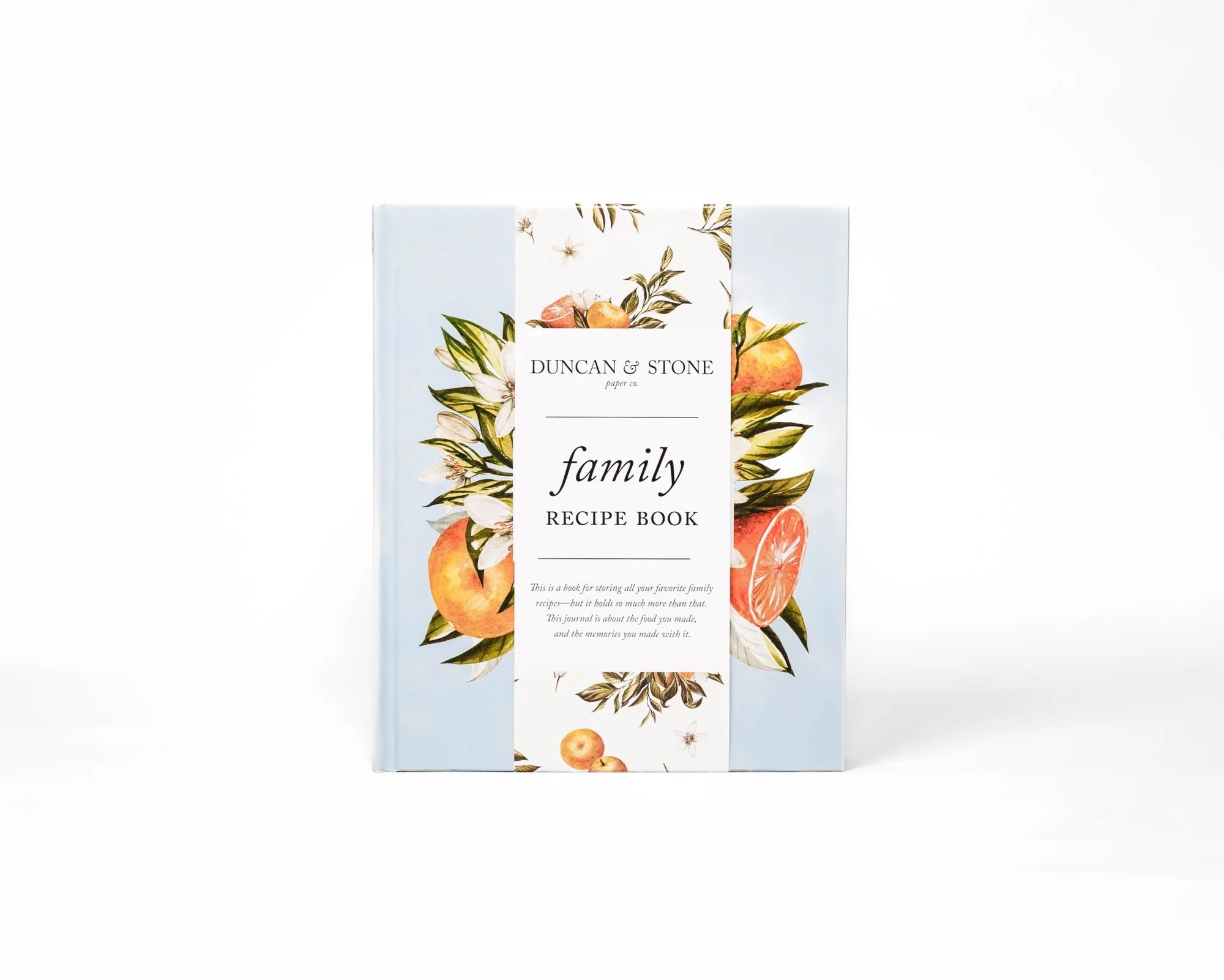
A family recipe book should be built to last, since it will hopefully be used and handed down for decades. Look for a sturdy, durable cover that can handle life in the kitchen, along with thick, quality paper that holds up to frequent use. A binding that lies flat is especially helpful, so the book stays open on the counter while you cook. Organized sections or tabs make it easy to find what you’re looking for, and a pocket is useful for storing original recipe cards, clippings or notes.
Some recipe books are completely blank. Others include guided pages with space for ingredients, instructions, serving sizes and personal notes. A guided format helps keep everything consistent and makes the book easier for future generations to follow.
Gathering Your Family’s Recipes
The first step is collecting recipes from across your family. Start with the dishes that come up again and again at holidays, birthdays and Sunday dinners. Reach out to parents, grandparents, aunts, uncles and cousins, and ask about their favorite recipes, the ones they learned growing up and the dishes they’re known for.
If a family member cooks without written measurements, spend time in the kitchen with them. Watch closely, measure what they add, and take notes as you go. It may take a few attempts to get a recipe exactly right, but those hours together often become memories in their own right. Don’t forget to look through old recipe boxes, handwritten cards and cookbooks with notes in the margins, since these can be treasure troves of family history.
Organizing Your Recipe Book
Once you’ve gathered your recipes, decide how you’d like to organize them. Many families arrange their books by course, with sections for breakfasts, appetizers, soups, main dishes, sides, breads, desserts and drinks. Others prefer to organize by occasion, grouping holiday favorites, birthday treats and everyday meals together. Some families even give each branch of the family its own section, so every relative’s specialties are kept together.
Whatever approach you choose, aim for consistency. Writing each recipe in the same format, with ingredients listed first and clear step-by-step instructions, makes the book easier to use for anyone who picks it up.
Add the Stories Behind the Recipes
What truly sets a family recipe book apart from an ordinary cookbook is the personal touch. Alongside each recipe, write a few lines about where it came from and why it matters. Note who first made it, when it’s traditionally served and any memories connected to it. You might mention that a particular pie always appeared at Thanksgiving, or that a casserole was brought to every new neighbor on the street.
Small details make a big difference. Write down any helpful tips, such as which pan works best or a secret ingredient that makes all the difference. Include a family member’s favorite saying from the kitchen, or a funny story about a recipe gone wrong. If you have photos of the dish or of family members cooking together, add them to the pages as well.
Keeping the Tradition Alive
A family recipe book is never really finished. As new family members join and new traditions begin, keep adding to it. Include the recipes your children love, the dishes you create yourself and the meals that become part of new celebrations. Encourage family members to write in their own handwriting where possible. Years from now, seeing a loved one’s handwriting on the page will be one of the most meaningful parts of the book.
A Gift Worth Sharing
A family recipe book also makes a thoughtful gift for weddings, holidays, housewarmings or a child leaving home for the first time. Some families create a single heirloom book, while others make copies so every household can have one. However you share it, it carries the same message: these are the flavors of home, and they belong to you.
Final Thoughts
Creating a family recipe book is a labor of love, but it’s one that brings families closer together. By gathering recipes, recording the stories behind them and passing the book down, you ensure that your family’s favorite dishes and the memories connected to them will be enjoyed for many years to come.
