
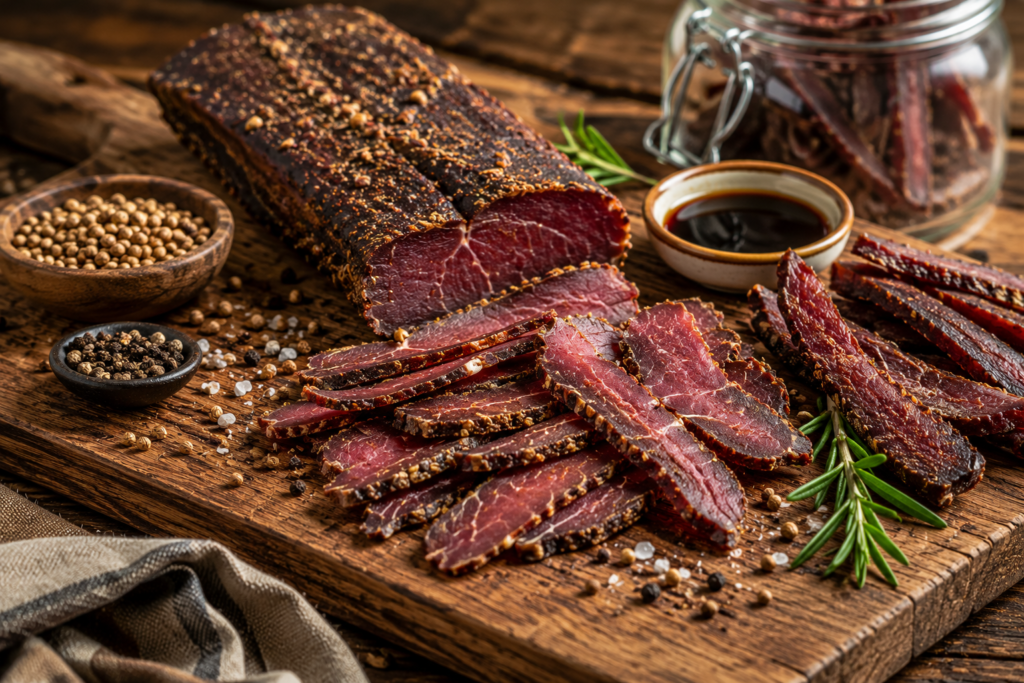
Welcome, and get ready to discover one of South Africa’s most beloved snacks! If you’ve never made a homemade Biltong Recipe before, you’re in for a rewarding culinary experience. Unlike traditional beef jerky, biltong is air-dried rather than heat-dried, giving it a richer flavor, a tender bite, and a unique texture that’s hard to resist. Whether you’re looking for a high-protein snack, preparing food for outdoor adventures, or simply want to try an authentic South African favorite, this recipe will guide you every step of the way.
Making biltong at home may sound intimidating at first, but it’s surprisingly straightforward. With quality beef, a flavorful vinegar-based marinade, a blend of aromatic spices, and a little patience while the meat dries, you’ll create delicious homemade biltong that’s far fresher and more flavorful than most store-bought versions.
Recipe Overview
- Category: Snack
- Cuisine: South African
- Servings: 8 people
- Prep Time: 20 minutes
- Drying Time: 4–6 days
- Total Time: Approximately 5 days
- Calories: Approximately 180 per serving
Why You’ll Love This Biltong Recipe
Homemade biltong offers incredible flavor while giving you complete control over the ingredients and seasoning.
- Rich, authentic South African flavor
- Naturally high in protein
- Easy to customize with your favorite spices
- No artificial preservatives
- Great for meal prep
- Long shelf life
- Perfect for hiking, camping, or road trips
- More flavorful than traditional jerky
What Is Biltong?
Biltong is a traditional South African cured meat snack that dates back hundreds of years. It is typically made from beef, although game meats like venison are also commonly used. Instead of being cooked or smoked, the meat is marinated in vinegar and spices before being slowly air-dried over several days.
The vinegar not only adds flavor but also helps preserve the meat, while coriander, black pepper, and coarse salt create the signature taste that makes biltong so distinctive. The result is meat that’s flavorful, slightly tangy, tender, and packed with protein.
Today, biltong has become popular around the world as a healthier snack alternative due to its high protein content and minimal processing.
Ingredients
One of the reasons homemade biltong is so rewarding is that it relies on simple ingredients rather than complicated curing mixtures. Choosing fresh, lean beef and quality spices makes all the difference, allowing the natural flavor of the meat to shine through while creating the authentic taste that biltong is known for.
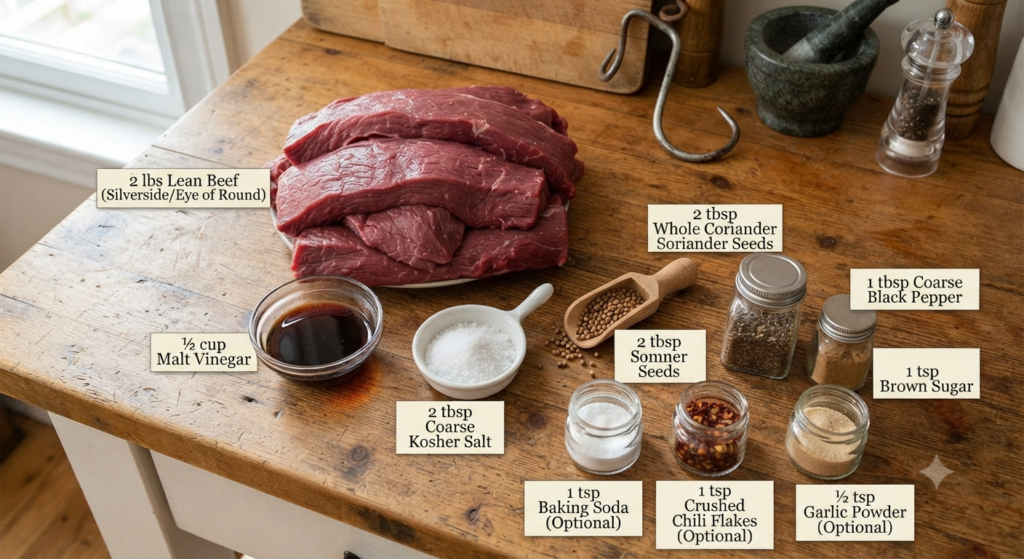
- 2 pounds lean beef (silverside, topside, or eye of round)
- ½ cup malt vinegar
- 2 tablespoons coarse kosher salt
- 2 tablespoons whole coriander seeds
- 1 tablespoon coarsely ground black pepper
- 1 teaspoon brown sugar
- 1 teaspoon baking soda (optional, for tenderness)
- 1 teaspoon crushed chili flakes (optional)
- ½ teaspoon garlic powder (optional)
Kitchen Equipment
You’ll need:
- Sharp knife
- Cutting board
- Mixing bowl
- Spice grinder or mortar and pestle
- Large zip-top bag or airtight container
- Hooks or butcher’s twine
- Biltong box or well-ventilated drying area
- Paper towels
How to Make Biltong Recipe
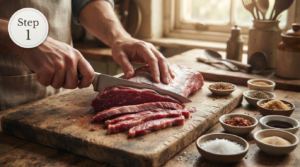
Step 1: Slice the Beef
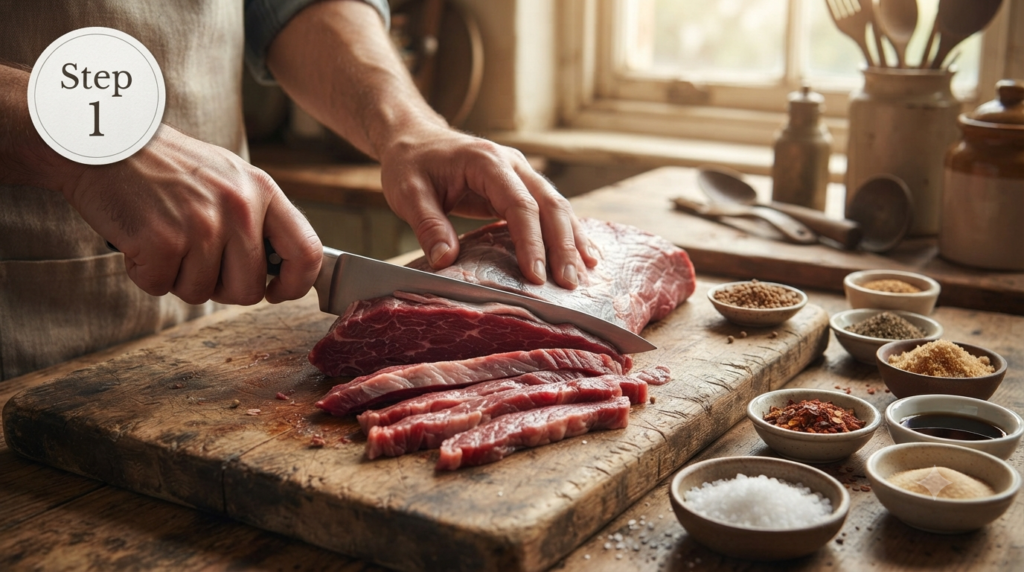
Choose a lean cut of beef and trim away any excess fat, as fat can spoil during the drying process. Slice the meat into strips approximately 1 inch wide and ½ inch thick, always cutting with the grain for traditional biltong. Uniform strips ensure even curing and drying.
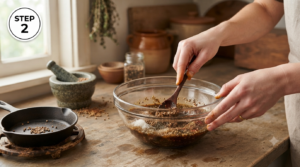
Step 2: Prepare the Marinade
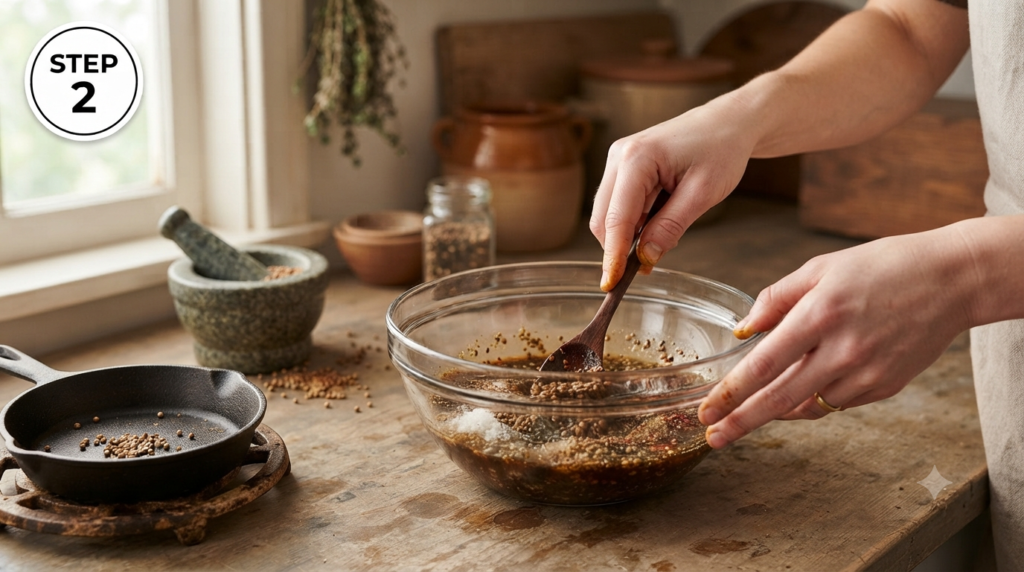
Toast the whole coriander seeds in a dry skillet for a few minutes until fragrant, then coarsely crush them using a spice grinder or mortar and pestle. In a large bowl, combine the crushed coriander, coarse salt, black pepper, brown sugar, garlic powder, and chili flakes. Pour in the malt vinegar and stir everything together.
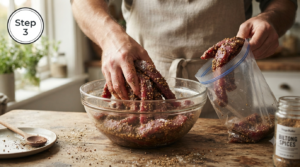
Step 3: Marinate the Beef
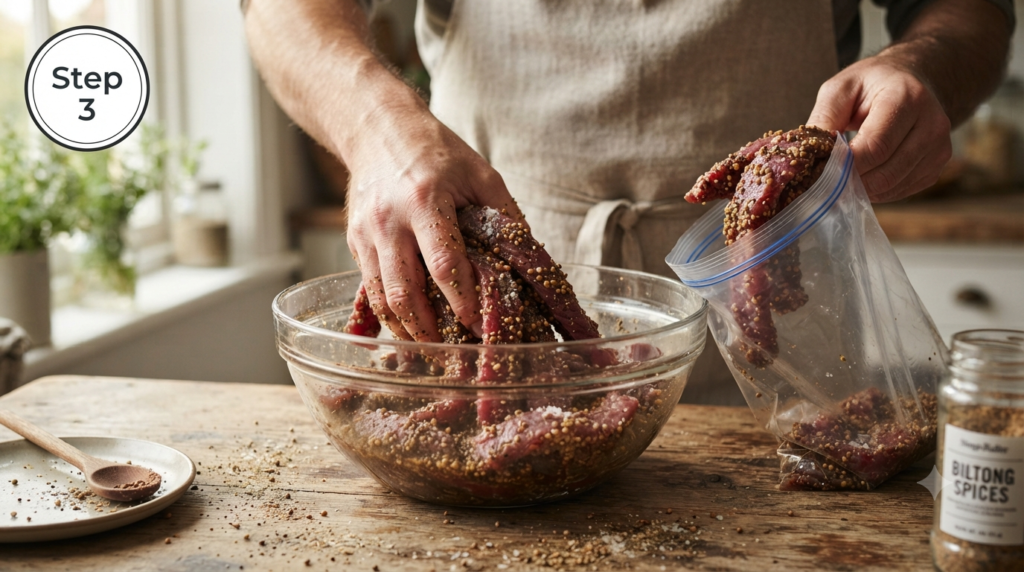
Coat each strip of beef thoroughly in the vinegar and spice mixture. Place the strips into a zip-top bag or airtight container, making sure every piece is evenly covered. Refrigerate for 12 to 24 hours, turning the meat once or twice so the marinade distributes evenly.
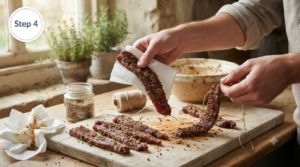
Step 4: Prepare for Drying
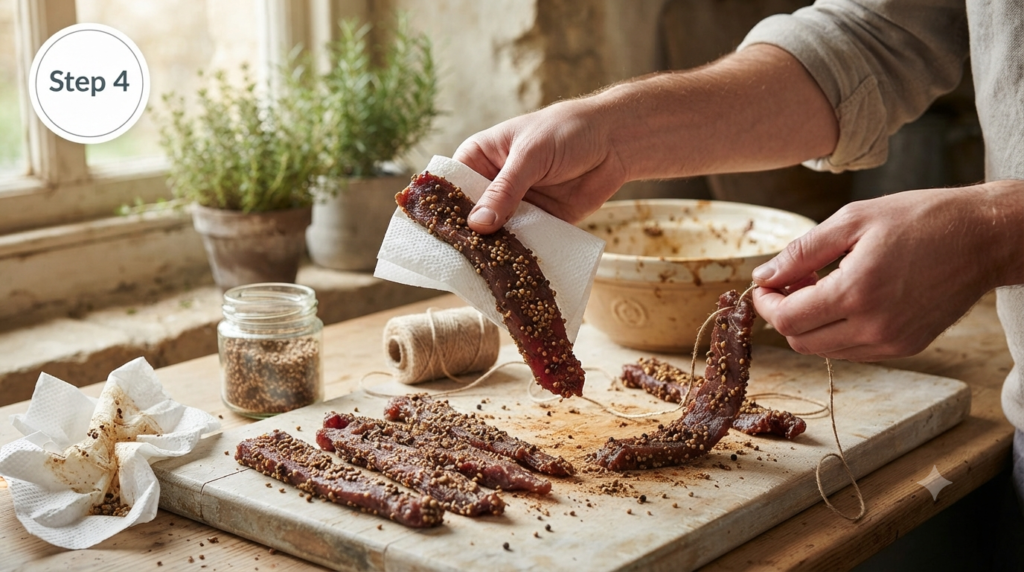
Remove the beef from the marinade and gently pat each strip dry with paper towels. Attach butcher’s twine or hooks to each strip so they can hang freely. Proper airflow around every piece is essential for successful drying.
Step 5: Air-Dry the Biltong
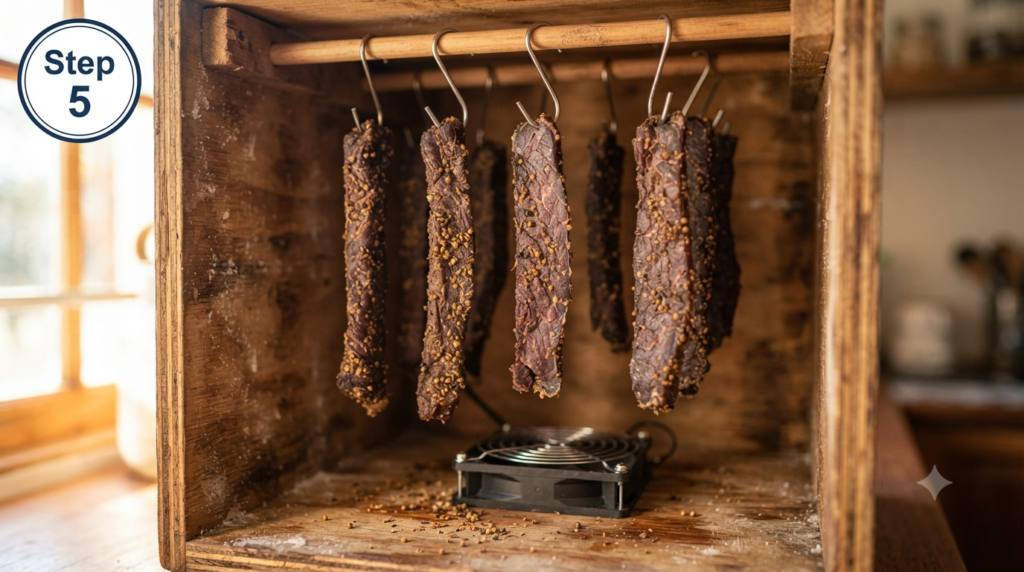
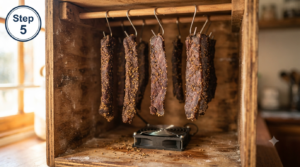
Hang the beef strips inside a biltong box or in a clean, cool, well-ventilated area away from direct sunlight. Allow the meat to dry for 4 to 6 days, depending on the thickness of the strips and your preferred texture. Thicker pieces remain slightly softer inside, while thinner strips become firmer and drier.
Step 6: Slice and Enjoy
Once the biltong has reached your preferred level of dryness, remove it from the hooks and place it on a clean cutting board. Using a sharp knife, slice the meat into thin strips across the grain for a more tender bite.
Serve it immediately as a protein-packed snack, add it to charcuterie boards, or use it as a flavorful topping for salads and sandwiches. Homemade biltong is best enjoyed fresh, allowing you to fully appreciate its rich, savory flavor and satisfying texture.
Recipe Video Guide
Expert Tips for the Best Biltong Recipe
Making authentic biltong is as much about patience as it is about ingredients. Keep these tips in mind for consistently great results.
- Use lean cuts of beef with minimal fat to prevent spoilage during drying.
- Always use coarse salt, as it seasons the meat more evenly.
- Toast the coriander seeds before crushing them to enhance their aroma.
- Allow enough airflow around each strip while drying.
- Avoid humid environments, as excess moisture can slow the drying process.
- Taste a small piece after four days to check the texture before drying longer.
- Use a dedicated biltong box with a small fan if you live in a humid climate.
Delicious Variations
Traditional South African Biltong
Keep the seasoning simple with malt vinegar, coriander, coarse salt, and black pepper for the classic flavor enjoyed across South Africa.
Garlic Pepper Biltong
Add extra garlic powder and freshly cracked black pepper for a bold, savory version that pairs wonderfully with cheese.
Spicy Chili Biltong
Increase the crushed chili flakes or add cayenne pepper for a spicy kick that’s perfect for those who enjoy heat.
Smoky Paprika Biltong
Mix smoked paprika into the spice blend to create a subtle smoky flavor while maintaining the traditional curing process.
Brown Sugar & Black Pepper Biltong
Add a little more brown sugar for a gentle balance between sweetness, saltiness, and spice.
What to Serve with Biltong
Although it’s delicious on its own, homemade biltong pairs well with a variety of foods and drinks.
- Cheese boards
- Mixed nuts
- Fresh fruit
- Crackers
- Olives
- Pickles
- Avocado salad
- Boiled eggs
- Sandwiches
- Wraps
- Cold beverages
- South African wines
Storage & Shelf Life
Proper storage helps maintain the flavor and texture of homemade biltong.
Room Temperature
Store in a paper bag or breathable container in a cool, dry place for up to 1 week.
Refrigerator
Keep biltong in an airtight container for up to 3 weeks.
Freezer
Freeze tightly wrapped portions for up to 6 months. Thaw in the refrigerator before serving.
Storage Tip
Avoid sealing freshly dried biltong immediately if it still contains slight moisture, as condensation can reduce its shelf life.
Common Mistakes to Avoid
Using Fatty Cuts of Beef
Too much fat can spoil during the drying process and shorten the shelf life of your biltong.
Skipping the Vinegar Marinade
The vinegar not only adds flavor but also plays an important role in preserving the meat.
Drying in a Humid Environment
Poor airflow and high humidity increase the risk of mold and uneven drying.
Slicing Against the Grain Too Early
Traditionally, the meat is dried first and sliced just before serving to preserve freshness.
Over-Drying the Meat
Leaving the biltong hanging for too long can make it excessively tough and chewy.
Nutrition Information
| Nutrient | Amount (Per Serving) |
|---|---|
| Calories | 180 kcal |
| Protein | 30 g |
| Carbohydrates | 2 g |
| Fat | 6 g |
| Saturated Fat | 2 g |
| Cholesterol | 75 mg |
| Sodium | 620 mg |
| Sugar | 1 g |
| Iron | 2.8 mg |
| Potassium | 420 mg |
Nutrition values are approximate and may vary depending on the cut of beef and seasoning used.
Final Thoughts
Homemade Biltong Recipe is proof that simple ingredients and traditional techniques can produce something truly exceptional. While it requires patience during the drying process, the reward is a flavorful, protein-rich snack with a distinctive taste and texture that sets it apart from ordinary jerky.
Whether you’re preparing snacks for hiking, adding something special to a charcuterie board, or simply exploring authentic South African cuisine, this recipe is well worth trying. Once you’ve mastered the basic method, you can experiment with different spice blends to create your own signature version while staying true to the rich heritage of this iconic cured meat.
You may also like Roasted Sweet Potatoes Recipe.
Frequently Asked Questions
Is biltong the same as beef jerky?
No. Although both are dried meat snacks, biltong is cured with vinegar and spices before being air-dried, while beef jerky is typically marinated and cooked or dehydrated with heat.
What is the best cut of beef for biltong?
Lean cuts such as silverside, topside, eye of round, or sirloin work best because they contain minimal fat and dry evenly.
How long does homemade biltong take to dry?
Most batches take 4 to 6 days, depending on the thickness of the meat, humidity, airflow, and your preferred texture.
Can I make biltong without a biltong box?
Yes. A clean, cool, well-ventilated area with consistent airflow can work, although a biltong box provides better control over drying conditions.
Why does biltong use vinegar?
Vinegar enhances the flavor, helps preserve the meat, and supports the curing process by creating an environment that’s less favorable for spoilage.
Can homemade biltong be frozen?
Yes. Properly wrapped biltong freezes well for several months and can be thawed in the refrigerator when needed.
Recipe Card
Perfect Biltong Recipe
Ingredients
Equipment
Method
- Choose a lean cut of beef and trim away any excess fat, as fat can spoil during the drying process. Slice the meat into strips approximately 1 inch wide and ½ inch thick, always cutting with the grain for traditional biltong. Uniform strips ensure even curing and drying.
- Toast the whole coriander seeds in a dry skillet for a few minutes until fragrant, then coarsely crush them using a spice grinder or mortar and pestle. In a large bowl, combine the crushed coriander, coarse salt, black pepper, brown sugar, garlic powder, and chili flakes. Pour in the malt vinegar and stir everything together.
- Coat each strip of beef thoroughly in the vinegar and spice mixture. Place the strips into a zip-top bag or airtight container, making sure every piece is evenly covered. Refrigerate for 12 to 24 hours, turning the meat once or twice so the marinade distributes evenly.
- Remove the beef from the marinade and gently pat each strip dry with paper towels. Attach butcher’s twine or hooks to each strip so they can hang freely. Proper airflow around every piece is essential for successful drying.
- Hang the beef strips inside a biltong box or in a clean, cool, well-ventilated area away from direct sunlight. Allow the meat to dry for 4 to 6 days, depending on the thickness of the strips and your preferred texture. Thicker pieces remain slightly softer inside, while thinner strips become firmer and drier.
- Once the biltong has reached your preferred level of dryness, remove it from the hooks and place it on a clean cutting board. Using a sharp knife, slice the meat into thin strips across the grain for a more tender bite.
- Serve it immediately as a protein-packed snack, add it to charcuterie boards, or use it as a flavorful topping for salads and sandwiches. Homemade biltong is best enjoyed fresh, allowing you to fully appreciate its rich, savory flavor and satisfying texture.
Video
Notes
- Cheese boards
- Mixed nuts
- Fresh fruit
- Crackers
- Olives
- Pickles
- Avocado salad
- Boiled eggs
- Sandwiches
- Wraps
- Cold beverages
- South African wines
