

Mung bean noodles, also known as glass noodles or cellophane noodles, are a popular ingredient in many Asian cuisines. Made from mung bean starch, these thin, translucent noodles have a delicate texture and a wonderful ability to absorb the flavors of sauces, vegetables, and spices. They are naturally gluten-free and make a great alternative to traditional wheat-based noodles.
This mung bean noodles recipe is simple, nutritious, and perfect for a quick lunch, dinner, or a refreshing meal prep option. Packed with vegetables and a flavorful sauce, it brings together a balance of taste, texture, and wholesome ingredients.
What Are Mung Bean Noodles?
Mung bean noodles are made from the starch of mung beans, small green legumes known for their nutritional value. When cooked, the noodles become soft and slightly chewy while remaining light and springy. Because they do not have a strong flavor of their own, they work beautifully with savory sauces, herbs, and spices.
These noodles are commonly used in dishes such as stir-fries, soups, salads, and spring roll fillings. Their versatility makes them a favorite ingredient for both traditional and modern recipes.
Ingredients
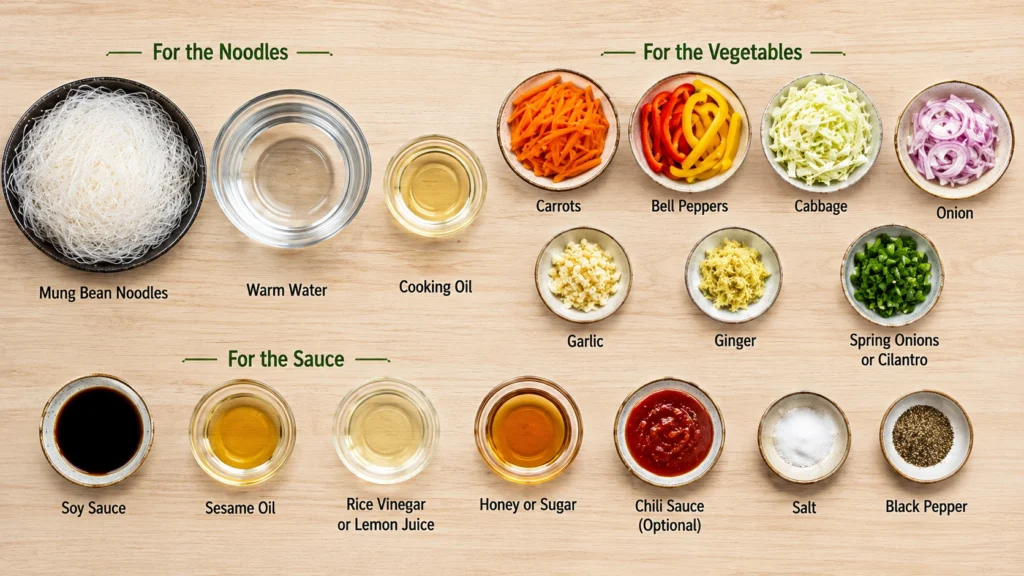
For the noodles:
- 200 grams mung bean noodles
- 2 cups warm water (for soaking)
- 1 tablespoon cooking oil
For the vegetables:
- 1 cup sliced carrots
- 1 cup bell peppers, thinly sliced
- 1 cup shredded cabbage
- 1 small onion, sliced
- 2 cloves garlic, minced
- 1 teaspoon grated ginger
- Fresh spring onions or cilantro for garnish
For the sauce:
- 2 tablespoons soy sauce
- 1 tablespoon sesame oil
- 1 tablespoon rice vinegar or lemon juice
- 1 teaspoon honey or sugar
- 1 teaspoon chili sauce (optional)
- Salt and black pepper to taste
Equipment Needed
- Measuring spoons and cups
- Mixing bowl for soaking noodles
- Colander for draining
- Wok or frying pan for cooking
- Knife and cutting board for vegetables
- Small bowl for preparing sauce
How to Make Mung Bean Noodles
Step 1: Prepare the noodles
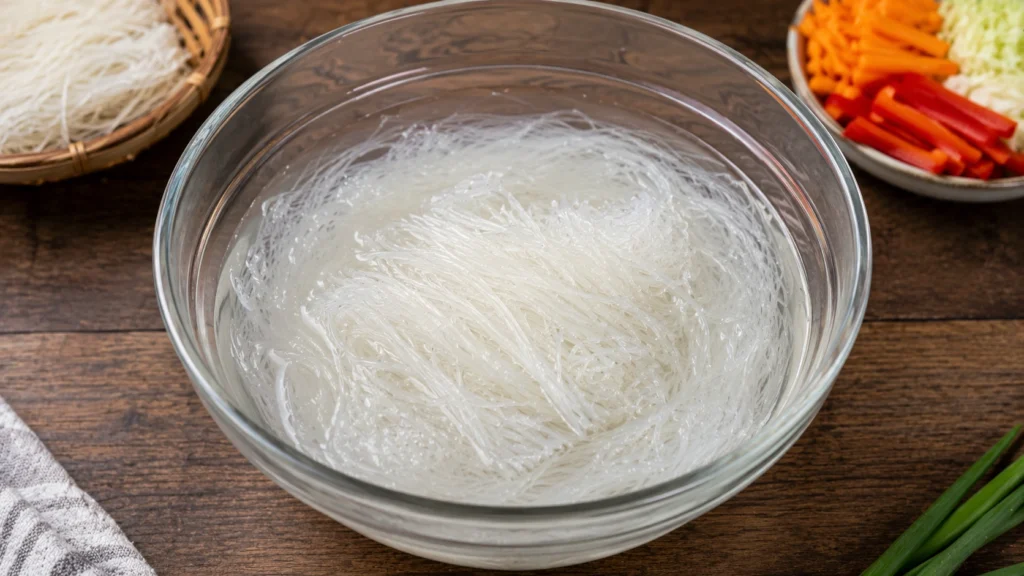
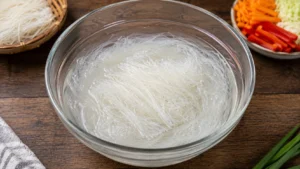
Place the mung bean noodles in a bowl and cover them with warm water. Let them soak for about 10–15 minutes or until they become soft. Drain the water and set the noodles aside.
Avoid over-soaking the noodles, as they can become too soft and lose their pleasant chewy texture.
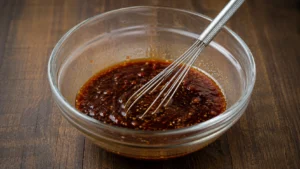
Step 2: Prepare the sauce
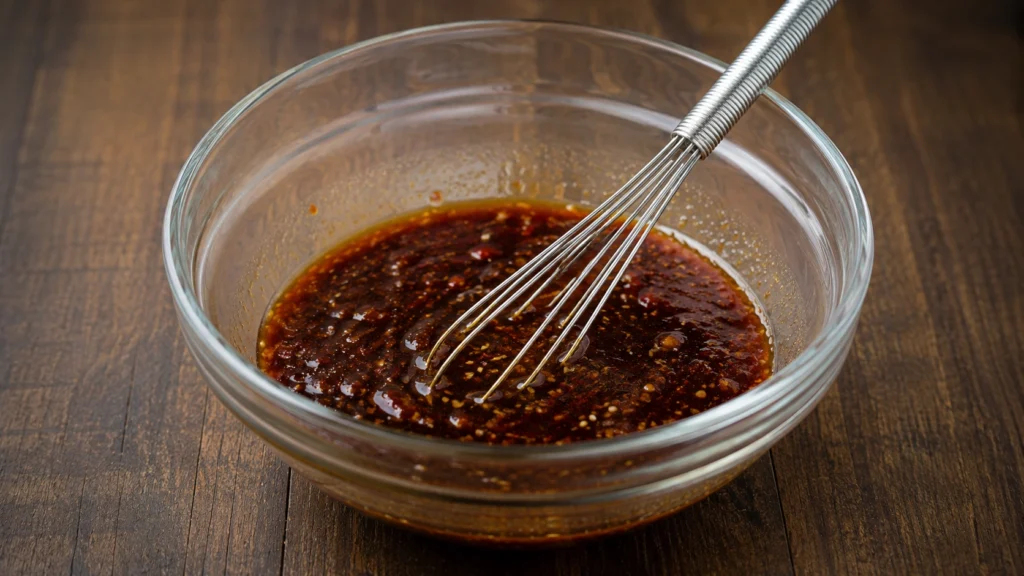
In a small bowl, mix soy sauce, sesame oil, rice vinegar, honey or sugar, and chili sauce. Stir well until all ingredients combine. Adjust the flavors according to your preference.
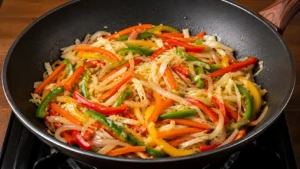
Step 3: Cook the vegetables
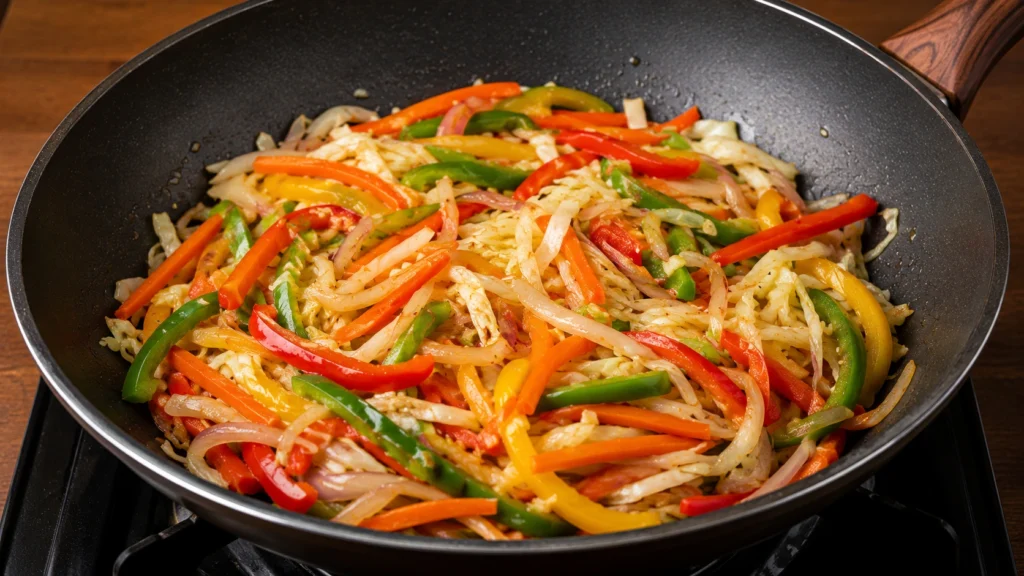
Heat oil in a pan over medium heat. Add garlic and ginger, cooking for a few seconds until fragrant. Add onions, carrots, bell peppers, and cabbage. Stir-fry the vegetables for 3–5 minutes until they are slightly tender but still crisp.
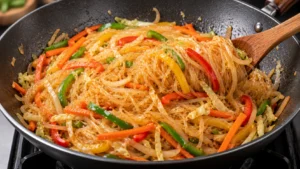
Step 4: Combine noodles and flavors
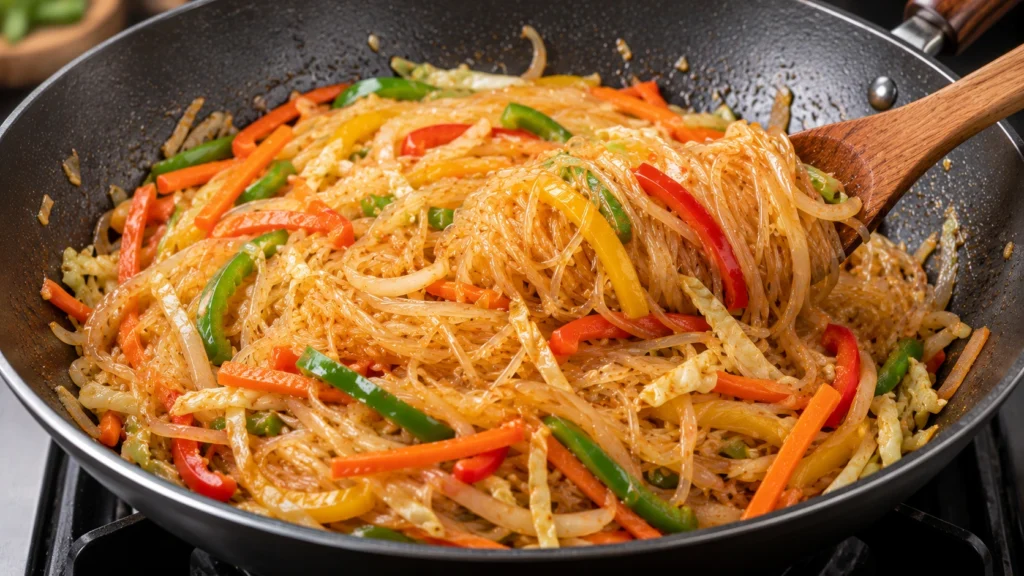
Add the soaked mung bean noodles to the pan with the vegetables. Pour the prepared sauce over the noodles and toss everything together until the noodles are evenly coated.
Cook for another 2–3 minutes, allowing the noodles to absorb the flavors.
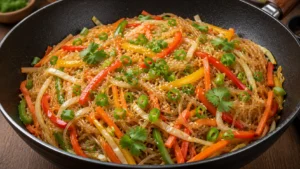
Step 5: Garnish and serve
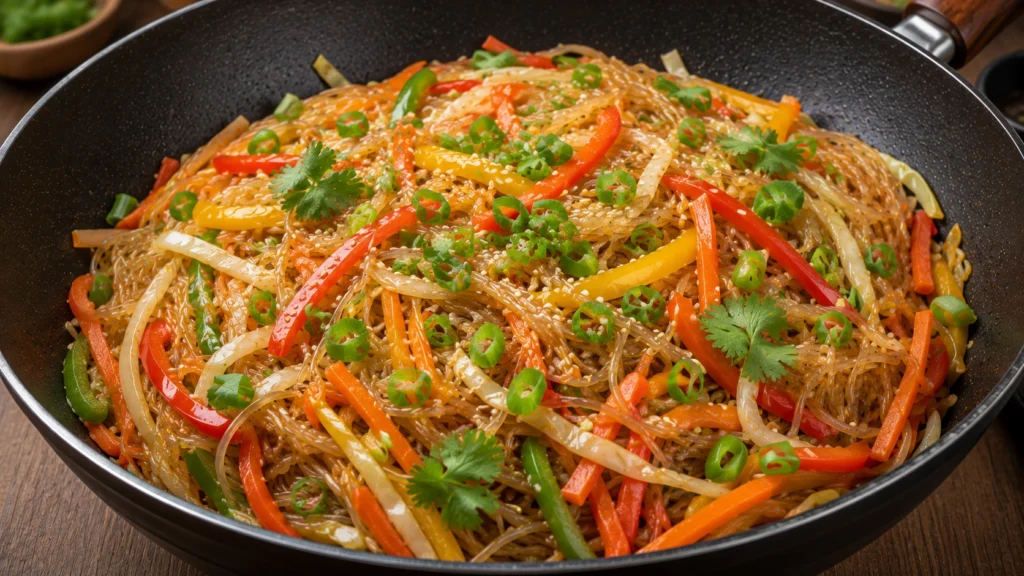
Turn off the heat and garnish with chopped spring onions, cilantro, or sesame seeds. Serve warm as a main dish or as a side with your favorite Asian-inspired meals.
Tips for Perfect Mung Bean Noodles
- Do not overcook the noodles: Mung bean noodles cook quickly and can become mushy if left in heat for too long.
- Soak before cooking: Proper soaking helps achieve the perfect soft and chewy texture.
- Add protein if desired: You can include tofu, eggs, chicken, shrimp, or mushrooms for a more filling meal.
- Balance the flavors: A good noodle dish should have a mix of salty, sweet, sour, and spicy flavors.
- Use fresh vegetables: Crisp vegetables add color, nutrition, and texture to the dish.
Health Benefits of Mung Bean Noodles
Mung beans are known for being a good source of plant-based nutrients. Mung bean noodles can be a lighter meal option and are naturally gluten-free, making them suitable for people who avoid gluten-containing grains.
When combined with vegetables and protein-rich ingredients, this dish can provide a balanced meal with carbohydrates, fiber, vitamins, and minerals.
Variations You Can Try
Spicy Mung Bean Noodles
Add extra chili oil, red pepper flakes, or spicy sauce for a bold and fiery version.
Mung Bean Noodle Salad
Mix cooked noodles with cucumber, carrots, herbs, and a tangy dressing for a refreshing cold salad.
Coconut Curry Mung Bean Noodles
Add coconut milk and curry spices to create a creamy, aromatic noodle dish.
Serving Suggestions
- Serve mung bean noodles hot as a quick lunch or dinner.
- Garnish with spring onions, cilantro, sesame seeds, or crushed peanuts for extra flavor.
- Pair with stir-fried vegetables, tofu, chicken, or shrimp for a complete meal.
- Serve alongside Asian-inspired soups, spring rolls, or salads.
- Add chili oil or extra sauce for a spicier and more flavorful version.
Storage Tips
- Store cooked mung bean noodles in an airtight container in the refrigerator for up to 3 days.
- Allow noodles to cool completely before storing.
- Add a small amount of oil before refrigerating to prevent sticking.
- Reheat gently in a pan or microwave with a splash of water to restore moisture.
- Avoid freezing, as the noodles may lose their texture after thawing.
Nutrition Information (Approximate per serving)
| Nutrient | Amount |
|---|---|
| Calories | 250–300 kcal |
| Carbohydrates | 45–50 g |
| Protein | 5–8 g |
| Fat | 6–10 g |
| Fiber | 3–5 g |
| Sodium | 500–700 mg |
Nutrition values may vary depending on ingredients, portion size, and optional additions.
Conclusion
Mung bean noodles are an easy and delicious way to enjoy a healthy meal with exciting flavors and textures. Whether stir-fried with vegetables, served in a soup, or prepared as a fresh salad, these noodles offer endless possibilities in the kitchen.
This simple mung bean noodles recipe is a great choice for busy days when you want a quick, flavorful, and nourishing dish that the whole family can enjoy.
Frequently Asked Questions (FAQ)
What are mung bean noodles made from?
Mung bean noodles are made from mung bean starch and are also known as glass noodles or cellophane noodles.
Do mung bean noodles need to be boiled?
No, most mung bean noodles only need to be soaked in warm water until soft before cooking.
Are mung bean noodles gluten-free?
Yes, mung bean noodles are naturally gluten-free, making them a suitable option for people avoiding wheat-based noodles.
How long can cooked mung bean noodles be stored?
Cooked mung bean noodles can be stored in an airtight container in the refrigerator for up to 3 days.
Can I add protein to mung bean noodles?
Yes, you can add tofu, eggs, chicken, shrimp, or mushrooms to make the dish more filling.
Mung Bean Noodles Recipe
Ingredients
Equipment
Method
- Place the mung bean noodles in a bowl and cover them with warm water. Let them soak for about 10–15 minutes or until they become soft. Drain the water and set the noodles aside.
- Avoid over-soaking the noodles, as they can become too soft and lose their pleasant chewy texture.
- In a small bowl, mix soy sauce, sesame oil, rice vinegar, honey or sugar, and chili sauce. Stir well until all ingredients combine. Adjust the flavors according to your preference.
- Heat oil in a pan over medium heat. Add garlic and ginger, cooking for a few seconds until fragrant. Add onions, carrots, bell peppers, and cabbage. Stir-fry the vegetables for 3–5 minutes until they are slightly tender but still crisp.
- Add the soaked mung bean noodles to the pan with the vegetables. Pour the prepared sauce over the noodles and toss everything together until the noodles are evenly coated.
- Cook for another 2–3 minutes, allowing the noodles to absorb the flavors.
- Turn off the heat and garnish with chopped spring onions, cilantro, or sesame seeds. Serve warm as a main dish or as a side with your favorite Asian-inspired meals.

1 thought on “Mung Bean Noodles Recipe”