
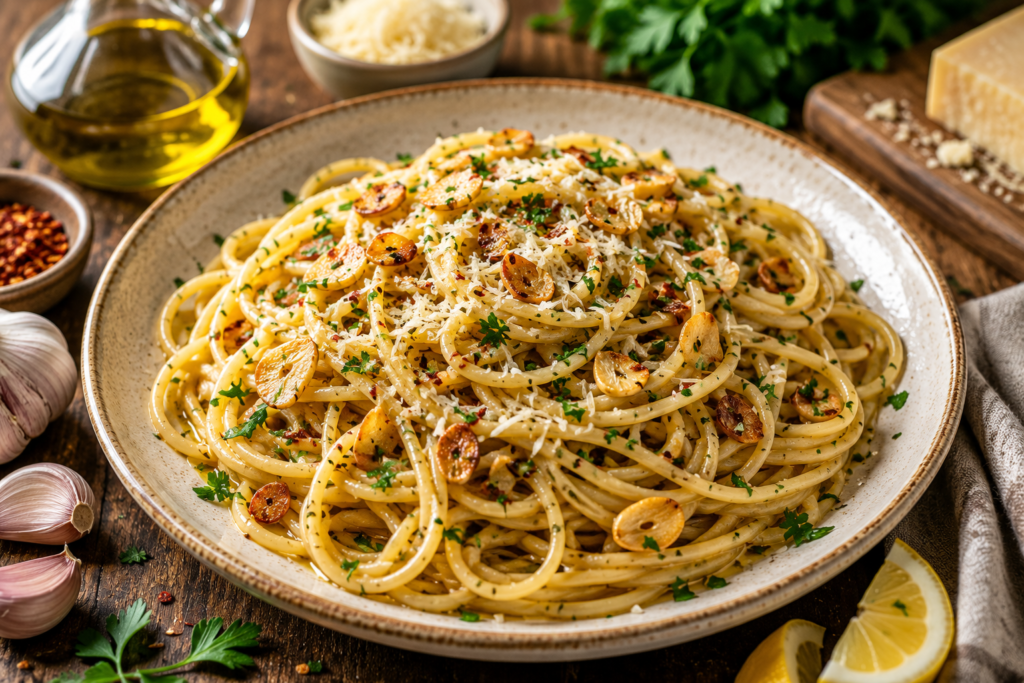
Welcome to one of those wonderfully simple recipes that proves you don’t need a long ingredient list to make an unforgettable meal! This Garlic and Olive Oil Pasta Recipe is light, comforting, flavorful, and incredibly easy to prepare. With golden garlic, fruity olive oil, tender pasta, a little chili, and fresh parsley, you can turn a few everyday ingredients into a satisfying dinner.
Known as Aglio e Olio, this Italian-inspired pasta is especially useful when you want something delicious without spending hours in the kitchen. The key is gently cooking the garlic in olive oil so it becomes fragrant and lightly golden without turning bitter.
Whether you’re looking for a quick weeknight dinner, a simple lunch, or a comforting meal made from pantry staples, this recipe is a fantastic choice. It’s also easy to customize with Parmesan, lemon, vegetables, or protein if you want to make it more substantial.
Recipe Overview
- Category: Main Course
- Cuisine: Italian
- Servings: 4 people
- Prep Time: 10 minutes
- Cook Time: 15 minutes
- Total Time: 25 minutes
- Calories: Approximately 430 calories per serving
Why You’ll Love This Garlic and Olive Oil Pasta Recipe
This recipe keeps things simple while delivering plenty of flavor.
- Ready in about 25 minutes
- Uses simple pantry ingredients
- Naturally vegetarian
- Rich garlic and olive oil flavor
- Light but satisfying
- Perfect for busy weeknights
- Easy to customize
- No complicated sauce required
What Is Garlic and Olive Oil Pasta?
Garlic and Olive Oil Pasta, commonly known as Spaghetti Aglio e Olio, is a classic Italian pasta dish made by tossing cooked pasta with olive oil, sautéed garlic, and often red pepper flakes and parsley.
Unlike creamy pasta dishes, this recipe doesn’t rely on a heavy sauce. Instead, the pasta water combines with the olive oil to create a light, glossy coating that clings beautifully to the noodles.
The simplicity is what makes the dish special. Good-quality olive oil, fresh garlic, properly cooked pasta, and a little seasoning are enough to create a flavorful meal.
Ingredients
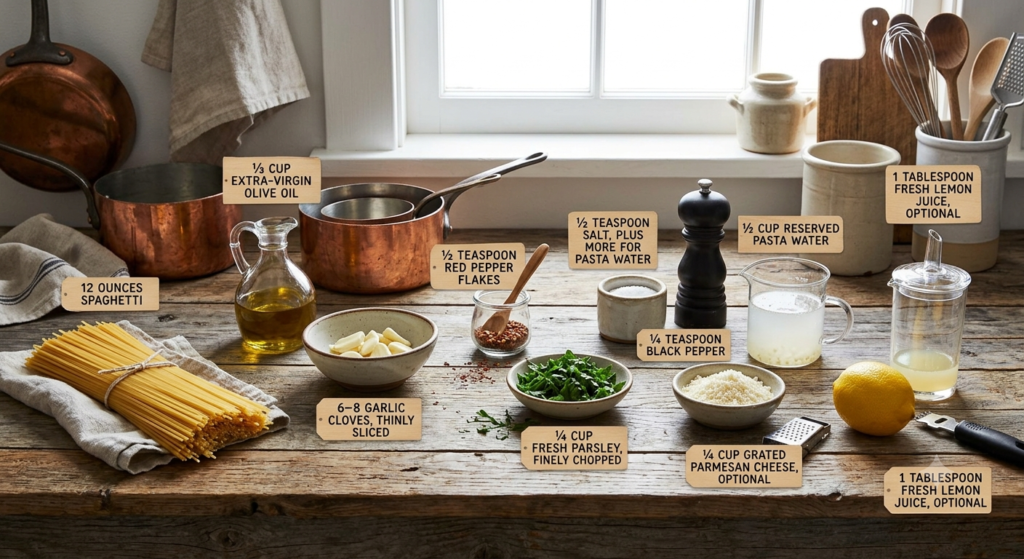
You will need the following simple ingredients to make this flavorful Garlic and Olive Oil Pasta.
For the Pasta
- 12 ounces spaghetti or linguine
- ⅓ cup extra-virgin olive oil
- 6–8 garlic cloves, thinly sliced
- ½ teaspoon red pepper flakes
- ¼ cup fresh parsley, finely chopped
- ½ teaspoon salt, plus more for pasta water
- ¼ teaspoon black pepper
- ½ cup reserved pasta water
- ¼ cup grated Parmesan cheese, optional
- 1 tablespoon fresh lemon juice, optional
Kitchen Equipment
You’ll need:
- Large pot
- Large skillet
- Colander
- Tongs
- Sharp knife
- Cutting board
- Measuring cups and spoons
- Fine grater, if using Parmesan
Recipe Video Guide
How to Make Garlic and Olive Oil Pasta Recipe
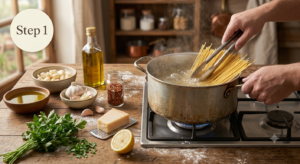
Step 1: Cook the Pasta
Bring a large pot of water to a rolling boil and season it generously with salt. Add the spaghetti or linguine and cook according to the package instructions until al dente, meaning the pasta is tender but still has a slight bite in the center.
Before draining, carefully reserve about ½ cup of the starchy pasta water. This water is important because its starch helps the olive oil form a silky coating around the pasta.
Drain the pasta well, but don’t rinse it. Rinsing removes the starch that helps the sauce cling to the noodles.
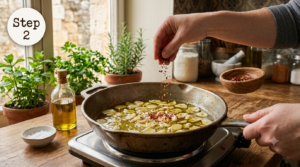
Step 2: Cook the Garlic in Olive Oil
While the pasta is cooking, pour the olive oil into a large skillet and place it over medium-low heat. Add the thinly sliced garlic and cook gently for about 2 to 4 minutes.
Stir the garlic frequently and watch it carefully. You want it to become fragrant and lightly golden, but not dark brown. Burnt garlic can quickly become bitter and overpower the entire dish.
Add the red pepper flakes during the final minute of cooking. The gentle heat allows their flavor to infuse into the olive oil without scorching them.
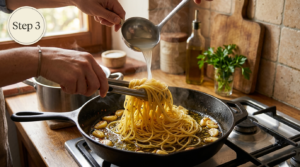
Step 3: Combine the Pasta and Garlic Oil
Add the drained pasta directly to the skillet with the garlic-infused olive oil. Toss everything together using tongs so the noodles become evenly coated.
Gradually add a few tablespoons of the reserved pasta water while tossing continuously. The starchy water helps emulsify the olive oil and creates a light, glossy coating rather than leaving the oil sitting separately at the bottom of the pan.
Continue tossing for about 1 to 2 minutes until the pasta looks glossy and the garlic and chili are evenly distributed.
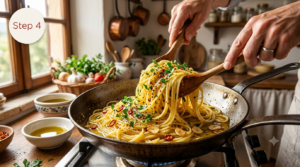
Step 4: Add Parsley and Seasoning
Once the pasta is glossy and well coated, add the chopped fresh parsley, black pepper, and a little additional salt if needed. Toss everything together over low heat for another minute.
Taste the pasta and adjust the seasoning according to your preference. If you enjoy a brighter flavor, add a small squeeze of fresh lemon juice.
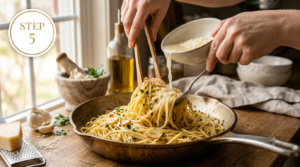
Step 5: Finish the Pasta
Remove the skillet from the heat and give the pasta one final toss. If it seems dry, add another tablespoon or two of reserved pasta water until the noodles have a smooth, silky coating.
For extra richness, sprinkle in freshly grated Parmesan cheese and toss gently until incorporated. The cheese is optional, but it adds a delicious savory flavor.
Step 6: Garnish and Serve
Transfer the Garlic and Olive Oil Pasta to serving plates while it’s still hot. Finish with a drizzle of extra-virgin olive oil, fresh parsley, red pepper flakes, and a little Parmesan if desired.
Serve immediately with lemon wedges and your favorite side dishes. The pasta is best enjoyed fresh while the garlic and olive oil are still fragrant.
Expert Tips for the Best Garlic and Olive Oil Pasta
A few small details can make a big difference in this simple dish.
- Use good-quality extra-virgin olive oil because it provides much of the flavor.
- Slice the garlic evenly so it cooks at the same rate.
- Cook garlic over medium-low heat to prevent burning.
- Reserve pasta water before draining.
- Don’t rinse the pasta after cooking.
- Toss the pasta thoroughly to help create a glossy coating.
- Use freshly chopped parsley for the best flavor.
- Add Parmesan only after reducing the heat or removing the pan from the stove.
- Adjust the red pepper flakes according to your spice preference.
Delicious Variations
Lemon Garlic Pasta
Add extra fresh lemon juice and a little lemon zest for a bright, refreshing version.
Parmesan Garlic Pasta
Add plenty of freshly grated Parmesan for a richer and more savory pasta.
Garlic Shrimp Pasta
Sauté peeled shrimp in olive oil before preparing the garlic, then toss the cooked shrimp with the finished pasta.
Vegetable Garlic Pasta
Add sautéed mushrooms, spinach, broccoli, cherry tomatoes, or zucchini for extra vegetables.
Spicy Garlic Pasta
Increase the red pepper flakes or add finely chopped fresh chili peppers for extra heat.
What to Serve with Garlic and Olive Oil Pasta
This pasta works beautifully with simple sides.
- Garlic bread
- Green salad
- Roasted vegetables
- Bruschetta
- Steamed broccoli
- Grilled chicken
- Sautéed shrimp
- Roasted tomatoes
Storage and Reheating
Refrigerator
Allow leftover pasta to cool completely before placing it in an airtight container. Refrigerate for up to 3 days.
Reheating
Reheat the pasta gently in a skillet over low to medium heat. Add a small splash of water and a drizzle of olive oil while tossing until heated through.
Avoid overheating the pasta because it can become dry and chewy.
Common Mistakes to Avoid
Burning the Garlic
Dark brown or burnt garlic can make the entire dish bitter. Cook it slowly over medium-low heat.
Forgetting the Pasta Water
Starchy pasta water helps combine the olive oil with the pasta and creates a much better texture.
Using Too Much Oil
While olive oil is the foundation of the dish, adding excessive amounts can make the pasta greasy rather than silky.
Overcooking the Pasta
Cook the pasta until al dente. Mushy pasta won’t hold the sauce as well.
Adding Cold Pasta
For the best result, transfer the freshly drained pasta directly into the skillet while it’s still hot.
Nutrition Information
| Nutrient | Amount (Per Serving) |
|---|---|
| Calories | 430 kcal |
| Protein | 11 g |
| Carbohydrates | 62 g |
| Fat | 16 g |
| Saturated Fat | 2.5 g |
| Fiber | 3 g |
| Sugar | 2 g |
| Sodium | 330 mg |
Nutrition values are approximate and may vary depending on the pasta, olive oil, and optional Parmesan used.
Final Thoughts
This Garlic and Olive Oil Pasta Recipe is proof that a handful of simple ingredients can create an incredibly satisfying meal. The fragrant garlic-infused olive oil coats every strand of pasta, while chili flakes and fresh parsley add just enough heat and freshness to keep every bite interesting.
The most important things to remember are to cook the garlic gently, save some pasta water, and toss everything together while hot. Once you master those simple techniques, this quick Italian-inspired pasta can easily become one of your favorite weeknight meals.
You may also like Peanut Butter Roll Cake Recipe.
Frequently Asked Questions
Can I use another type of pasta?
Yes. Spaghetti, linguine, fettuccine, bucatini, and angel hair can all work well.
Can I make this recipe without Parmesan?
Absolutely. Parmesan is optional. The pasta is traditionally enjoyed without needing a creamy cheese-based sauce.
How do I prevent the garlic from becoming bitter?
Cook thinly sliced garlic slowly over medium-low heat and remove it from the heat once it becomes lightly golden.
Can I make Garlic and Olive Oil Pasta spicy?
Yes. Simply increase the amount of red pepper flakes or add fresh chili peppers.
Can I add protein?
Yes. Shrimp, grilled chicken, salmon, or crispy tofu can all be added to make the meal more substantial.
Why should I save pasta water?
The starch in pasta water helps the olive oil and other ingredients combine into a light, glossy coating that sticks to the noodles.
Recipe Card
Garlic and Olive Oil Pasta Recipe
Ingredients
Equipment
Method
- Bring a large pot of water to a rolling boil and season it generously with salt. Add the spaghetti or linguine and cook according to the package instructions until al dente, meaning the pasta is tender but still has a slight bite in the center.
- Before draining, carefully reserve about ½ cup of the starchy pasta water. This water is important because its starch helps the olive oil form a silky coating around the pasta.
- Drain the pasta well, but don’t rinse it. Rinsing removes the starch that helps the sauce cling to the noodles.
- While the pasta is cooking, pour the olive oil into a large skillet and place it over medium-low heat. Add the thinly sliced garlic and cook gently for about 2 to 4 minutes.
- Stir the garlic frequently and watch it carefully. You want it to become fragrant and lightly golden, but not dark brown. Burnt garlic can quickly become bitter and overpower the entire dish.
- Add the red pepper flakes during the final minute of cooking. The gentle heat allows their flavor to infuse into the olive oil without scorching them.
- Add the drained pasta directly to the skillet with the garlic-infused olive oil. Toss everything together using tongs so the noodles become evenly coated.
- Gradually add a few tablespoons of the reserved pasta water while tossing continuously. The starchy water helps emulsify the olive oil and creates a light, glossy coating rather than leaving the oil sitting separately at the bottom of the pan.
- Continue tossing for about 1 to 2 minutes until the pasta looks glossy and the garlic and chili are evenly distributed.
- Once the pasta is glossy and well coated, add the chopped fresh parsley, black pepper, and a little additional salt if needed. Toss everything together over low heat for another minute.
- Taste the pasta and adjust the seasoning according to your preference. If you enjoy a brighter flavor, add a small squeeze of fresh lemon juice.
- Remove the skillet from the heat and give the pasta one final toss. If it seems dry, add another tablespoon or two of reserved pasta water until the noodles have a smooth, silky coating.
- For extra richness, sprinkle in freshly grated Parmesan cheese and toss gently until incorporated. The cheese is optional, but it adds a delicious savory flavor.
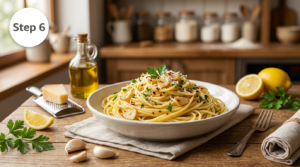
- Transfer the Garlic and Olive Oil Pasta to serving plates while it’s still hot. Finish with a drizzle of extra-virgin olive oil, fresh parsley, red pepper flakes, and a little Parmesan if desired.
- Serve immediately with lemon wedges and your favorite side dishes. The pasta is best enjoyed fresh while the garlic and olive oil are still fragrant.
Video
Notes
- Garlic bread
- Green salad
- Roasted vegetables
- Bruschetta
- Steamed broccoli
- Grilled chicken
- Sautéed shrimp
- Roasted tomatoes
