Introducing your little one to new flavors can be an exciting part of family mealtimes. This baby curry recipe is a gentle, flavorful dish made with soft vegetables, creamy coconut milk, and mild spices. It offers a simple way to introduce aromatic ingredients without relying on hot chili or excessive salt, making it a versatile option for babies who are developmentally ready for complementary foods.
Unlike traditional curries that may contain strong heat, this baby curry recipe focuses on naturally sweet vegetables, tender lentils, and warming spices such as cumin and turmeric. The ingredients cook together until soft, creating a texture that can be adjusted to suit your baby’s feeding stage. You can mash the curry for a smoother consistency or leave soft, manageable pieces for a baby who is ready for more texture.
Whether you’re preparing a family meal or looking for a new homemade food to add to your little one’s menu, this recipe is easy to adapt. It can also be served to the whole family, with extra seasoning or chili added separately to adult portions.
Recipe Overview
- Category: Baby Food / Main Meal
- Cuisine: Indian-inspired
- Servings: 4 small portions
- Prep Time: 10 minutes
- Cook Time: 25 minutes
- Total Time: 35 minutes
- Suitable From: Around 6 months, once your baby is developmentally ready for solids; adapt texture and ingredients to individual needs
- Calories: Approximately 100–140 per small portion, depending on quantities
What Is a Baby Curry Recipe?
A baby curry recipe is a mild, soft-textured dish that introduces babies to the aromas and flavors commonly found in curries. Rather than relying on hot peppers or salty sauces, it uses vegetables, lentils, and gentle seasonings to build flavor naturally.
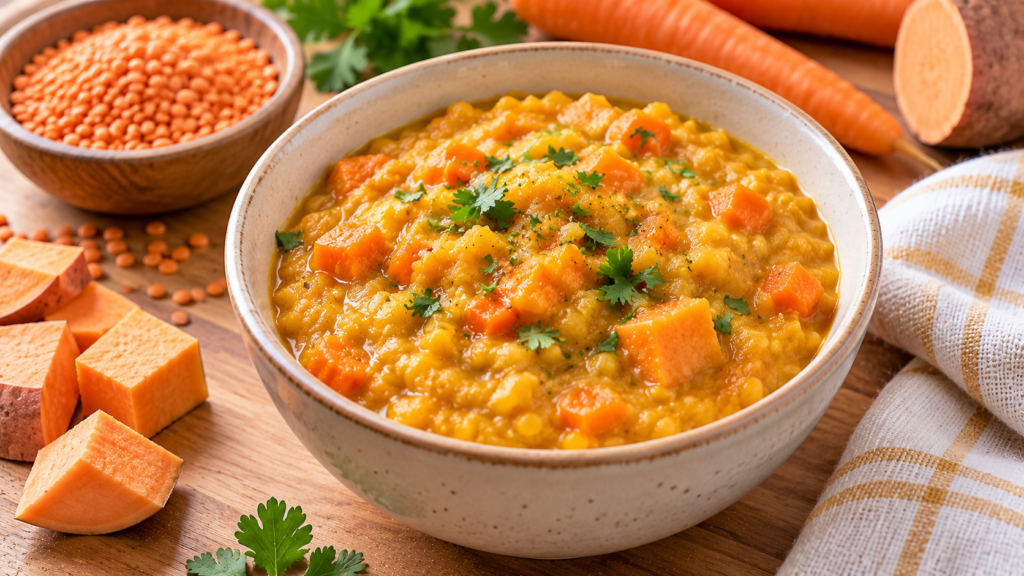
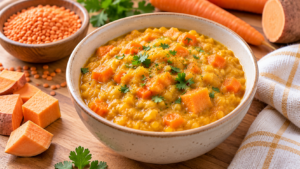
This version combines red lentils, sweet potato, carrot, and coconut milk. Red lentils soften quickly and provide plant-based protein, while sweet potato and carrot add natural sweetness. Coconut milk creates a creamy consistency, and a small amount of cumin and turmeric gives the dish its characteristic curry flavor.
Babies can begin exploring a wide range of suitable family foods at around six months, depending on developmental readiness. The curry should be prepared without added salt, and its texture must be adapted to your baby’s ability to manage food safely. Always supervise your baby while eating and follow age-appropriate feeding guidance.
Why You’ll Love This Recipe
- Mild and aromatic: Gentle spices introduce new flavors without adding hot chili.
- Soft texture: The vegetables and lentils cook until tender and can be mashed easily.
- Simple ingredients: Most ingredients are affordable pantry staples.
- Easy to customize: You can substitute suitable vegetables or adjust the consistency.
- Freezer-friendly: Small portions can be frozen for convenient future meals.
This baby curry recipe is also a practical way to introduce different food groups in one dish. It contains vegetables, lentils, and a source of fat, while allowing you to adjust the texture as your baby develops feeding skills.
Ingredients
Choose fresh vegetables and plain, unsalted ingredients to make a gentle curry with a naturally creamy texture.
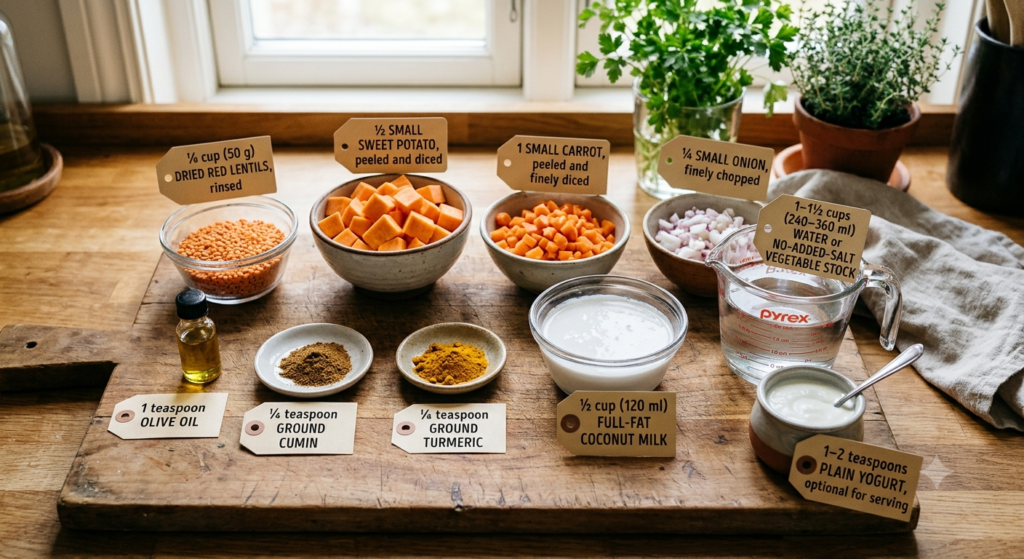
- ¼ cup (50 g) dried red lentils, rinsed thoroughly
- ½ small sweet potato, peeled and diced
- 1 small carrot, peeled and finely diced
- ¼ small onion, finely chopped
- 1 teaspoon olive oil
- ¼ teaspoon ground cumin
- ¼ teaspoon ground turmeric
- ½ cup (120 ml) full-fat coconut milk
- 1–1½ cups (240–360 ml) water or no-added-salt vegetable stock
- 1–2 teaspoons plain yogurt, optional for serving if tolerated
Ingredient note: Use no-added-salt stock or water, and check labels for hidden salt and other unnecessary additives. Coconut milk is rich, so use a suitable amount and remember that it is not nutritionally equivalent to breast milk or infant formula. If introducing common allergens such as dairy, offer them in an age-appropriate form and follow your healthcare professional’s advice if your baby has an allergy risk.
Equipment Needed
- Cutting board
- Sharp kitchen knife
- Vegetable peeler
- Measuring cups and spoons
- Small saucepan with a lid
- Wooden spoon or heat-safe spatula
- Fork or potato masher
- Blender, optional for a smoother texture
- Small airtight containers for storing portions
Recipe Video Guide
How to Make Baby Curry Recipe
Follow these six simple steps to prepare a mild vegetable and lentil curry with a soft texture suitable for adaptation to your baby’s feeding stage.
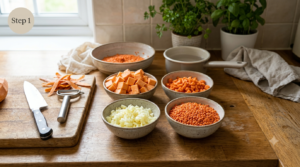
Step 1: Prepare the Vegetables
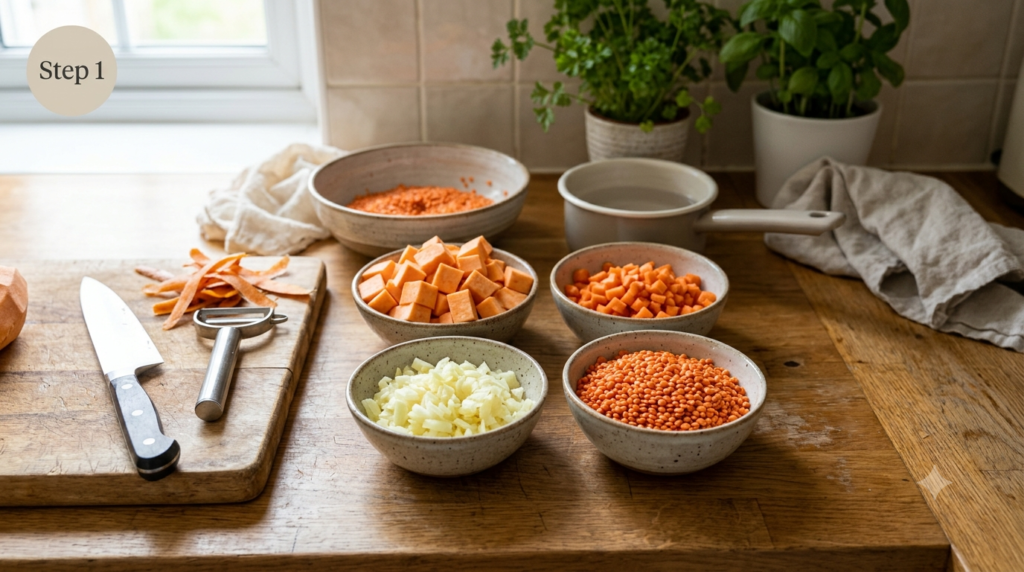
Peel the sweet potato and carrot, then cut them into small, evenly sized pieces so they cook at a similar rate. Finely chop the onion to help it soften quickly. Rinse the red lentils under running water until the water looks clearer. Preparing everything before cooking makes the process easier and helps ensure the vegetables become tender without leaving firm pieces in the finished curry.
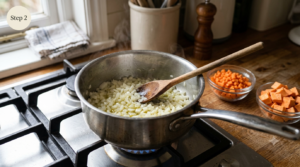
Step 2: Soften the Onion
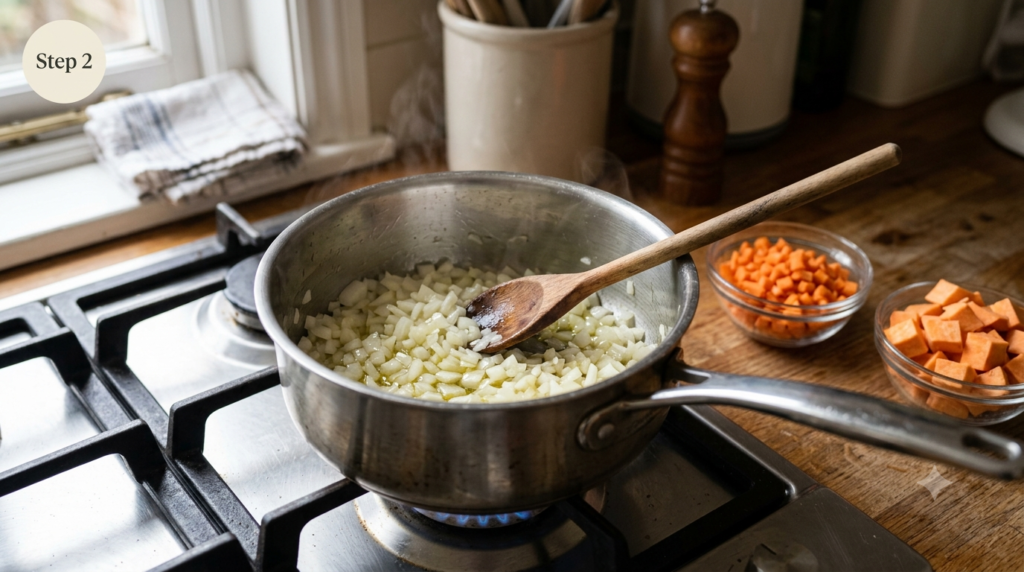
Heat the olive oil in a small saucepan over low to medium-low heat. Add the finely chopped onion and cook for approximately 3–4 minutes, stirring regularly until soft and translucent. Avoid browning it heavily, as the goal is to create a gentle flavor base. If the onion begins to stick, add a small splash of water rather than extra oil.
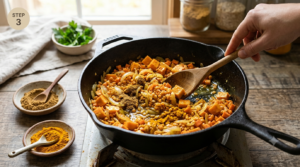
Step 3: Add the Mild Spices
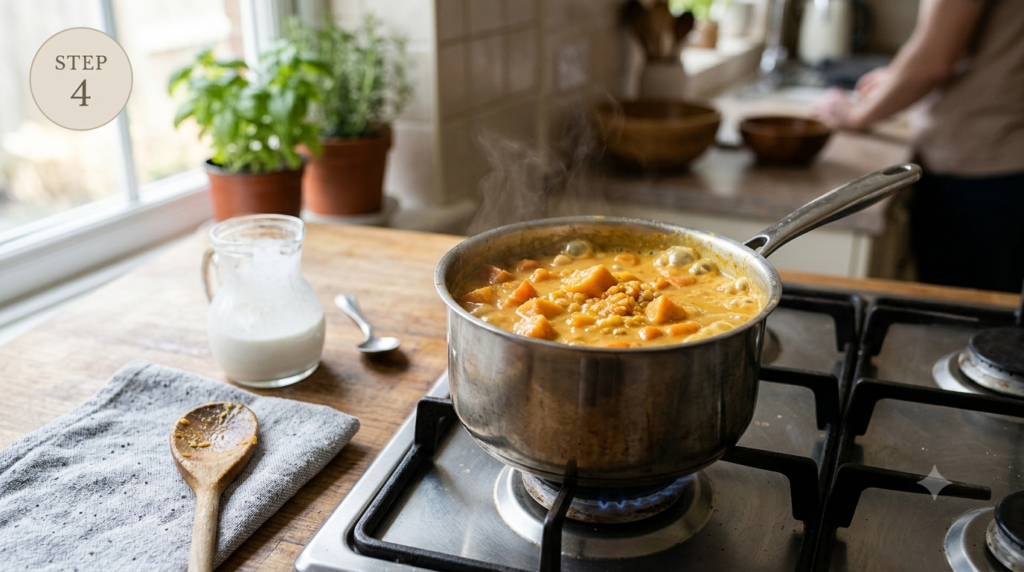
Stir in the ground cumin and turmeric, cooking for about 20–30 seconds until fragrant. Keep the heat low so the spices do not burn. Add the rinsed lentils, diced sweet potato, and carrot, then stir to coat the ingredients evenly. This brief step helps distribute the aromatic flavors throughout the curry without needing chili, salt, or commercial curry sauces.
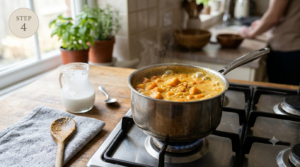
Step 4: Add Liquid and Simmer
Pour in the coconut milk and enough water or no-added-salt stock to cover the ingredients. Stir well, bring the mixture to a gentle simmer, and cover the saucepan with a lid. Cook for approximately 18–22 minutes, stirring occasionally, until the lentils have broken down and the vegetables are completely soft. Add extra water if needed to prevent sticking or to achieve a softer consistency.
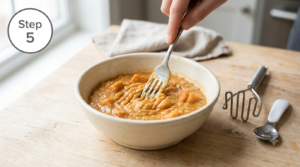
Step 5: Adjust the Texture
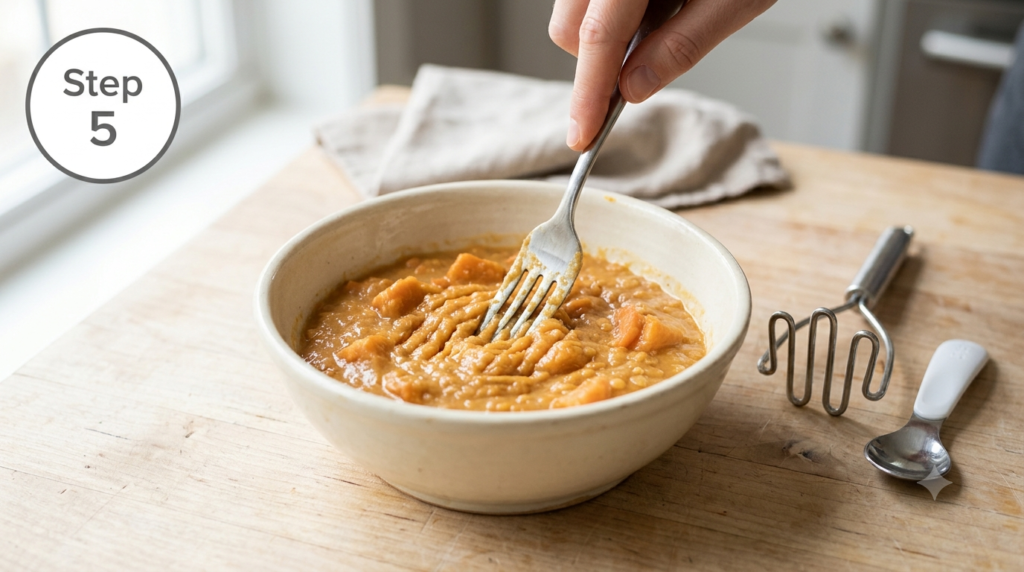
Remove the saucepan from the heat and allow the curry to cool slightly. Mash the mixture with a fork for a thicker, textured consistency, or blend it if a smoother texture is appropriate for your baby. For babies who are ready for soft lumps, retain small, very tender pieces rather than blending everything completely. Check carefully for firm vegetable pieces and ensure the curry is not too thick or sticky.
Step 6: Cool and Serve Safely
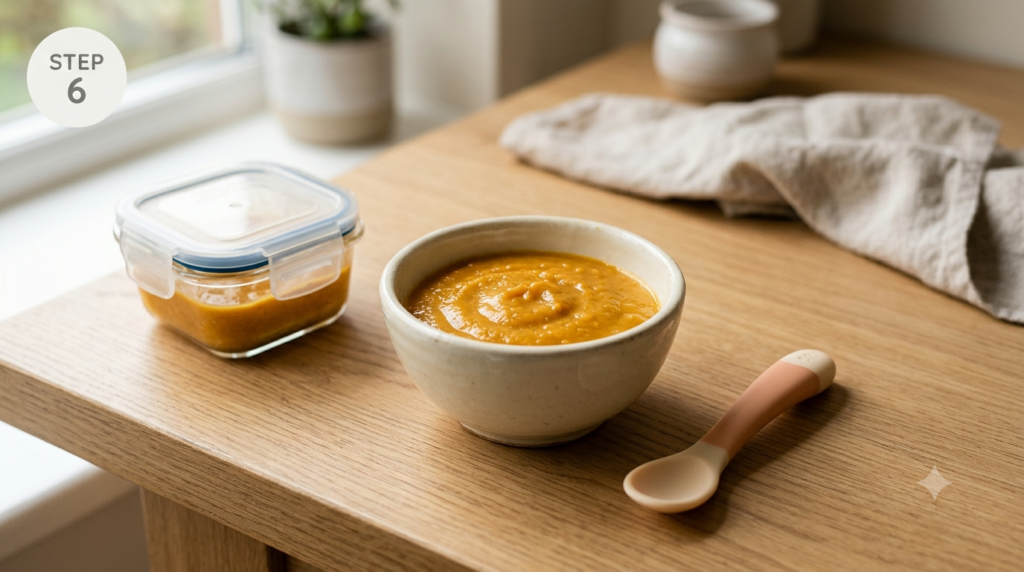
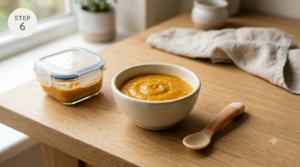
Let the curry cool until it reaches a safe serving temperature, stirring it to distribute heat evenly. Check the temperature before offering a small amount to your baby. Serve an age-appropriate portion and let your baby explore the food at their own pace. Avoid adding salt, honey, or hot chili to the baby’s portion, and refrigerate or freeze leftovers promptly.
Expert Tips for the Best Baby Curry Recipe
Keep the spices mild. Cumin and turmeric provide aroma and flavor without making the curry hot. Start with small quantities, and avoid chili powder or spicy commercial curry pastes in the baby’s portion.
Cook vegetables until completely soft. Firm pieces can be difficult for babies to manage. Test each piece by pressing it gently between your fingers or with a fork before serving.
Adjust the consistency. Add water to loosen a thick curry, or mash the ingredients to create a texture appropriate for your baby’s developmental stage. Avoid making the mixture sticky or excessively thick.
Introduce ingredients thoughtfully. If your baby is trying a new ingredient, offer it in an age-appropriate form and observe for signs of an allergic reaction. Introduce common allergens individually when practical, particularly if your baby has eczema or a known food allergy.
Avoid added salt. Babies need very little sodium, and stock cubes, sauces, and packaged curry pastes can contain substantial amounts. Water or verified no-added-salt stock is the better choice.
Serve at a safe temperature. Thick foods can retain heat, so stir thoroughly and check the temperature before feeding.
Variations to Try
- Pumpkin curry: Replace the sweet potato with peeled pumpkin for a soft, naturally sweet variation.
- Pea and potato curry: Add well-cooked peas and potato, then mash them to the appropriate consistency.
- Chickpea curry: Use thoroughly cooked, very soft chickpeas, mashed or blended to eliminate whole, firm pieces.
- Spinach curry: Stir finely chopped spinach into the saucepan near the end and cook until completely wilted.
- Dairy-free version: The basic recipe is dairy-free when prepared with coconut milk and without yogurt.
- Family curry: Prepare the mild base without added salt, then season adult servings separately with salt, extra spices, or chili.
Always check that any substitutions are fully cooked and have a texture suitable for your baby’s feeding ability. Avoid whole nuts, firm chunks, and other foods that can pose choking hazards.
What to Serve With Baby Curry
This baby curry recipe can be served on its own or alongside another suitable food, depending on your baby’s appetite and feeding stage. Very soft rice, mashed potato, or a small amount of well-cooked, soft flatbread may work for babies who are developmentally ready for those textures. Make sure rice is cooked thoroughly, cooled safely, and offered in a form your baby can manage.
For older babies who are ready for more variety, you can offer the curry alongside soft-cooked vegetables or another iron-rich food. Lentils provide some iron, but babies have increased iron needs during infancy, so a varied diet containing suitable iron-rich foods remains important.
Do not force your baby to finish a portion. Offer a small amount, allow time for exploration, and follow your baby’s hunger and fullness cues. Breast milk or infant formula remains an important source of nutrition during the first year.
Storage and Reheating Instructions
Refrigeration: Cool the curry promptly and refrigerate it in a clean, airtight container within two hours of cooking. Use within 24–48 hours for a conservative baby-food storage approach.
Freezing: Divide the cooled curry into small, individual portions using freezer-safe containers or trays. Freeze promptly and label each portion with the preparation date. For best quality, use within one to two months.
Thawing: Defrost in the refrigerator or use a safe microwave defrosting method, then stir thoroughly. Do not thaw baby food at room temperature.
Reheating: Reheat only the portion you intend to serve until steaming hot throughout. Stir carefully to remove hot spots, then allow it to cool to a safe temperature before feeding. Avoid reheating the same portion repeatedly.
Leftover food: Discard food that has been in contact with your baby’s spoon or mouth, rather than returning it to the storage container. This reduces the risk of bacterial contamination.
Common Mistakes to Avoid
- Adding too much spice: Strong chili or spicy sauces can overwhelm the gentle flavors of this dish.
- Leaving vegetables firm: Cook the vegetables until completely soft and easy to mash.
- Using salted stock: Choose water or no-added-salt stock to keep sodium low.
- Serving the curry too thick: Add liquid or mash thoroughly to achieve an appropriate consistency.
- Ignoring allergens: Check ingredient labels and introduce common allergens thoughtfully, following medical advice when necessary.
- Serving it too hot: Stir thoroughly and check the temperature before feeding.
- Using unsafe food shapes: Avoid firm chunks or whole ingredients that could create a choking risk.
Nutrition Information
The following values are rough estimates per small portion, assuming four portions from the recipe. Actual values depend on the amount of coconut milk and the final serving size.
| Nutrient | Approximate Amount per Portion |
|---|---|
| Calories | 100–140 kcal |
| Protein | 3–5 g |
| Carbohydrates | 12–17 g |
| Fat | 4–7 g |
| Fibre | 2–4 g |
| Sodium | 20–60 mg, if using water and no added salt |
This curry provides carbohydrates from vegetables and lentils, some plant-based protein, and fat from coconut milk and olive oil. Nutritional requirements differ by age and growth, so the curry should be one part of a varied diet rather than a complete nutritional plan on its own.
Frequently Asked Questions
At what age can babies eat curry?
Many babies can explore mild, appropriately textured family foods from around six months when they show developmental readiness for complementary feeding. The curry should be soft, without added salt or hot chili, and served in a form suitable for the baby’s feeding skills. Ask your pediatric healthcare professional if you are uncertain about readiness or texture.
Is curry too spicy for babies?
Curry does not have to be hot. This recipe uses small amounts of cumin and turmeric for aroma rather than chili heat. Start with mild seasoning and avoid spicy sauces, salty stock cubes, and commercial pastes that may contain high levels of salt.
Can I make baby curry without coconut milk?
Yes. Replace the coconut milk with extra water or no-added-salt stock for a lighter curry. You can also stir in a little plain yogurt after cooking if dairy is suitable for your baby and has been introduced safely. The texture and flavor will be different, but the vegetables and lentils will still provide a soft, flavorful meal.
Can I freeze homemade baby curry?
Yes. Freeze the curry in small portions as soon as it has cooled sufficiently, and label each container with the date. Thaw safely, reheat thoroughly, stir well, and check the temperature before serving. Discard leftovers that have been contaminated by contact with your baby’s mouth.
Can I use curry powder for babies?
A mild curry powder can be suitable if its ingredients are appropriate and it contains no added salt or hot chili that would make the dish too spicy. Check the label, use a small amount, and choose plain individual spices if you want more control over the flavor.
Can the whole family eat this recipe?
Absolutely. Prepare the basic curry without added salt and chili, then serve the baby’s portion first. Adults can season their own servings separately with extra salt, pepper, chili, or additional spices. This makes one simple meal adaptable for different preferences.
Final Thoughts
This baby curry recipe is a gentle introduction to aromatic flavors, combining tender vegetables, red lentils, coconut milk, and mild spices in one easy saucepan meal. It is simple to prepare, easy to adapt, and convenient to freeze in small portions for busy days.
The most important things are to avoid added salt, cook the ingredients until completely soft, and adjust the texture to your baby’s developmental stage. Serve small portions at a safe temperature, supervise your baby while eating, and continue offering a varied range of suitable foods as your little one grows.
You may also like Devilled Sausages Recipe.
Recipe Card
Baby Curry Recipe
Ingredients
Equipment
Method
- Peel the sweet potato and carrot, then cut them into small, evenly sized pieces so they cook at a similar rate. Finely chop the onion to help it soften quickly. Rinse the red lentils under running water until the water looks clearer. Preparing everything before cooking makes the process easier and helps ensure the vegetables become tender without leaving firm pieces in the finished curry.
- Heat the olive oil in a small saucepan over low to medium-low heat. Add the finely chopped onion and cook for approximately 3–4 minutes, stirring regularly until soft and translucent. Avoid browning it heavily, as the goal is to create a gentle flavor base. If the onion begins to stick, add a small splash of water rather than extra oil.
- Stir in the ground cumin and turmeric, cooking for about 20–30 seconds until fragrant. Keep the heat low so the spices do not burn. Add the rinsed lentils, diced sweet potato, and carrot, then stir to coat the ingredients evenly. This brief step helps distribute the aromatic flavors throughout the curry without needing chili, salt, or commercial curry sauces.
- Pour in the coconut milk and enough water or no-added-salt stock to cover the ingredients. Stir well, bring the mixture to a gentle simmer, and cover the saucepan with a lid. Cook for approximately 18–22 minutes, stirring occasionally, until the lentils have broken down and the vegetables are completely soft. Add extra water if needed to prevent sticking or to achieve a softer consistency.
- Remove the saucepan from the heat and allow the curry to cool slightly. Mash the mixture with a fork for a thicker, textured consistency, or blend it if a smoother texture is appropriate for your baby. For babies who are ready for soft lumps, retain small, very tender pieces rather than blending everything completely. Check carefully for firm vegetable pieces and ensure the curry is not too thick or sticky.
- Let the curry cool until it reaches a safe serving temperature, stirring it to distribute heat evenly. Check the temperature before offering a small amount to your baby. Serve an age-appropriate portion and let your baby explore the food at their own pace. Avoid adding salt, honey, or hot chili to the baby’s portion, and refrigerate or freeze leftovers promptly.