
Ingredients
Equipment
Method
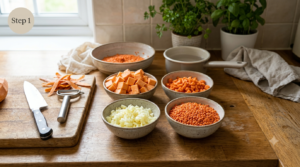
Step 1: Prepare the Vegetables
- Peel the sweet potato and carrot, then cut them into small, evenly sized pieces so they cook at a similar rate. Finely chop the onion to help it soften quickly. Rinse the red lentils under running water until the water looks clearer. Preparing everything before cooking makes the process easier and helps ensure the vegetables become tender without leaving firm pieces in the finished curry.
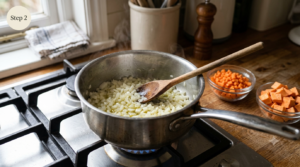
Step 2: Soften the Onion
- Heat the olive oil in a small saucepan over low to medium-low heat. Add the finely chopped onion and cook for approximately 3–4 minutes, stirring regularly until soft and translucent. Avoid browning it heavily, as the goal is to create a gentle flavor base. If the onion begins to stick, add a small splash of water rather than extra oil.
Step 3: Add the Mild Spices
- Stir in the ground cumin and turmeric, cooking for about 20–30 seconds until fragrant. Keep the heat low so the spices do not burn. Add the rinsed lentils, diced sweet potato, and carrot, then stir to coat the ingredients evenly. This brief step helps distribute the aromatic flavors throughout the curry without needing chili, salt, or commercial curry sauces.

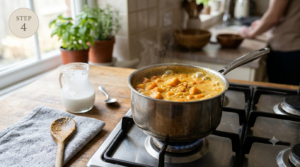
Step 4: Add Liquid and Simmer
- Pour in the coconut milk and enough water or no-added-salt stock to cover the ingredients. Stir well, bring the mixture to a gentle simmer, and cover the saucepan with a lid. Cook for approximately 18–22 minutes, stirring occasionally, until the lentils have broken down and the vegetables are completely soft. Add extra water if needed to prevent sticking or to achieve a softer consistency.
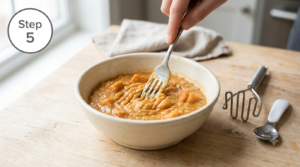
Step 5: Adjust the Texture
- Remove the saucepan from the heat and allow the curry to cool slightly. Mash the mixture with a fork for a thicker, textured consistency, or blend it if a smoother texture is appropriate for your baby. For babies who are ready for soft lumps, retain small, very tender pieces rather than blending everything completely. Check carefully for firm vegetable pieces and ensure the curry is not too thick or sticky.
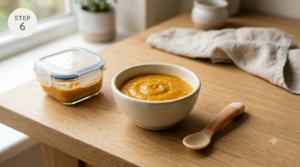
Step 6: Cool and Serve Safely
- Let the curry cool until it reaches a safe serving temperature, stirring it to distribute heat evenly. Check the temperature before offering a small amount to your baby. Serve an age-appropriate portion and let your baby explore the food at their own pace. Avoid adding salt, honey, or hot chili to the baby’s portion, and refrigerate or freeze leftovers promptly.
Video
Notes
This baby curry recipe can be served on its own or alongside another suitable food, depending on your baby’s appetite and feeding stage. Very soft rice, mashed potato, or a small amount of well-cooked, soft flatbread may work for babies who are developmentally ready for those textures. Make sure rice is cooked thoroughly, cooled safely, and offered in a form your baby can manage.