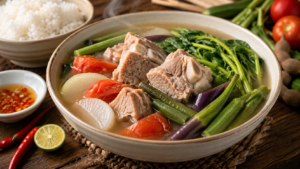
Ingredients
Equipment
Method
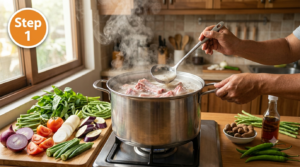
Step 1: Boil the Pork
- Place the pork ribs and water into a large pot. Bring to a boil over medium-high heat, then skim off any foam that rises to the surface. This helps create a clear and flavorful broth.
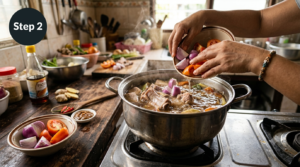
Step 2: Add Aromatics
- Add the quartered onions and tomatoes to the pot. Reduce the heat to a gentle simmer and cook for about 45–60 minutes, or until the pork becomes tender.
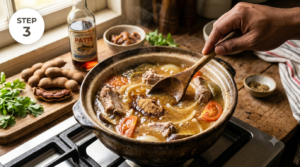
Step 3: Season the Broth
- Stir in the tamarind soup mix and fish sauce. Mix well until the tamarind fully dissolves into the broth. Taste and adjust the sourness or salt according to your preference.
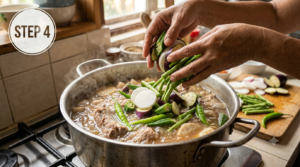
Step 4: Cook the Vegetables
- Add the sliced daikon radish first and cook for about 5 minutes. Then add the eggplant, long beans, okra, and green chilies. Continue cooking until the vegetables are tender but still vibrant.
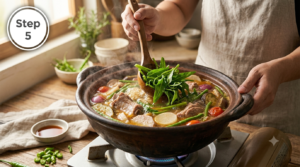
Step 5: Add the Kangkong
- Finally, stir in the kangkong leaves and stems. Cook for just 1–2 minutes until they wilt while maintaining their bright green color.
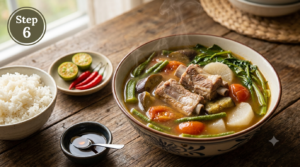
Step 6: Serve and Enjoy
- Ladle the hot Sinigang into individual serving bowls, making sure each serving includes a generous portion of pork, vegetables, and the flavorful sour broth. Serve immediately with steamed white rice and a small dish of fish sauce mixed with fresh calamansi for those who enjoy an extra burst of flavor. Sinigang tastes best when served piping hot, allowing its comforting aroma and tangy broth to shine.
Video
Notes
Sinigang pairs wonderfully with simple side dishes that complement its tangy broth.
- Steamed jasmine rice
- Garlic fried rice
- Fried fish
- Crispy pork belly
- Grilled chicken
- Lumpia (Filipino spring rolls)
- Fried eggplant
- Salted eggs with tomatoes
- Green mango salad
- Fresh calamansi wedges