Ingredients
Equipment
Method
Step 1: Prepare the Baking Pan
- Preheat your oven to 350°F (175°C). Line a 10×15-inch jelly roll pan with parchment paper, leaving a little extra paper over the edges to make the cake easier to lift after baking.
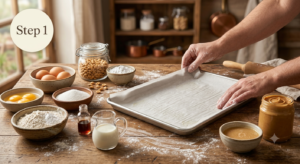
- Lightly grease the parchment paper and the sides of the pan. Preparing the pan properly is important because a thin sponge cake can stick easily if the surface isn’t prepared.
Step 2: Whip the Eggs and Sugar
- Add the eggs and granulated sugar to a large mixing bowl. Using an electric mixer, beat them on medium-high speed for approximately 5 to 7 minutes, until the mixture becomes pale, thick, and noticeably increased in volume.
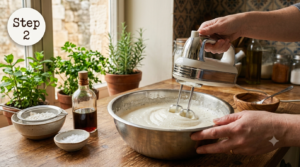
- Add the vanilla extract and mix briefly. Properly whipped eggs provide much of the structure and lightness of this sponge cake, so don’t rush this step.
Step 3: Combine the Dry Ingredients
- In a separate bowl, sift together the all-purpose flour, baking powder, and salt. Sifting helps remove lumps and distributes the baking powder evenly throughout the flour.
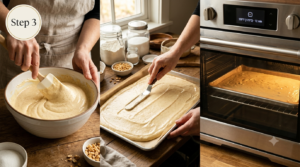
- Gradually add the dry ingredients to the whipped egg mixture. Fold gently with a rubber spatula using broad movements from the bottom of the bowl upward. Avoid overmixing because you want to preserve as much air as possible.
Step 4: Add the Milk and Butter
- Combine the milk and melted butter in a small bowl. Add a small amount of the cake batter to the milk mixture and stir gently, then fold that mixture back into the main batter.
- This technique helps incorporate the melted butter without deflating the whipped eggs. Continue folding just until the batter is smooth and evenly combined.
Step 5: Bake the Sponge Cake
- Pour the batter into the prepared jelly roll pan and spread it evenly into the corners using an offset spatula. Give the pan a gentle tap on the counter to remove any large air bubbles.
- Bake for approximately 12 to 15 minutes, or until the cake is lightly golden and springs back when gently pressed in the center. Avoid overbaking because a dry sponge is much more likely to crack when rolled.
Step 6: Roll the Warm Cake
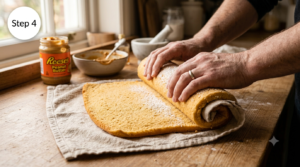
- While the cake is still warm, carefully loosen the edges with a thin spatula. Place a clean kitchen towel over the cake and gently turn it out of the pan.
- Peel away the parchment paper, then lightly dust the exposed cake with powdered sugar. Starting from one short end, carefully roll the cake together with the towel into a snug log. Let it cool completely while rolled. This helps the sponge develop the shape it needs without cracking later.
Step 7: Make the Peanut Butter Filling
- While the cake cools, prepare the filling. Add the softened butter and creamy peanut butter to a mixing bowl and beat for about 2 minutes until smooth and fluffy.
- Gradually add the powdered sugar, followed by the vanilla extract, heavy cream, and a pinch of salt. Beat until the filling becomes light, creamy, and easy to spread. If it seems too thick, add another teaspoon of cream or milk.
Step 8: Fill and Roll the Cake
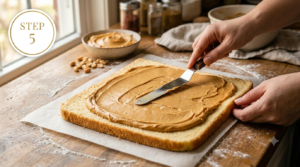
- Carefully unroll the completely cooled sponge cake and spread the peanut butter filling evenly over the surface, leaving a small border around the edges.
- Starting from the same short end, gently roll the cake back into a tight log. Wrap it in plastic wrap and refrigerate for at least 1 hour to allow the filling to firm up and the cake to hold its shape.
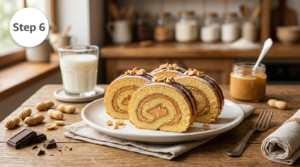
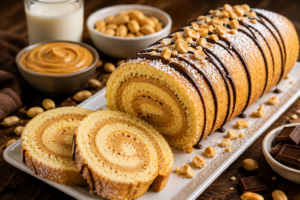
- Before serving, dust the top with powdered sugar and sprinkle with chopped roasted peanuts. For an extra indulgent finish, drizzle melted chocolate over the cake.
Video
Notes
This cake is delicious on its own but becomes even more special with a few simple additions.
- Dust with powdered sugar
- Drizzle with melted chocolate
- Serve with whipped cream
- Add sliced bananas
- Serve with vanilla ice cream
- Garnish with roasted peanuts
- Pair with coffee or cold milk
- Add fresh berries on the side