
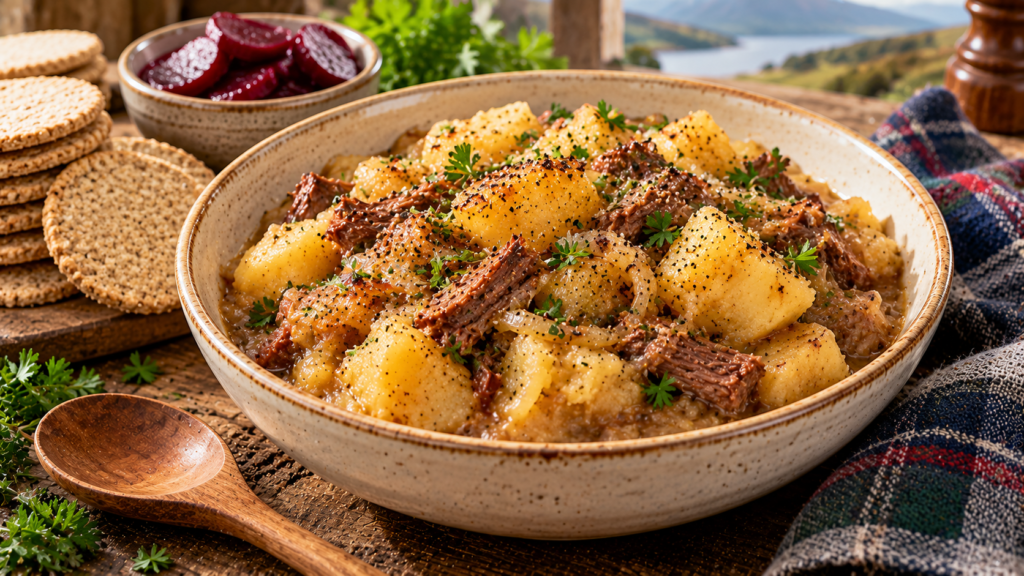
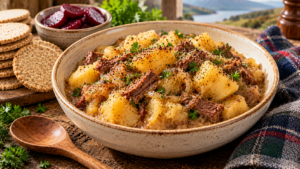
Few dishes capture the warmth of Scottish home cooking quite like a steaming pot of stovies. This Scottish Stovies Recipe transforms humble potatoes, onions, and leftover roast meat into a rich, comforting meal that has been enjoyed in Scottish households for generations. Slowly cooked until the potatoes become soft and tender, stovies are simple, filling, and wonderfully satisfying on a cold evening.
Traditionally associated with Scotland, especially Aberdeen and the northeast, stovies were a practical way to make use of leftover meat and potatoes. Recipes vary from family to family: some use roast beef, others use corned beef or sausages, and some rely on potatoes and onions cooked in flavorful dripping or stock. There is no single version that every Scottish household follows.
The beauty of this Scottish Stovies Recipe lies in its simplicity. You don’t need fancy ingredients or complicated cooking techniques to create a delicious meal. With a heavy-bottomed pot, a little patience, and a handful of everyday ingredients, you can make a traditional-style dish that tastes even better with oatcakes, pickled beetroot, or crusty bread.
Recipe Overview
- Recipe Name: Scottish Stovies
- Category: Main Course / Comfort Food
- Cuisine: Scottish
- Servings: 4 people
- Prep Time: 15 minutes
- Cook Time: 45–60 minutes
- Total Time: Approximately 1 hour 15 minutes
- Calories: Approximately 350–450 kcal per serving, depending on the meat and fat used
What Are Scottish Stovies?
Scottish stovies are a traditional potato-based dish made by slowly cooking potatoes with onions, fat, and often leftover cooked meat. The potatoes absorb the savory cooking liquid and gradually soften, creating a thick, rustic mixture with some pieces holding their shape while others break down into a creamy consistency.
Unlike a typical stew, stovies usually contain little liquid and rely on the potatoes to create their own thick texture. Some cooks use beef dripping for a rich flavor, while others prefer butter, oil, or stock. This Scottish Stovies Recipe uses cooked beef and beef stock for a hearty, accessible version that is easy to prepare at home.
Why You’ll Love This Recipe
This Scottish Stovies Recipe is affordable, filling, and ideal for using leftover roast beef. The potatoes and onions slowly develop a savory flavor without requiring constant attention. You can adjust the consistency to make the dish chunky or soft, depending on your preference. It’s also a wonderful way to explore traditional Scottish cooking using ingredients you may already have in your kitchen.
Ingredients
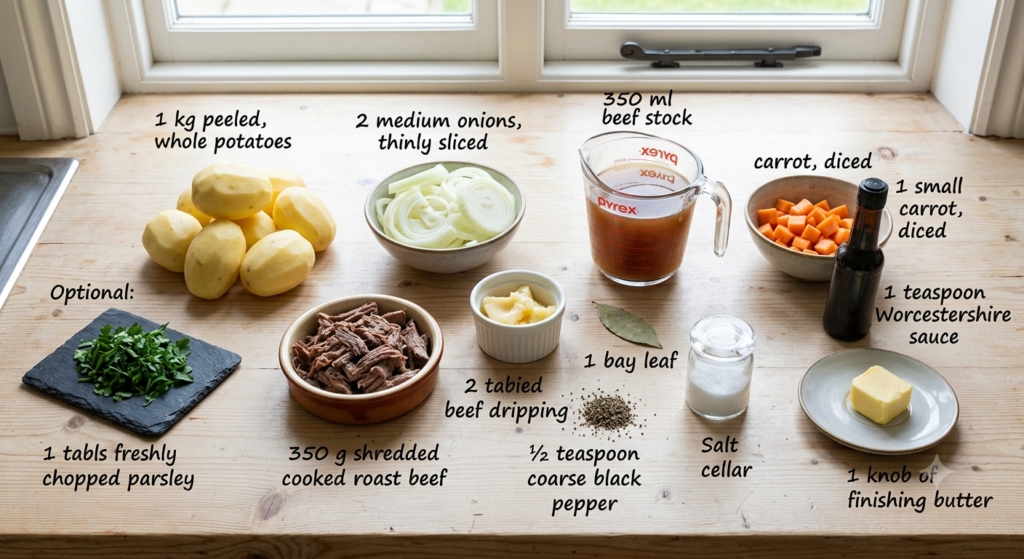
Gather these simple ingredients to make a comforting pot of traditional-style Scottish stovies.
For the Stovies
- 1 kg potatoes, peeled
- 2 medium onions, thinly sliced
- 350 g cooked roast beef, shredded or chopped
- 2 tablespoons beef dripping or butter
- 300–400 ml beef stock, preferably low-sodium
- 1 bay leaf, optional
- ½ teaspoon black pepper
- Salt to taste
- 1 tablespoon chopped fresh parsley, optional
Optional Additions
- 1 small carrot, diced
- 1 teaspoon Worcestershire sauce
- A small knob of butter for finishing
Ingredient tip: Floury potatoes create a softer, creamier texture, while waxy potatoes hold their shape better. Choose according to how you prefer your stovies.
Equipment Needed
A few basic kitchen tools are all you need to prepare this Scottish Stovies Recipe at home.
- Large heavy-bottomed saucepan or Dutch oven
- Sharp knife
- Chopping board
- Vegetable peeler
- Wooden spoon
- Measuring jug
- Serving spoon
Recipe Video Guide
How to Make Scottish Stovies
Step 1: Prepare the Potatoes and Onions
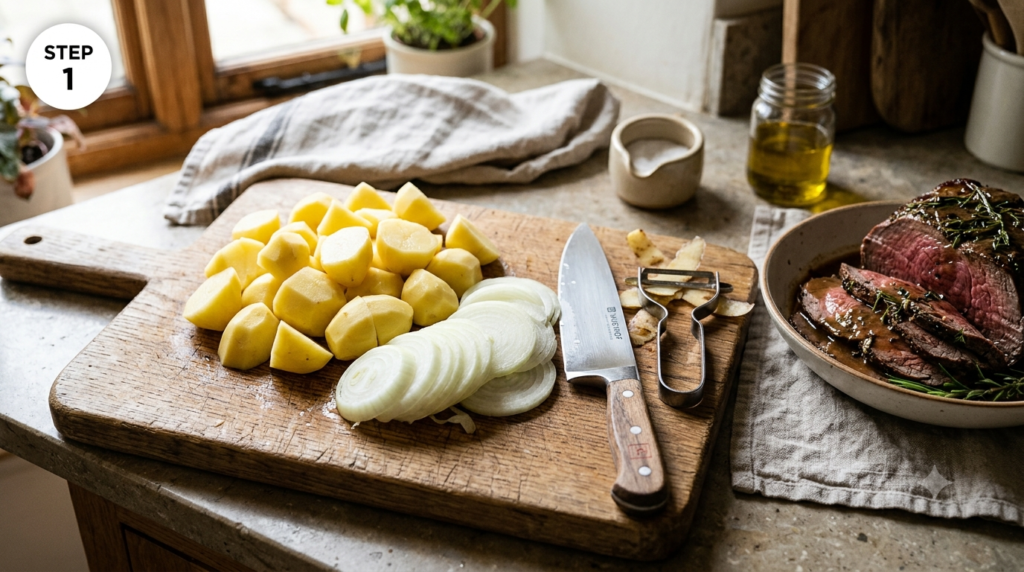
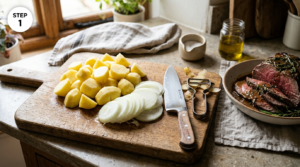
Peel the potatoes and cut them into chunky, similarly sized pieces so they cook at a consistent rate. Thinly slice the onions and set them aside. If you’re using a carrot, peel and dice it into small pieces. Keep the cooked beef ready nearby so everything can be added without interrupting the cooking process.
Step 2: Soften the Onions
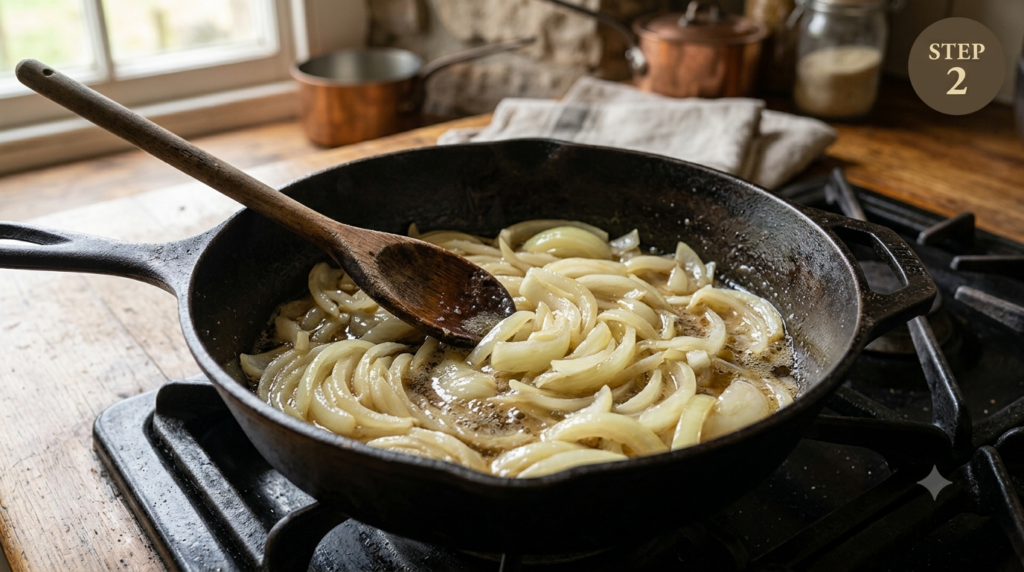
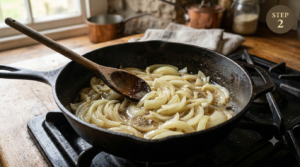
Place a heavy-bottomed saucepan over medium-low heat and add the beef dripping or butter. Once melted, add the sliced onions and cook gently for about 8–10 minutes, stirring occasionally until they become soft and translucent. Avoid browning them too much, as the goal is to build a mellow, savory base for the potatoes.
Step 3: Add the Potatoes and Stock
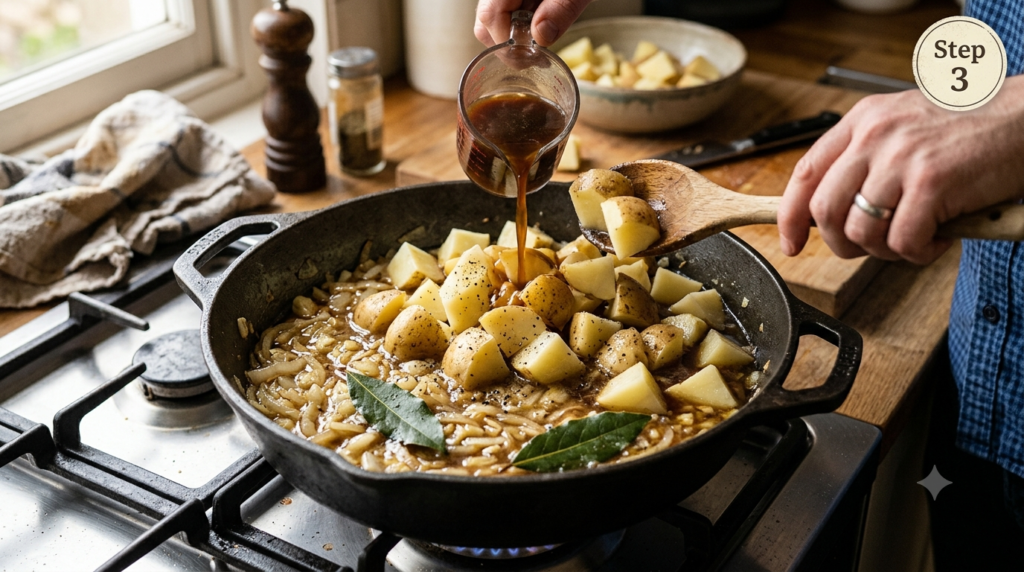
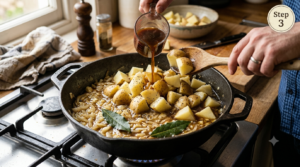
Add the potatoes to the pan and stir them gently to coat them with the onion mixture. Pour in enough beef stock to come partway up the potatoes rather than completely submerging them. Add the optional bay leaf and Worcestershire sauce, if using, then bring the liquid to a gentle simmer.
Step 4: Add the Cooked Beef
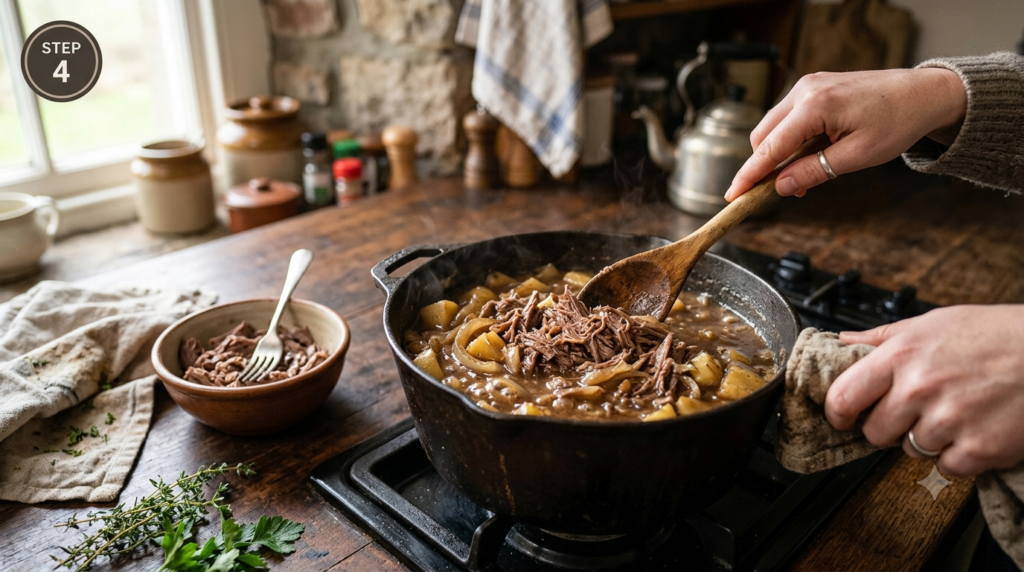
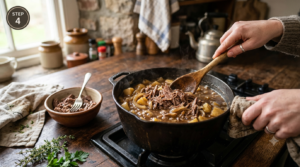
Stir the chopped or shredded roast beef through the potatoes. Cover the saucepan with a lid and reduce the heat to low. Allow the mixture to simmer gently for approximately 30–40 minutes, stirring occasionally to prevent sticking. Add a small splash of stock or water if the bottom becomes too dry before the potatoes are tender.
Step 5: Simmer Until Thick and Tender
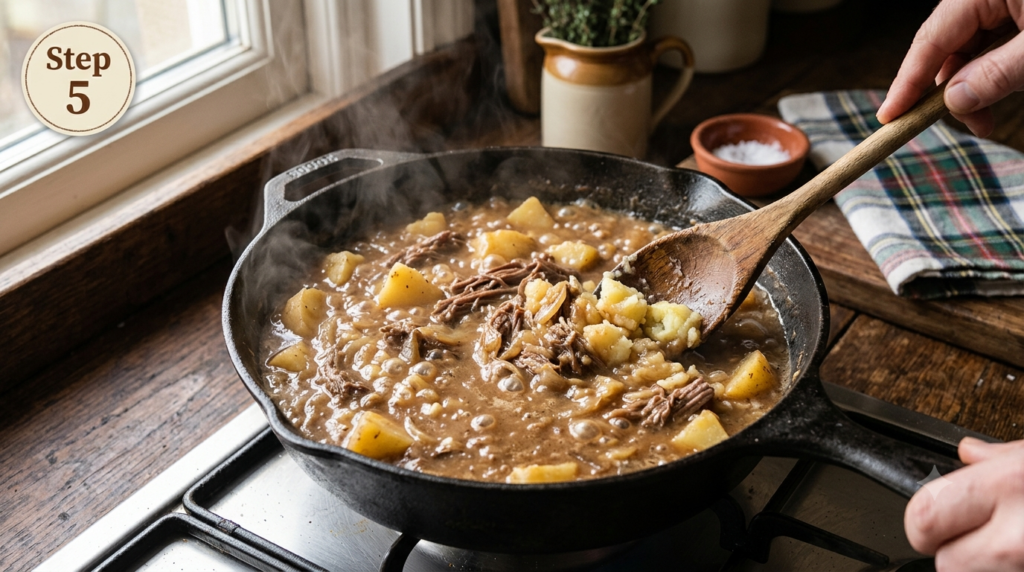
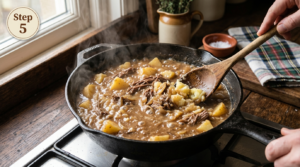
Check the potatoes with a fork. They should be very tender, with some pieces beginning to break down and thicken the cooking liquid. Use the back of a wooden spoon to gently crush a few pieces against the side of the pan, leaving the rest intact. Remove the bay leaf and taste before adding salt and black pepper.
Step 6: Finish and Serve
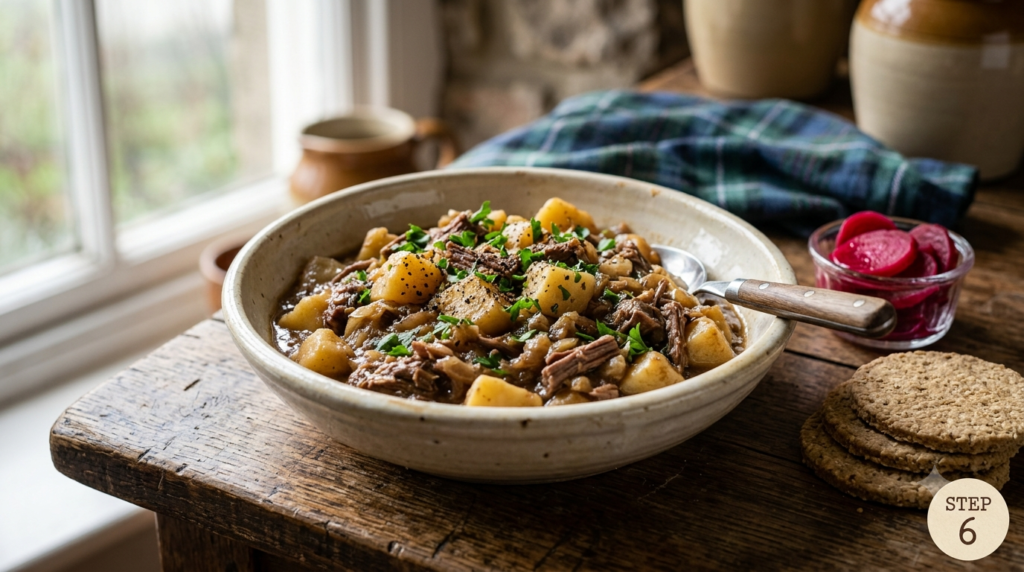
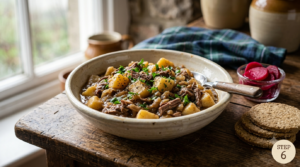
Remove the pan from the heat and let the stovies rest for a few minutes so the flavors settle. Stir in a small knob of butter or a little chopped parsley if desired. Spoon into warm bowls and serve immediately with oatcakes, crusty bread, or pickled beetroot for a traditional Scottish-inspired meal.
Expert Tips for the Best Scottish Stovies Recipe
- Choose suitable potatoes: Floury potatoes break down easily and make the dish creamy; waxy varieties produce a chunkier texture.
- Cook the onions slowly: Gentle cooking develops sweetness without burning the onion.
- Use cooked meat: Leftover roast beef works particularly well and saves preparation time.
- Add stock gradually: Too much liquid can turn the dish into a thin soup rather than thick stovies.
- Keep the heat low: A gentle simmer helps the potatoes soften without scorching the bottom.
- Stir carefully: Frequent vigorous stirring can turn the entire dish into mash.
- Taste before salting: Beef stock and leftover roast meat may already contain plenty of salt.
Delicious Scottish Stovies Variations
Corned Beef Stovies
Replace the roast beef with approximately 350 g of chopped corned beef. Add it during the final 10–15 minutes of cooking so it warms through without completely disappearing into the potatoes. Since corned beef is usually salty, taste the dish before adding extra seasoning.
Sausage Stovies
Use cooked, sliced sausages instead of roast beef. Brown them separately for extra flavor, then add them to the potatoes during the simmering stage. This version is hearty and works well with a little black pepper.
Traditional Dripping Stovies
For a richer traditional-style flavor, use beef dripping instead of butter or oil. Dripping gives the onions and potatoes a deep, savory taste, especially when combined with stock from a roast dinner.
Vegetarian Stovies
Omit the meat and use vegetable stock with butter or olive oil. Add mushrooms, carrots, or extra onions for more flavor and texture. The potatoes remain the heart of the dish, making this a satisfying meat-free alternative.
Scottish Stovies with Carrots
Add a diced carrot with the potatoes for extra color and a gentle sweetness. This is not essential to every traditional version, but it makes the dish more vegetable-rich and works particularly well for family meals.
What to Serve with Scottish Stovies
This Scottish Stovies Recipe is filling on its own, but traditional accompaniments add contrast and complete the meal.
- Oatcakes: A classic Scottish accompaniment with a crisp, nutty texture.
- Pickled beetroot: Adds tanginess that balances the savory potatoes and meat.
- Crusty bread: Useful for enjoying the thick cooking juices.
- Steamed cabbage: Brings freshness and a slightly earthy flavor.
- Buttered peas: Add color and gentle sweetness.
- Turnips or swede: A traditional root vegetable pairing for a hearty dinner.
- Brown sauce: A small amount can add a tangy, savory finish if you enjoy it.
For a simple traditional-style plate, serve a generous bowl of stovies with oatcakes and pickled beetroot.
Storage Instructions
Refrigerator
Cool the stovies promptly and transfer them to an airtight container. Refrigerate within two hours and use within 3–4 days. Store the dish at 4°C (40°F) or below.
Freezer
Freeze cooled portions in freezer-safe containers for up to 3 months for the best quality. Potatoes may become slightly softer after freezing, but the dish will still be suitable for reheating.
Reheating
Reheat in a saucepan over low to medium-low heat, adding a splash of stock or water if the mixture has thickened too much. Stir occasionally until steaming hot throughout. You can also microwave individual portions, stirring halfway through.
Make-Ahead Tip
Prepare the stovies a day ahead and refrigerate them once cooled. The flavors often deepen overnight, and the mixture becomes thicker as it rests. Add a little stock during reheating to restore your preferred consistency.
Common Mistakes to Avoid
Adding Too Much Stock
Stovies should be thick and comforting rather than watery. Begin with a moderate amount of stock and add more only when needed.
Cooking at Excessively High Heat
High heat can cause the potatoes to stick or scorch before they become tender. Keep the pan at a gentle simmer and stir occasionally.
Cutting the Potatoes Unevenly
Very small pieces may collapse before larger chunks cook through. Cut them into reasonably uniform pieces for consistent results.
Over-Stirring the Potatoes
Stirring too aggressively can break down all the potatoes. Fold the mixture gently and crush only a few pieces to thicken it.
Adding Too Much Salt
Cooked roast meat, dripping, and stock may already be seasoned. Taste the finished mixture before adding salt.
Nutrition Information
| Nutrient | Approximate Amount per Serving |
|---|---|
| Calories | 400 kcal |
| Carbohydrates | 45 g |
| Protein | 25 g |
| Fat | 14 g |
| Saturated Fat | 6 g |
| Fiber | 6 g |
| Sugar | 5 g |
| Sodium | 650 mg |
Nutrition estimates are based on four servings and vary with the beef cut, amount of fat, stock, and optional ingredients.
Final Thoughts
This Scottish Stovies Recipe is a wonderful example of traditional home cooking that turns everyday ingredients into a warm, satisfying meal. Tender potatoes, softened onions, savory beef, and rich stock come together in a dish that is both practical and full of character.
Try the roast beef version first, then experiment with corned beef, sausages, or a vegetarian variation. Keep the heat low, add stock gradually, and allow some of the potatoes to break down naturally. With these simple techniques, this Scottish Stovies Recipe can bring a little Scottish comfort to your own kitchen.
You may also like Cheese Savoury Sandwich Recipe.
Frequently Asked Questions
What are Scottish stovies made of?
Scottish stovies are generally made with potatoes, onions, fat, and sometimes leftover cooked meat or sausages. Recipes vary by region and family tradition.
Which potatoes are best for stovies?
Floury potatoes are ideal if you like a soft, creamy consistency. Waxy potatoes are better if you prefer the potato pieces to retain their shape.
Can I make Scottish stovies without meat?
Yes. Use vegetable stock, olive oil or butter, and extra vegetables such as mushrooms and carrots for a vegetarian version.
Can I use raw beef in stovies?
This version is designed for cooked leftover beef. If you want to use raw beef, brown it first and ensure it cooks safely and becomes tender before serving; the cooking time will need to be adjusted.
Why are my stovies watery?
Too much stock or insufficient simmering can leave the dish thin. Simmer uncovered briefly and gently crush a few potatoes to thicken the mixture.
Are Scottish stovies the same as stew?
Not exactly. Stovies are usually potato-led, with relatively little liquid and a thick, soft consistency. Stews generally contain more liquid and a wider variety of ingredients.
Recipe Card
Scottish Stovies Recipe
Ingredients
Equipment
Method
- Peel the potatoes and cut them into chunky, similarly sized pieces so they cook at a consistent rate. Thinly slice the onions and set them aside. If you’re using a carrot, peel and dice it into small pieces. Keep the cooked beef ready nearby so everything can be added without interrupting the cooking process.
- Place a heavy-bottomed saucepan over medium-low heat and add the beef dripping or butter. Once melted, add the sliced onions and cook gently for about 8–10 minutes, stirring occasionally until they become soft and translucent. Avoid browning them too much, as the goal is to build a mellow, savory base for the potatoes.
- Add the potatoes to the pan and stir them gently to coat them with the onion mixture. Pour in enough beef stock to come partway up the potatoes rather than completely submerging them. Add the optional bay leaf and Worcestershire sauce, if using, then bring the liquid to a gentle simmer.
- Stir the chopped or shredded roast beef through the potatoes. Cover the saucepan with a lid and reduce the heat to low. Allow the mixture to simmer gently for approximately 30–40 minutes, stirring occasionally to prevent sticking. Add a small splash of stock or water if the bottom becomes too dry before the potatoes are tender.
- Check the potatoes with a fork. They should be very tender, with some pieces beginning to break down and thicken the cooking liquid. Use the back of a wooden spoon to gently crush a few pieces against the side of the pan, leaving the rest intact. Remove the bay leaf and taste before adding salt and black pepper.
- Remove the pan from the heat and let the stovies rest for a few minutes so the flavors settle. Stir in a small knob of butter or a little chopped parsley if desired. Spoon into warm bowls and serve immediately with oatcakes, crusty bread, or pickled beetroot for a traditional Scottish-inspired meal.
Video
Notes
- Oatcakes: A classic Scottish accompaniment with a crisp, nutty texture.
- Pickled beetroot: Adds tanginess that balances the savory potatoes and meat.
- Crusty bread: Useful for enjoying the thick cooking juices.
- Steamed cabbage: Brings freshness and a slightly earthy flavor.
- Buttered peas: Add color and gentle sweetness.
- Turnips or swede: A traditional root vegetable pairing for a hearty dinner.
- Brown sauce: A small amount can add a tangy, savory finish if you enjoy it.
