
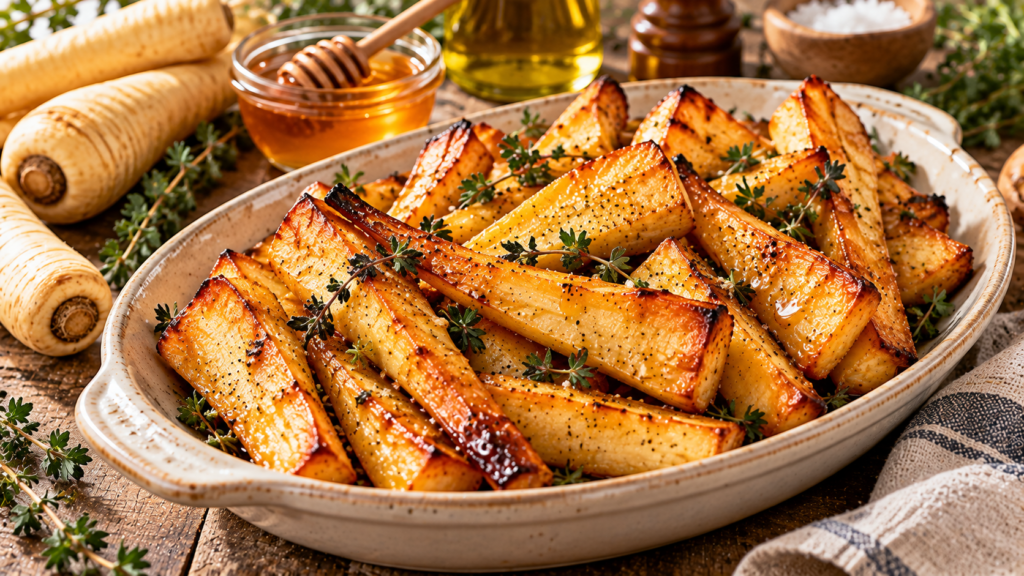
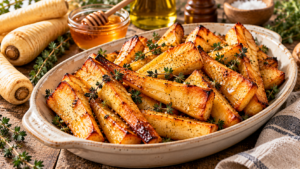
Want a side dish that’s sweet, golden, slightly crispy around the edges, and wonderfully tender in the middle? This Honey Roast Parsnips Recipe transforms humble root vegetables into a delicious addition to Sunday roasts, holiday dinners, and everyday family meals. A simple coating of honey, olive oil, and seasoning helps the parsnips caramelize beautifully while bringing out their naturally sweet, earthy flavor.
Roasted parsnips are especially delicious when their edges turn golden brown and their centers become soft enough to melt in your mouth. The honey adds a delicate sweetness, while black pepper and fresh herbs balance the flavor. Best of all, this Honey Roast Parsnips Recipe requires only a handful of ingredients and very little preparation.
Whether you’re planning a traditional British roast dinner or simply looking for a new way to enjoy vegetables, these honey-glazed parsnips are an excellent choice. They pair beautifully with roast chicken, beef, pork, nut roasts, and mashed potatoes. Once you learn the simple technique, this Honey Roast Parsnips Recipe can become a regular favorite at your table.
Recipe Overview
- Recipe Name: Honey Roast Parsnips
- Category: Side Dish
- Cuisine: British
- Servings: 4 people
- Prep Time: 10 minutes
- Cook Time: 30–40 minutes
- Total Time: Approximately 50 minutes
- Calories: Approximately 180 kcal per serving
What Are Honey Roast Parsnips?
Honey roast parsnips are parsnips coated with oil, honey, and seasoning before being roasted until tender and caramelized. Parsnips resemble pale carrots but have a sweeter, nuttier flavor that becomes even more pronounced during roasting. Their natural sugars brown in the oven, creating delicious golden edges and a soft interior.
This Honey Roast Parsnips Recipe uses a straightforward method that works well for family dinners and festive meals. The vegetables are cut into evenly sized pieces, tossed with the glaze, and roasted at a high temperature. A little thyme or rosemary adds an aromatic touch, while black pepper keeps the sweetness balanced.
Why You’ll Love This Recipe
This Honey Roast Parsnips Recipe uses inexpensive ingredients and takes only a few minutes of hands-on preparation. Honey encourages the vegetables to develop a beautifully caramelized coating, while roasting brings out their natural sweetness. The recipe is easy to adapt with garlic, herbs, or a touch of mustard. It also pairs with a wide range of main dishes, making it useful for both everyday meals and special occasions.
Ingredients
Gather these simple ingredients to make tender parsnips with a delicious honey glaze and golden edges.
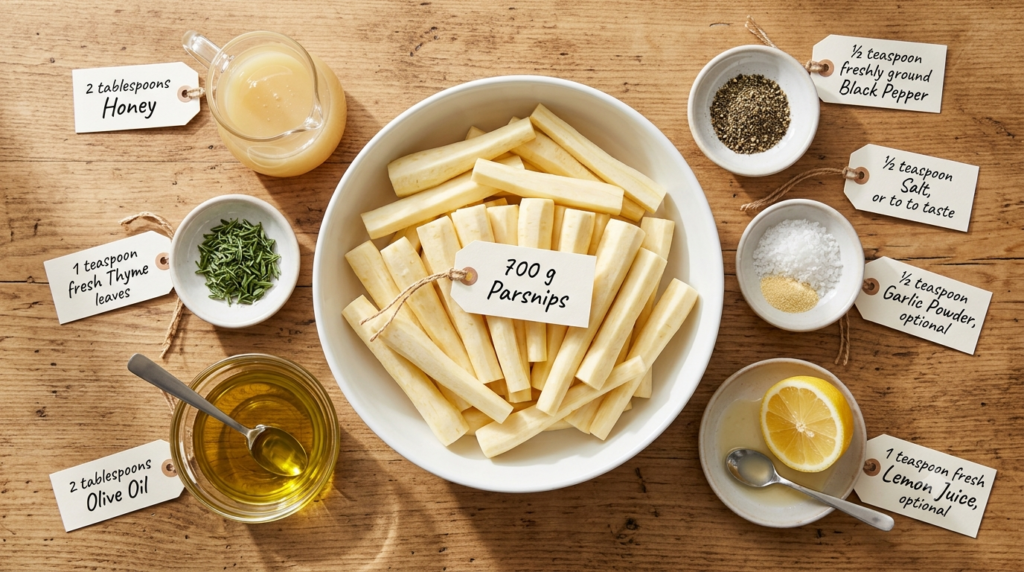
For the Honey Roast Parsnips
- 700 g parsnips
- 2 tablespoons olive oil
- 2 tablespoons honey
- ½ teaspoon salt, or to taste
- ½ teaspoon freshly ground black pepper
- 1 teaspoon fresh thyme leaves, or ½ teaspoon dried thyme
- ½ teaspoon garlic powder, optional
- 1 teaspoon fresh lemon juice, optional
Ingredient tip: Choose firm, medium-sized parsnips for a sweet flavor and tender texture. If the roots are very large, remove any tough, woody core before roasting.
Equipment Needed
A few everyday kitchen tools are all you need to prepare this Honey Roast Parsnips Recipe.
- Large baking tray
- Vegetable peeler
- Sharp knife
- Chopping board
- Large mixing bowl
- Measuring spoons
- Spatula or kitchen tongs
Recipe Guide
How to Make Honey Roast Parsnips
Step 1: Prepare the Parsnips
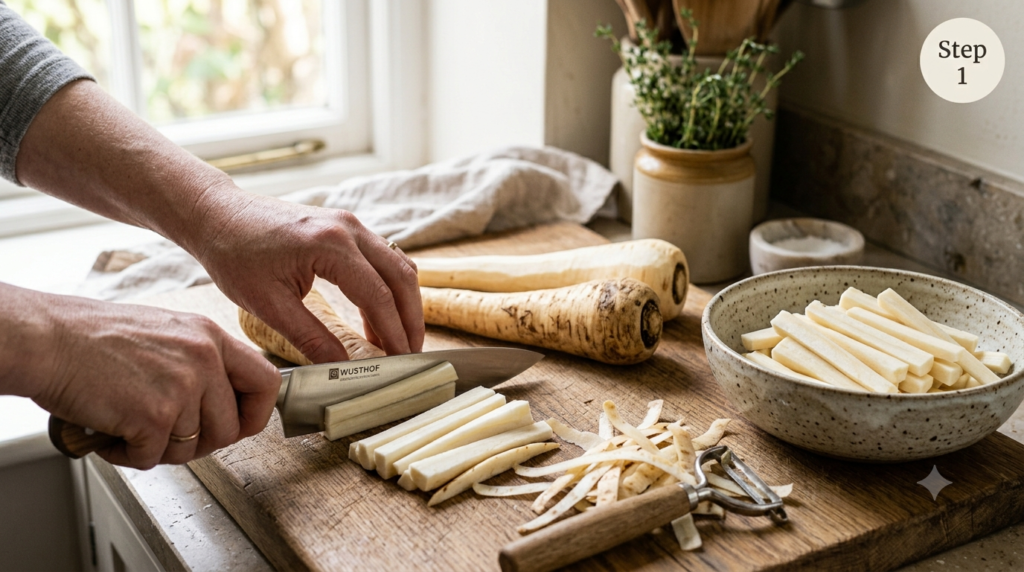
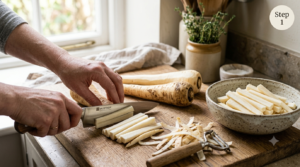
Preheat your oven to 200°C (400°F), or 180°C (350°F) for a fan oven. Peel the parsnips and trim off their ends. Cut them lengthwise into halves or quarters, depending on their thickness, then divide them into evenly sized batons. If the parsnips have a particularly tough central core, cut it away for a more tender result.
Step 2: Mix the Honey Glaze
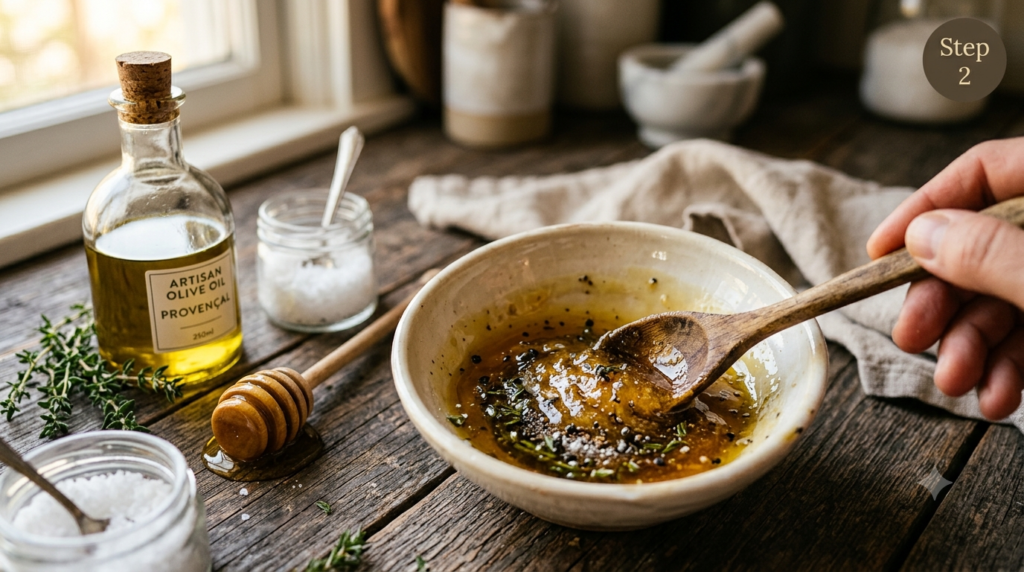
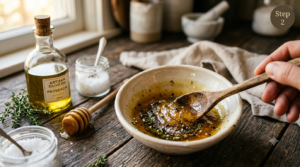
Place the olive oil, honey, salt, black pepper, thyme, and optional garlic powder in a large mixing bowl. Stir until the honey and oil form a reasonably even coating. If your honey is very thick, warm it briefly so it mixes more easily, but allow it to cool slightly before tossing it with the vegetables.
Step 3: Coat the Parsnips
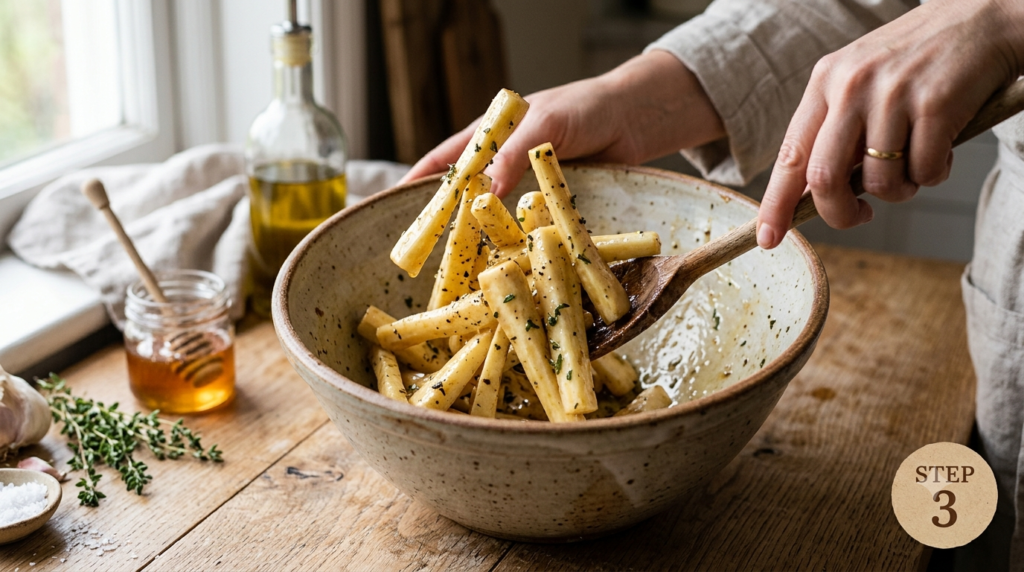
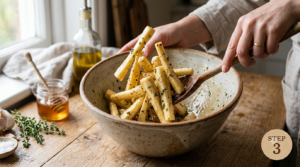
Add the prepared parsnips to the bowl and toss thoroughly until every piece is coated with the honey mixture. Use a spatula or clean hands to distribute the glaze evenly, paying attention to the cut surfaces. This step helps the vegetables brown consistently and ensures that each piece develops the sweet, savory flavor that makes this Honey Roast Parsnips Recipe so appealing.
Step 4: Arrange on the Baking Tray
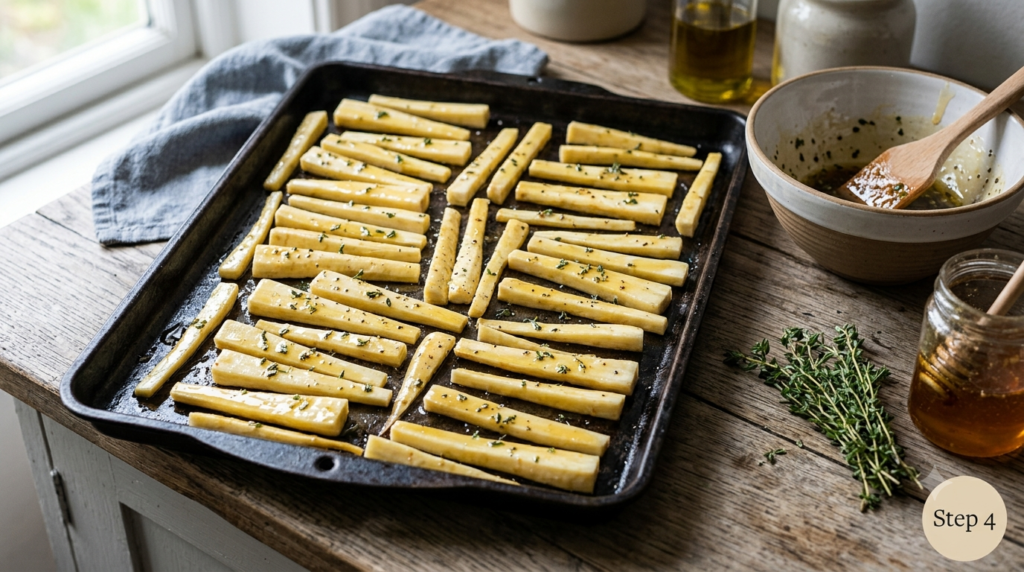
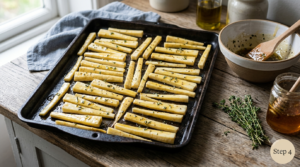
Spread the coated parsnips across a large baking tray in a single layer. Leave a little space between the pieces so moisture can escape and the vegetables can roast instead of steam. If the tray looks crowded, divide the parsnips between two trays. Arrange thicker pieces toward the outside if your oven tends to cook unevenly.
Step 5: Roast Until Golden
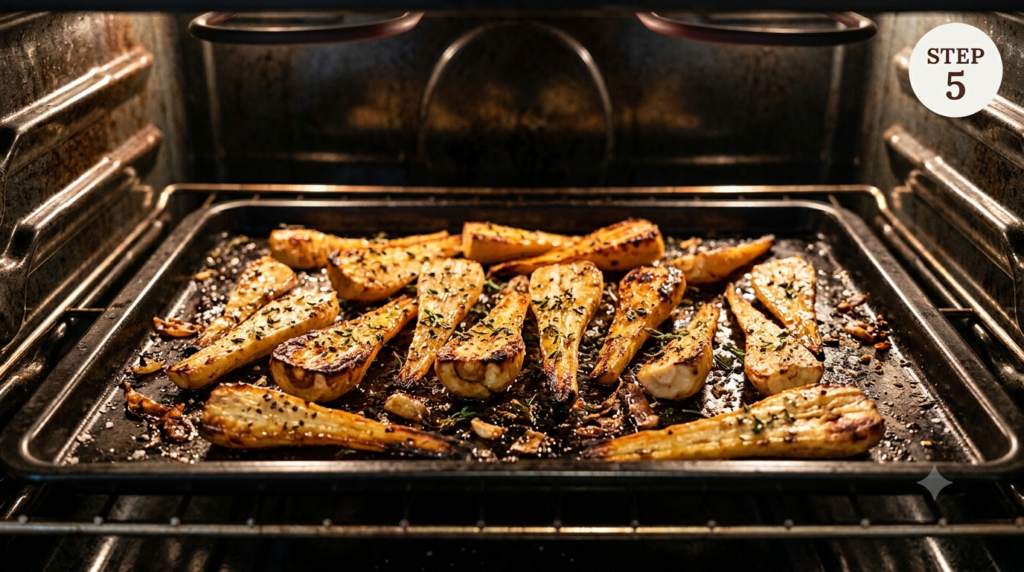
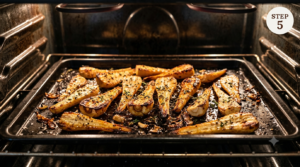
Roast for approximately 30–40 minutes, turning the parsnips halfway through cooking. Check them after 25 minutes because thinner pieces may finish sooner. They should be golden brown around the edges and tender when pierced with a fork. If the honey begins to darken too quickly, lower the oven temperature slightly and continue cooking until the centers soften.
Step 6: Finish and Serve
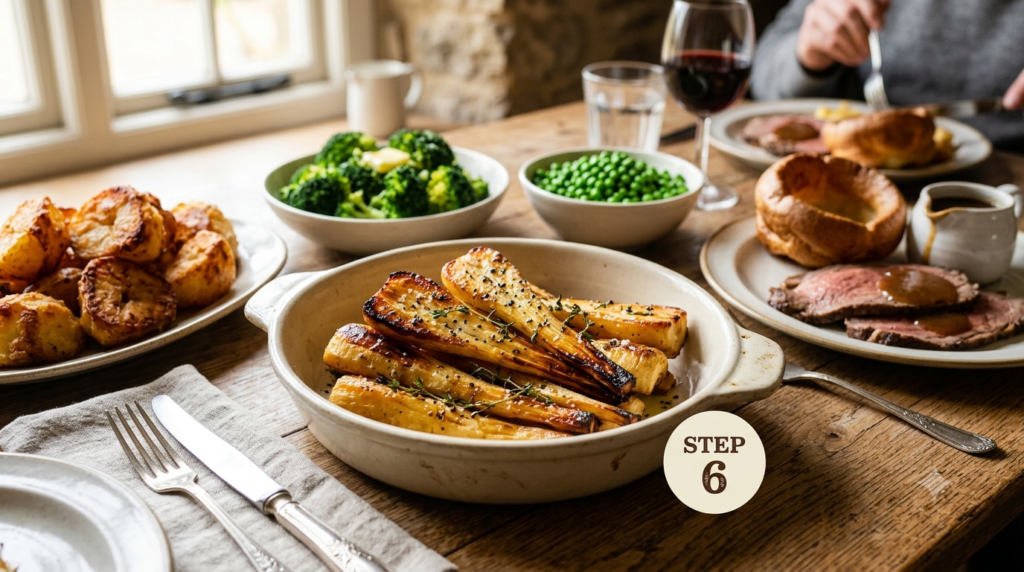
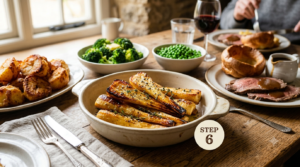
Remove the tray from the oven when the parsnips are tender and caramelized. Add a little lemon juice if you want to balance the sweetness, then taste and adjust the seasoning. Transfer the vegetables to a warm serving dish and sprinkle with extra thyme or chopped parsley. Serve immediately while the edges are still lightly crisp and the centers remain soft.
Expert Tips for the Best Honey Roast Parsnips Recipe
- Cut evenly: Similar-sized pieces cook at roughly the same rate.
- Avoid overcrowding: Use a large tray or roast in batches to encourage browning.
- Turn halfway through: This helps the parsnips caramelize on more than one side.
- Watch the honey: Honey can darken quickly, so check the tray toward the end of cooking.
- Use fresh herbs: Thyme and rosemary add a lovely savory aroma.
- Remove woody cores: Very large parsnips can have a tough center that is unpleasant to eat.
- Serve promptly: The edges are at their best shortly after roasting.
Delicious Variations
Honey and Mustard Parsnips
Mix one teaspoon of Dijon or English mustard into the glaze before coating the vegetables. The mustard adds a gentle tang that balances the honey and works particularly well alongside roast pork or chicken.
Garlic and Herb Parsnips
Add one finely minced garlic clove and a little chopped rosemary to the glaze. Keep an eye on the garlic because it can brown quickly at high temperatures.
Maple Roasted Parsnips
Replace the honey with an equal amount of maple syrup for a slightly different sweetness and a delicate caramel flavor. This variation is also a convenient alternative for people who prefer maple syrup.
Spicy Honey Parsnips
Add a small pinch of chili flakes or cayenne pepper to the glaze. The gentle heat contrasts nicely with the sweetness of the roasted vegetables.
Parmesan Honey Parsnips
Sprinkle finely grated Parmesan over the parsnips during the final 5–8 minutes of roasting. The cheese adds a savory, salty finish, so taste before adding extra salt.
What to Serve with Honey Roast Parsnips
This Honey Roast Parsnips Recipe is a versatile side dish that complements many meals.
- Roast chicken: The sweet vegetables balance the savory flavor of roasted poultry.
- Roast beef: Honey-glazed parsnips are a classic companion to a traditional British roast.
- Roast pork: The sweetness pairs especially well with pork and apple-based sauces.
- Mashed potatoes: Create a comforting plate with contrasting textures.
- Nut roast: A delicious vegetarian pairing for a Sunday lunch.
- Yorkshire puddings and gravy: Serve alongside other traditional British roast dinner favorites.
- Lentil loaf: Add a sweet, caramelized vegetable side to a plant-based meal.
For a traditional roast dinner, combine the parsnips with roast potatoes, green vegetables, your chosen main dish, and gravy.
Storage Instructions
Refrigerator
Allow the parsnips to cool, then transfer them to an airtight container and refrigerate within two hours. Store for up to 3–4 days.
Freezer
Freeze the roasted parsnips in a single layer until firm, then transfer them to a freezer-safe container for up to 2–3 months for best quality. Their texture may soften slightly after thawing.
Reheating
Reheat on a baking tray in an oven at 180°C (350°F) until thoroughly hot. This helps restore some of the browned edges. A microwave is convenient, but it usually produces softer vegetables.
Make-Ahead Tip
Peel and cut the parsnips a day ahead and store them covered in the refrigerator. For the best texture, add the honey glaze shortly before roasting rather than leaving the coated vegetables sitting for a long time.
Common Mistakes to Avoid
Cutting Uneven Pieces
Thin pieces can burn before thicker pieces soften. Cut the parsnips into similar-sized batons for more consistent cooking.
Overcrowding the Tray
Crowded vegetables release moisture and may turn soft instead of caramelized. Spread them out in a single layer.
Adding Too Much Honey
Excess honey can make the parsnips overly sweet and cause the glaze to burn. Measure the honey carefully and coat the vegetables lightly.
Forgetting to Turn the Parsnips
Turning halfway through helps produce even browning and prevents the underside from becoming too dark.
Roasting at Too Low a Temperature
A low oven may soften the parsnips without creating golden edges. Use the recommended temperature and adjust if the honey browns too quickly.
Nutrition Information
| Nutrient | Approximate Amount per Serving |
|---|---|
| Calories | 180 kcal |
| Carbohydrates | 32 g |
| Protein | 2 g |
| Fat | 6 g |
| Saturated Fat | 1 g |
| Fiber | 7 g |
| Sugar | 15 g |
| Sodium | 300 mg |
Nutrition values are estimates based on four servings and may vary depending on the size of the parsnips and the quantities of honey and oil used.
Final Thoughts
This Honey Roast Parsnips Recipe turns a simple root vegetable into a flavorful side dish with golden edges, tender centers, and a delicious balance of sweet and savory notes. The ingredients are easy to find, the preparation is straightforward, and the finished vegetables complement everything from roast chicken to vegetarian mains.
Try the classic version first, then experiment with mustard, garlic, herbs, or a touch of chili. For the best results, cut the parsnips evenly, give them enough space on the tray, and keep an eye on the honey during the final minutes of roasting. This Honey Roast Parsnips Recipe is a dependable addition to both everyday dinners and festive celebrations.
You may also like Cheese Savoury Sandwich Recipe.
Frequently Asked Questions
Do I need to boil parsnips before roasting?
No. Smaller or medium parsnips can be roasted directly after peeling and cutting. Parboiling is optional and can help create a softer interior, but it adds another step.
Why are my honey roast parsnips soggy?
Soggy parsnips are often caused by overcrowding the baking tray or using pieces that are too wet. Spread them out and roast until the excess moisture evaporates.
Can I prepare honey roast parsnips ahead of time?
Yes. Peel and cut the vegetables ahead, refrigerate them, and toss them with the glaze shortly before roasting. You can also roast them in advance and reheat them in the oven before serving.
Should I peel parsnips before roasting?
Peeling is recommended for a smoother texture, especially if the skin is thick or marked. Very young, tender parsnips can sometimes be scrubbed thoroughly instead.
Can I make this recipe vegan?
Yes. Replace the honey with maple syrup or another suitable plant-based syrup, and check any additional ingredients to ensure they meet your dietary requirements.
How do I know when parsnips are cooked?
They should be golden around the edges and easily pierced with a fork. The centers should be tender without becoming mushy.
Recipe Card
Honey Roast Parsnips Recipe
Ingredients
Equipment
Method
- Preheat your oven to 200°C (400°F), or 180°C (350°F) for a fan oven. Peel the parsnips and trim off their ends. Cut them lengthwise into halves or quarters, depending on their thickness, then divide them into evenly sized batons. If the parsnips have a particularly tough central core, cut it away for a more tender result.
- Place the olive oil, honey, salt, black pepper, thyme, and optional garlic powder in a large mixing bowl. Stir until the honey and oil form a reasonably even coating. If your honey is very thick, warm it briefly so it mixes more easily, but allow it to cool slightly before tossing it with the vegetables.
- Add the prepared parsnips to the bowl and toss thoroughly until every piece is coated with the honey mixture. Use a spatula or clean hands to distribute the glaze evenly, paying attention to the cut surfaces. This step helps the vegetables brown consistently and ensures that each piece develops the sweet, savory flavor that makes this Honey Roast Parsnips Recipe so appealing.
- Spread the coated parsnips across a large baking tray in a single layer. Leave a little space between the pieces so moisture can escape and the vegetables can roast instead of steam. If the tray looks crowded, divide the parsnips between two trays. Arrange thicker pieces toward the outside if your oven tends to cook unevenly.
- Roast for approximately 30–40 minutes, turning the parsnips halfway through cooking. Check them after 25 minutes because thinner pieces may finish sooner. They should be golden brown around the edges and tender when pierced with a fork. If the honey begins to darken too quickly, lower the oven temperature slightly and continue cooking until the centers soften.
- Remove the tray from the oven when the parsnips are tender and caramelized. Add a little lemon juice if you want to balance the sweetness, then taste and adjust the seasoning. Transfer the vegetables to a warm serving dish and sprinkle with extra thyme or chopped parsley. Serve immediately while the edges are still lightly crisp and the centers remain soft.
Video
Notes
- Roast chicken: The sweet vegetables balance the savory flavor of roasted poultry.
- Roast beef: Honey-glazed parsnips are a classic companion to a traditional British roast.
- Roast pork: The sweetness pairs especially well with pork and apple-based sauces.
- Mashed potatoes: Create a comforting plate with contrasting textures.
- Nut roast: A delicious vegetarian pairing for a Sunday lunch.
- Yorkshire puddings and gravy: Serve alongside other traditional British roast dinner favorites.
- Lentil loaf: Add a sweet, caramelized vegetable side to a plant-based meal.
