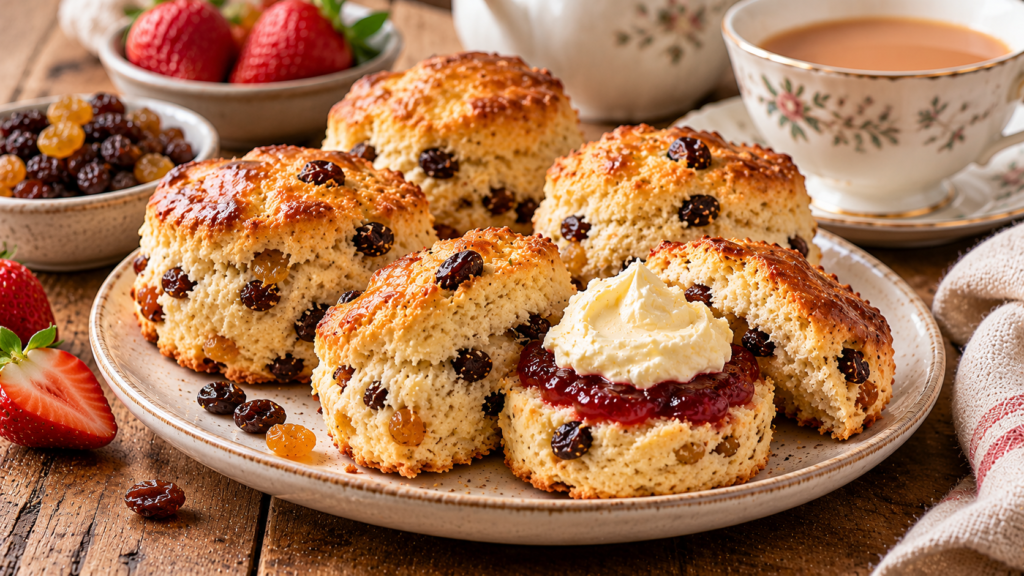
There is something wonderfully comforting about a freshly baked fruit scone, especially when it is still slightly warm from the oven. With a golden top, soft centre, and sweet little bursts of raisins or sultanas, fruit scones are a classic British treat that never goes out of style. This fruit scones recipe is simple enough for beginner bakers and perfect for afternoon tea, weekend breakfasts, or a homemade snack.
The secret to making delicious fruit scones is keeping the dough light and handling it gently. Cold butter creates a tender, crumbly texture, while a little milk brings the ingredients together without making the dough heavy. Dried fruit adds natural sweetness and makes every bite more flavorful.
Whether you serve your fruit scones with clotted cream and jam or enjoy them plain with a cup of tea, this easy recipe delivers a traditional homemade bake. You do not need special equipment or complicated techniques—just a few pantry ingredients and a little care.
Recipe Overview
- Category: Baking / Afternoon Tea
- Cuisine: British
- Servings: 8 fruit scones
- Prep Time: 15 minutes
- Cook Time: 12–15 minutes
- Total Time: 27–30 minutes
- Calories: Approximately 220–280 per scone, depending on size and ingredients
What Is a Fruit Scones Recipe?
A fruit scones recipe is a traditional baking method for making lightly sweetened, quick-bread-style scones with dried fruit mixed into the dough. British fruit scones are usually made with flour, butter, sugar, baking powder, milk, and raisins or sultanas. They are shaped into rounds and baked until risen and golden.
Unlike yeast breads, scones do not require kneading or a long rising time. Baking powder provides the lift, while cold butter helps create a soft, tender crumb. The dough should be handled gently so the finished scones remain light rather than dense.
Fruit scones are often served as part of afternoon tea. They can be enjoyed plain, split in half, or topped with jam and clotted cream. This fruit scones recipe follows a traditional approach while keeping the preparation straightforward for home bakers.
Why You’ll Love This Recipe
- Easy to prepare: The dough comes together quickly with simple ingredients.
- Classic British flavor: Dried fruit adds sweetness and a traditional touch.
- Tender texture: Cold butter and gentle mixing help create soft, fluffy scones.
- Perfect for afternoon tea: Serve with jam, clotted cream, or butter.
- Beginner-friendly: No yeast, complicated shaping, or special equipment is required.
These fruit scones are also easy to customize. You can use raisins, sultanas, currants, or a mixture of dried fruits. A little orange zest or cinnamon can add extra flavor without changing the basic method.
Ingredients
Gather the ingredients below before starting so you can prepare the dough quickly and keep the butter cold.
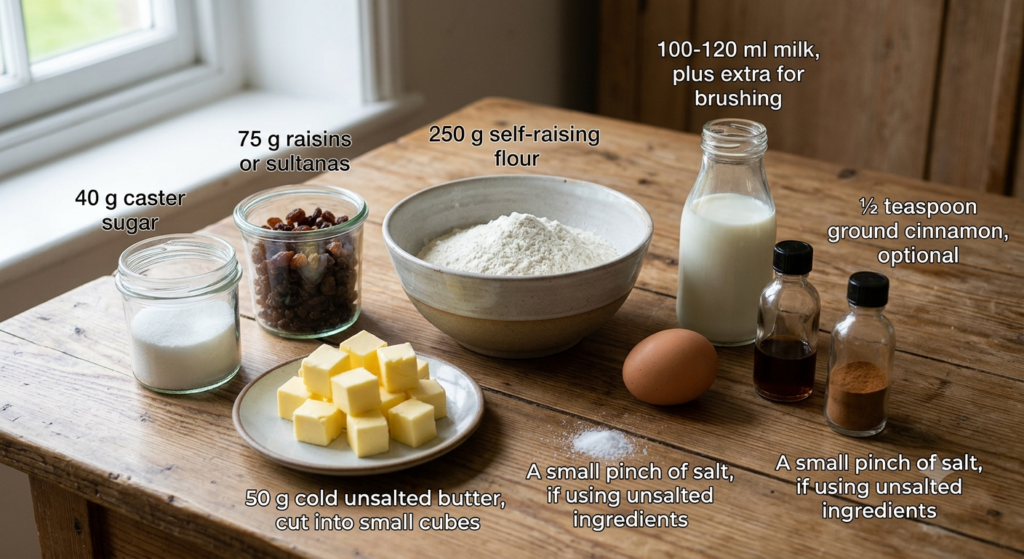
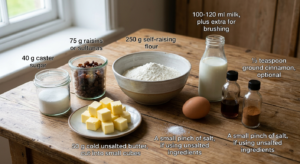
- 250 g self-raising flour
- 50 g cold unsalted butter, cut into small cubes
- 40 g caster sugar
- 75 g raisins or sultanas
- 1 large egg
- 100–120 ml milk, plus extra for brushing
- ½ teaspoon vanilla extract, optional
- ½ teaspoon ground cinnamon, optional
- A small pinch of salt, if using unsalted ingredients
Ingredient tip: Self-raising flour gives the scones their rise. If you only have plain flour, use 250 g plain flour and add approximately 2 teaspoons of baking powder. Measure the milk carefully because adding too much can make the dough sticky and difficult to shape.
Equipment Needed
- Large mixing bowl
- Measuring scale or measuring cups
- Measuring spoons
- Pastry cutter or fingertips
- Small bowl for beating the egg
- Wooden spoon or spatula
- Rolling pin, optional
- Round pastry cutter, approximately 5–6 cm wide
- Baking tray
- Baking paper
- Pastry brush
- Wire cooling rack
Recipe Video Guide
How to Make Fruit Scones Recipe
Follow these six simple steps to make light, golden fruit scones with a tender centre and plenty of dried fruit.
Step 1: Prepare the Oven and Ingredients
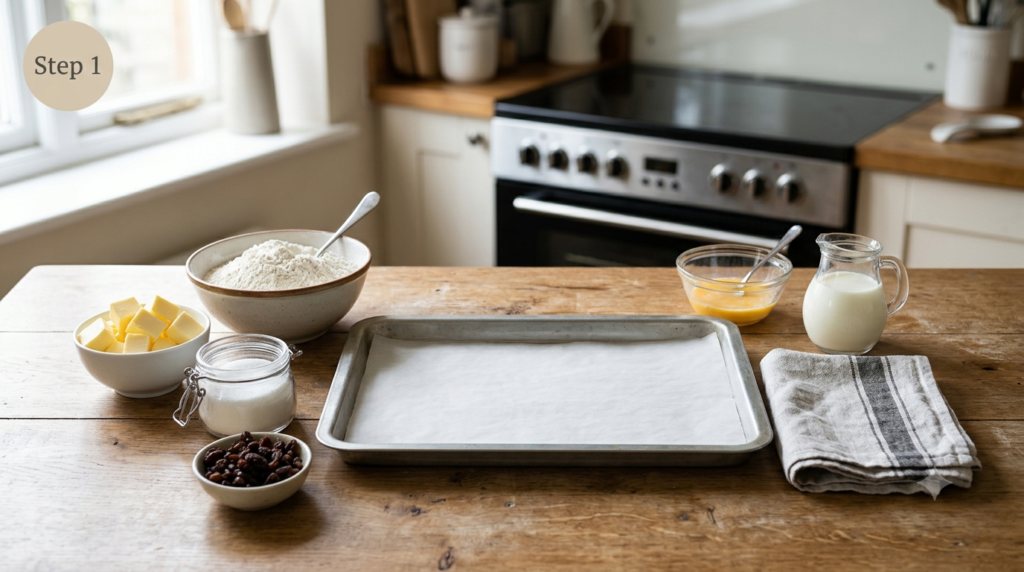
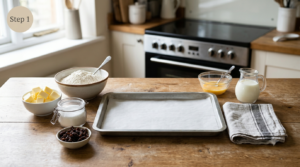
Preheat your oven to 220°C (200°C fan) or 425°F. Line a baking tray with baking paper. Measure the flour, butter, sugar, and dried fruit, then cut the cold butter into small cubes. Lightly beat the egg in a separate bowl and measure the milk. Having everything ready helps the dough come together quickly without allowing the butter to soften too much.
Step 2: Rub the Butter Into the Flour
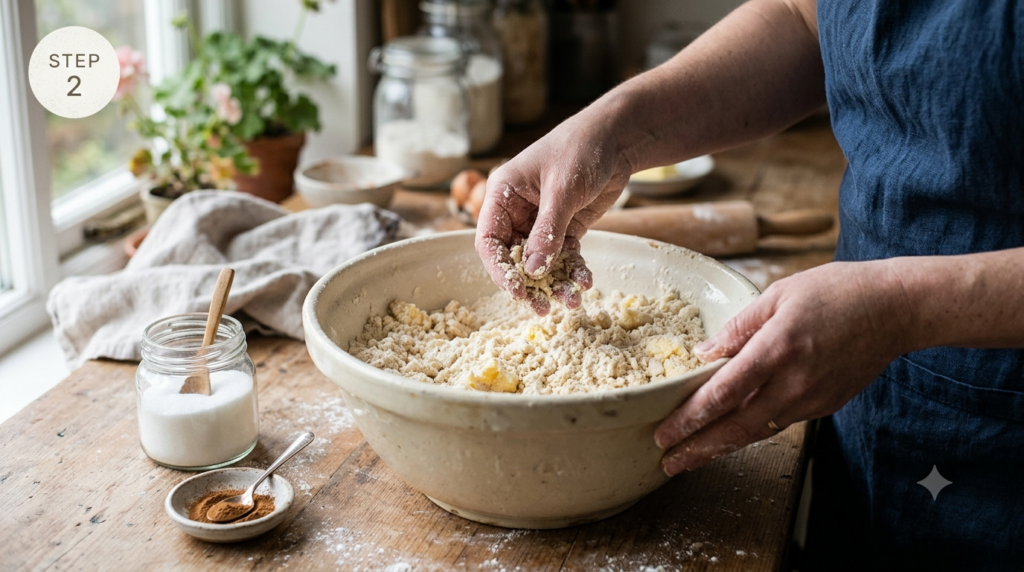
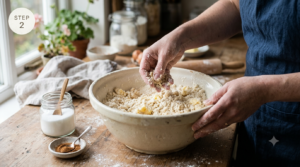
Place the self-raising flour in a large mixing bowl and add the cold butter cubes. Rub the butter into the flour using your fingertips until the mixture resembles fine breadcrumbs, with a few small buttery pieces remaining. Stir in the caster sugar and optional cinnamon. Work gently and avoid pressing the mixture too firmly, as keeping the butter cool helps create a light, tender texture.
Step 3: Add the Dried Fruit
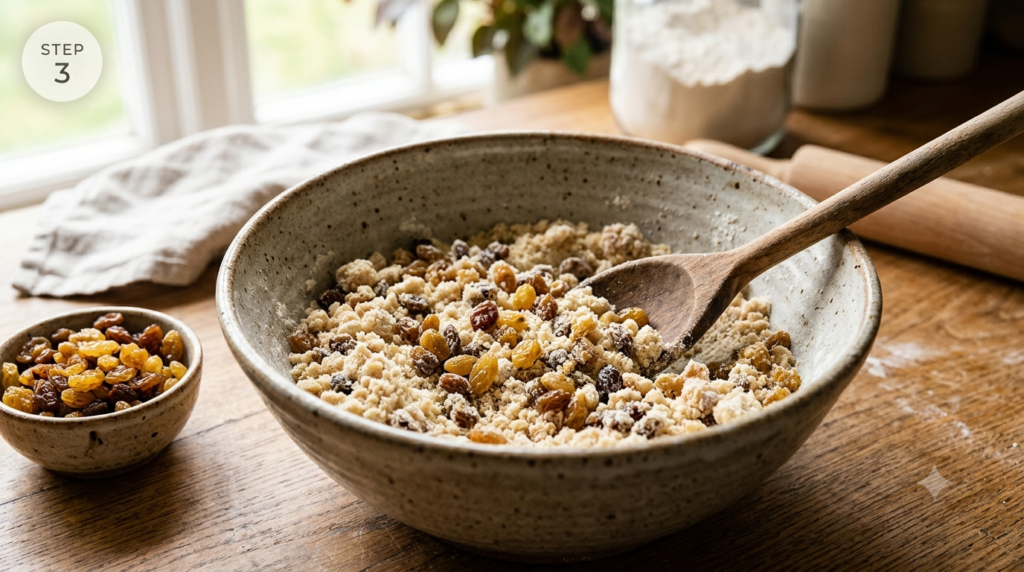
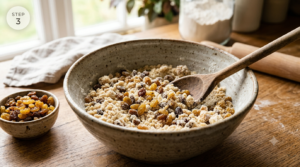
Stir the raisins or sultanas into the flour mixture until they are evenly distributed. If you are using vanilla extract, add it to the beaten egg before mixing it into the dough. Make sure the dried fruit is separated rather than clumped together. This helps every scone contain a balanced amount of fruit and prevents large pockets of sweetness in the finished bake.
Step 4: Bring the Dough Together
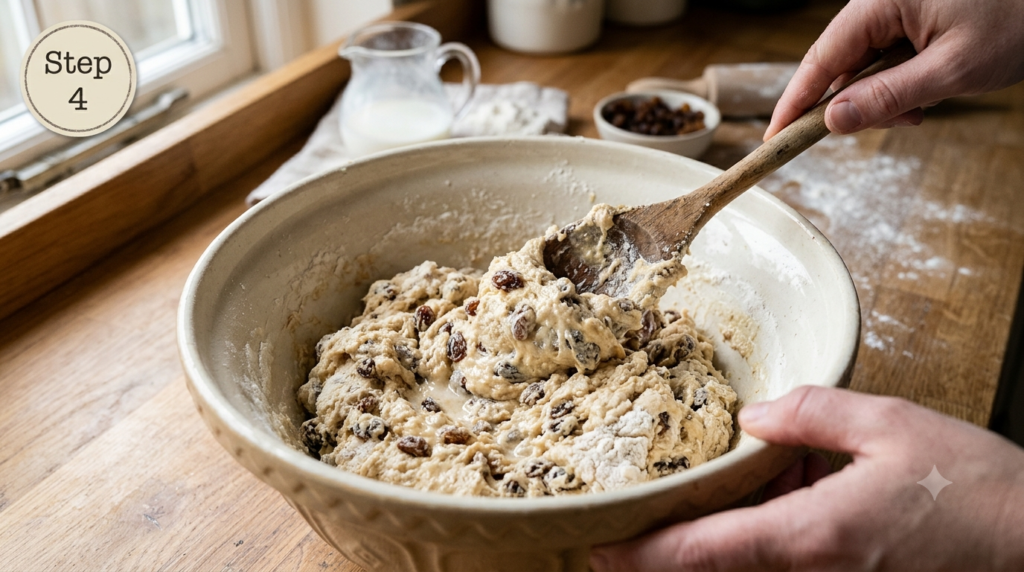
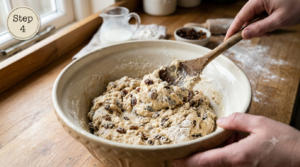
Pour the beaten egg into the dry mixture and add most of the milk. Mix gently with a wooden spoon or spatula until a soft dough begins to form. Add the remaining milk gradually only if needed. The dough should be slightly sticky but firm enough to handle. Avoid kneading it like bread dough, as overworking can make the scones tough and prevent them from rising properly.
Step 5: Shape and Bake the Scones
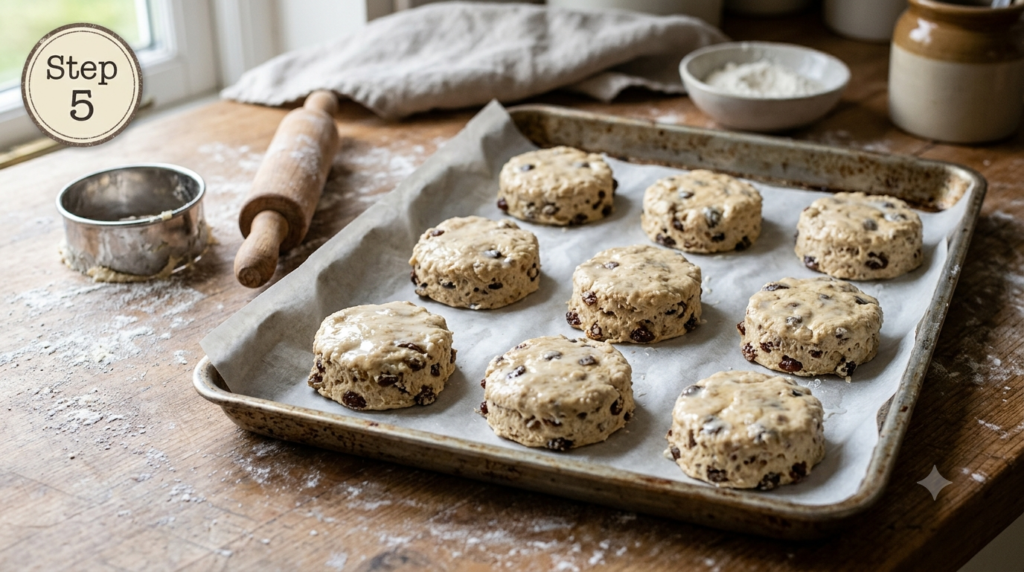
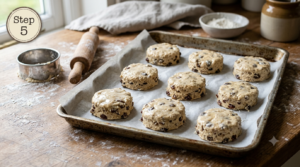
Lightly flour your work surface and gently pat the dough into a circle approximately 2–3 cm thick. Use a round pastry cutter to cut out scones, pressing straight down without twisting the cutter. Arrange them on the prepared baking tray with a little space between each one. Brush the tops lightly with milk or beaten egg, then bake for 12–15 minutes until risen and golden brown.
Step 6: Cool and Serve
Remove the scones from the oven and allow them to rest on the tray for a few minutes before transferring them to a wire rack. Let them cool slightly while keeping the centres soft and warm. Serve your fruit scones split in half with butter, strawberry jam, or clotted cream. They are especially delicious when enjoyed fresh on the day they are baked.
Expert Tips for the Best Fruit Scones Recipe
Keep the butter cold. Cold butter helps create a tender crumb. If your kitchen is warm, chill the butter and flour mixture briefly before adding the wet ingredients.
Do not overwork the dough. Mix only until the ingredients come together. Excessive kneading can develop gluten and make the scones dense.
Avoid adding too much milk. The dough should be soft but not wet. Add milk gradually so the mixture remains easy to shape.
Use a sharp cutter. Press the cutter straight down without twisting. Twisting can seal the edges and interfere with the scones’ rise.
Make the dough thick enough. Pat it to around 2–3 cm thick before cutting. Thin dough may produce flatter scones.
Bake in a fully preheated oven. A hot oven helps the scones rise quickly and develop a golden exterior.
Keep the tops simple. A light brush of milk or egg gives the scones a golden finish without making them heavy.
Variations to Try
- Orange fruit scones: Add finely grated orange zest for a fresh citrus aroma.
- Cinnamon fruit scones: Mix a little cinnamon or mixed spice into the flour.
- Mixed fruit scones: Use raisins, currants, chopped dates, and sultanas together.
- Apple fruit scones: Add a small amount of finely chopped dried apple.
- Lemon fruit scones: Add lemon zest and serve with lemon curd.
- Wholemeal fruit scones: Replace a portion of the self-raising flour with wholemeal flour, adding a little extra milk if needed.
These variations allow you to personalize the recipe while preserving the classic fruit scone texture. If you add extra ingredients, keep the dough balanced so it remains soft and easy to shape.
What to Serve With Fruit Scones
Fruit scones are a classic part of British afternoon tea. Serve them with strawberry jam and clotted cream for a traditional treat, or enjoy them with a little butter while they are still warm. A cup of English breakfast tea, Earl Grey, or freshly brewed coffee makes a lovely accompaniment.
For a lighter option, pair the scones with fresh berries or sliced fruit. If you are preparing an afternoon tea spread, arrange them alongside plain scones, biscuits, small cakes, and a pot of tea.
Fruit scones can also be served for breakfast or brunch. A little yogurt and fresh fruit can make a simple serving feel more substantial, while jam and cream are ideal for a special occasion.
Storage and Reheating Instructions
Room-temperature storage: Allow the scones to cool completely, then store them in an airtight container in a cool, dry place. They are best enjoyed within one to two days.
Freezing: Freeze fully cooled scones in a freezer-safe container or bag. Separate them with baking paper to prevent sticking. For best quality, use within two to three months.
Thawing: Thaw frozen scones at room temperature or overnight in the refrigerator.
Reheating: Warm a scone in an oven at 160°C (320°F) for approximately 5–8 minutes. You can also warm it briefly in a microwave, although the crust may become softer.
Freshness tip: Fruit scones are at their best on the day they are baked. If they become slightly dry the next day, warming them gently can help restore some of their softness.
Common Mistakes to Avoid
- Using warm butter: Soft butter can make the dough greasy and affect the texture.
- Overmixing the dough: Too much handling can make the scones tough.
- Adding too much milk: Wet dough can spread instead of rising neatly.
- Twisting the cutter: Twisting can prevent the scones from rising evenly.
- Making the dough too thin: A thicker dough produces taller scones.
- Overbaking: Baking for too long can dry out the centres.
- Opening the oven too early: A sudden temperature drop can affect the rise.
Nutrition Information
The following values are estimates for one fruit scone, assuming the recipe makes eight scones. Actual nutrition varies with the size of each scone and the ingredients used.
| Nutrient | Approximate Amount per Scone |
|---|---|
| Calories | 220–280 kcal |
| Protein | 4–6 g |
| Carbohydrates | 32–40 g |
| Fat | 8–11 g |
| Saturated Fat | 4–6 g |
| Fibre | 1–3 g |
| Sugar | 8–13 g |
These values are for the scones alone and do not include additional butter, jam, or clotted cream. Toppings can significantly increase the calories and sugar per serving.
Frequently Asked Questions
Why are my fruit scones not rising?
Scones may not rise if the baking powder in the self-raising flour is old, the dough is handled too much, or the oven is not hot enough. Use fresh flour, handle the dough gently, and preheat the oven fully before baking.
Can I use plain flour instead of self-raising flour?
Yes. Use the same amount of plain flour and add approximately 2 teaspoons of baking powder. Mix the baking powder evenly through the flour before adding the butter.
Can I make fruit scones without eggs?
Yes. You can replace the egg with a little extra milk or a suitable egg substitute. Add liquid gradually because the dough may need a different amount to reach the right consistency. The texture may be slightly different from traditional scones.
Can I use fresh fruit instead of dried fruit?
Dried fruit is best for traditional fruit scones because it adds sweetness without introducing much moisture. Fresh fruit can make the dough wet and affect the rise. If using fresh fruit, choose small pieces and adjust the liquid carefully.
Can I prepare fruit scones ahead of time?
You can prepare the dry ingredients and measure the butter and fruit in advance. For the best texture, mix and shape the dough shortly before baking. You can also freeze baked scones and warm them when needed.
What is the best way to serve fruit scones?
Serve them slightly warm or at room temperature, split in half, with butter, jam, or clotted cream. A cup of tea or coffee makes them especially enjoyable.
Final Thoughts
This fruit scones recipe is a simple and delicious way to enjoy a traditional British bake at home. With a golden exterior, tender crumb, and sweet dried fruit in every bite, these scones are perfect for afternoon tea, breakfast, or a homemade snack.
The key to success is keeping the butter cold, adding just enough milk, and handling the dough gently. Once you have mastered the basic method, you can experiment with citrus zest, spices, and different dried fruits to create your own favorite version.
Bake a fresh batch, serve them with your favorite toppings, and enjoy the comforting taste of homemade fruit scones.
You may also like Baby Curry Recipe: Mild, Creamy, and Full of Flavor.
Recipe Card
Fruit Scones Recipe
Ingredients
Equipment
Method
- Preheat your oven to 220°C (200°C fan) or 425°F. Line a baking tray with baking paper. Measure the flour, butter, sugar, and dried fruit, then cut the cold butter into small cubes. Lightly beat the egg in a separate bowl and measure the milk. Having everything ready helps the dough come together quickly without allowing the butter to soften too much.
- Place the self-raising flour in a large mixing bowl and add the cold butter cubes. Rub the butter into the flour using your fingertips until the mixture resembles fine breadcrumbs, with a few small buttery pieces remaining. Stir in the caster sugar and optional cinnamon. Work gently and avoid pressing the mixture too firmly, as keeping the butter cool helps create a light, tender texture.
- Stir the raisins or sultanas into the flour mixture until they are evenly distributed. If you are using vanilla extract, add it to the beaten egg before mixing it into the dough. Make sure the dried fruit is separated rather than clumped together. This helps every scone contain a balanced amount of fruit and prevents large pockets of sweetness in the finished bake.
- Pour the beaten egg into the dry mixture and add most of the milk. Mix gently with a wooden spoon or spatula until a soft dough begins to form. Add the remaining milk gradually only if needed. The dough should be slightly sticky but firm enough to handle. Avoid kneading it like bread dough, as overworking can make the scones tough and prevent them from rising properly.
- Lightly flour your work surface and gently pat the dough into a circle approximately 2–3 cm thick. Use a round pastry cutter to cut out scones, pressing straight down without twisting the cutter. Arrange them on the prepared baking tray with a little space between each one. Brush the tops lightly with milk or beaten egg, then bake for 12–15 minutes until risen and golden brown.
- Remove the scones from the oven and allow them to rest on the tray for a few minutes before transferring them to a wire rack. Let them cool slightly while keeping the centres soft and warm. Serve your fruit scones split in half with butter, strawberry jam, or clotted cream. They are especially delicious when enjoyed fresh on the day they are baked.