
The Little Crystals That Turn Into Jelly
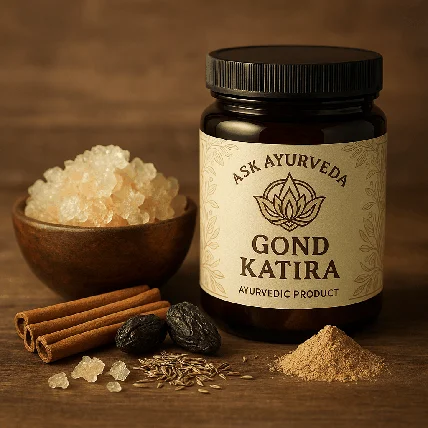
Open a bag of gond katira and it looks like nothing much: brittle, pale flakes and crooked shards, somewhere between broken glass and old candle wax. Drop a spoonful into water, walk away, and come back to a bowl of soft, wobbly, almost clear jelly. That transformation is the whole reason this ingredient has lived in Indian summer kitchens for generations.
In English, gond katira is called gum tragacanth. It is the dried sap of shrubs from the Astragalus family, which grow wild in the mountains of the Middle East and western Asia, according to the US Food and Drug Administration’s description of the gum. Food manufacturers know it too: it appears on ingredient lists as a thickener and stabilizer, and in Europe it carries the additive code E413. At home, though, nobody cares about codes. We care about texture, and texture is where this gum shines.
If you want the background story first, the Ayurvedic and Unani history, the traditional view of its qualities and the safety notes, this overview of gond katira covers the full picture. Here we stay in the kitchen.
Soaking: The Only Technique You Need
Gond katira is never eaten dry. Every recipe starts the same way, and the method is forgiving once you know what to expect.
- Use a small amount. The crystals swell dramatically, so a teaspoon or two fills a surprising amount of a bowl. Start small; you can always soak more tomorrow.
- Rinse first. The gum is a natural product harvested from plants, so give the crystals a quick rinse in clean water to wash off dust and tiny bits of bark.
- Give it plenty of water and room. Use a bowl that looks too big. The jelly grows well beyond the starting volume.
- Be patient. Ask Ayurveda’s guide mentions two approaches: soaking about 5 grams in water for around 30 minutes before stirring it into sherbet or buttermilk, or soaking a small amount overnight until it fully swells.
When it is done, the pieces will be soft all the way through, with no hard, glassy center. If you bite into a crunchy core, it needs more time. Lift the jelly out with a spoon, leave any grit at the bottom of the bowl, and you are ready to cook.
Plan your batch for the next day or two. Recipe writers usually suggest keeping soaked gel covered in the fridge and using it up quickly, since it is a fresh, wet ingredient and loses its spring as it sits.
Three Summer Drinks Built on the Gel
Classic rose sharbat
This is the old-school version. Traditional healers in Marwar, the guide notes, mixed gond katira with rose water and sugar into a sherbet for blazing summer days. Your modern take can stay just as simple: spoon soaked gel into a tall glass, add chilled water or milk, a splash of rose syrup or a few drops of rose water, sugar to taste, and plenty of ice. Stir well so the jelly spreads through the glass instead of sitting in a clump.
Lemon and mint cooler
For something brighter, build a nimbu pani base: fresh lime or lemon juice, sugar or jaggery syrup, a pinch of salt and roasted cumin, cold water. Add a few spoonfuls of the gel and torn mint leaves. The jelly carries the sour, salty flavor in a way plain water cannot, and it makes a basic lemonade feel like a proper treat.
Spiced buttermilk
Whisk plain yogurt with cold water until thin, season with salt, roasted cumin and a little grated ginger, then fold in a spoonful of soaked gond katira. The gel gives this savory drink a silky body.
Falooda, the Showstopper
If you only make one thing with gond katira this year, make falooda. It is half drink, half dessert, served in a tall glass and eaten with a long spoon. The layers go roughly like this:
- rose syrup pooled at the bottom of the glass;
- a spoonful of soaked gond katira and some soaked sweet basil seeds (sabja), which look similar but bring tiny black specks;
- cooked, cooled thin vermicelli (falooda sev);
- chilled sweetened milk poured over everything;
- a scoop of kulfi or vanilla ice cream, then chopped pistachios on top.
The gel gives each spoonful a soft, slippery bite that contrasts nicely with the noodles and the cold ice cream.
What the “Cooling” Label Means
Most recipes call gond katira a cooling food, and you will see it marketed as a summer ingredient. That idea comes from Ayurvedic and Unani tradition, which classifies the gum as having a cold potency that calms excess heat (pitta). It is a traditional framework, not a lab measurement. What you can count on is the practical side: a cold, hydrating drink on a hot afternoon feels refreshing, and the gel makes it more filling and fun to sip.
Safety Notes for the Home Cook
- Always soak fully and drink with enough liquid. Gums swell when they meet water. The RxList monograph on tragacanth warns that it can block the intestines if you do not drink enough fluid, so never swallow dry crystals and do not skimp on the liquid in your glass.
- Go easy at first. Larger amounts can cause bloating or gas, a point the Ask Ayurveda guide also makes.
- Watch for allergy. Reactions are rare but possible. Stop if you notice itching, rash or breathing trouble, and seek urgent care for any swelling of the face or throat.
- Pregnancy and breastfeeding. Reliable information on medicinal amounts is limited, so ask your doctor before making it a regular habit.
- Medications. Thick, gummy foods may slow how some pills are absorbed, so keep a gap between your drink and your medicines and check with a pharmacist.
Keeping Your Stash
Dry gond katira keeps well if you treat it like any other pantry staple: an airtight jar, a cool cupboard, away from steam and direct sun. Moisture is the enemy, since damp crystals clump and start to soften before you want them to.
A quick note: this article is for general information and kitchen inspiration. It is not medical advice and does not replace a conversation with your doctor, especially if you are pregnant, take regular medication or have a digestive condition.
